
Joe Wilderness Books in Order
Part ofJohn Lawton Books in OrderSee John Lawton's Joe Wilderness novels in order, with summaries, Cold War series background, and advice on the best place to start this witty spy sequence.
Last updated:
As an Amazon Associate, we earn from qualifying purchases (at no extra cost to you).
Joe Wilderness books in publication order
4 books
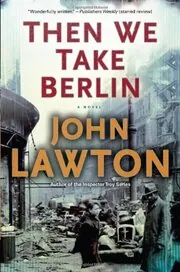
Then We Take Berlin
by John Lawton
2013
Orphaned during the Blitz, young thief Joe Wilderness is recruited by British intelligence for his languages and criminal instincts and posted to ruined Berlin. There he juggles interrogations, a lucrative black market scam and a love affair, then years later is lured back for one last, far more dangerous job.
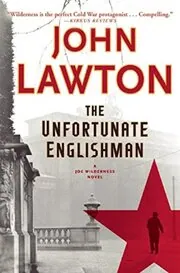
The Unfortunate Englishman
by John Lawton
2016
After a botched exfiltration in 1963 Berlin leaves a nuclear scientist dead, Joe Wilderness is pulled back into MI6 service instead of being left in jail. While a quiet metallurgist is sent east on a risky mission of his own, Joe navigates double crosses, prisoner swaps and Cold War showdowns.
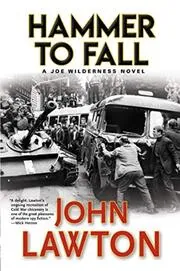
Hammer to Fall
by John Lawton
2020
Joe Wilderness begins by running small black market scams in divided Berlin, but an old acquaintance draws him into a dangerous investigation in 1960s Finland. Following a trail of cobalt and secret weapons, he ends up in Prague on the brink of the 1968 crackdown, where old plots suddenly converge.

Moscow Exile
by John Lawton
2023
Shifting between postwar Washington and late 1960s Europe, Moscow Exile follows socialite Charlotte and intelligence officer Charlie Leigh Hunt as they trade gossip and secrets in the shadow of the Red Scare. Years later Joe Wilderness, held by the KGB, becomes a bargaining chip in a rescue plan that leads back to Berlin's bridge of spies.
Joe Wilderness books in chronological order
Series background & context
The Joe Wilderness novels introduce a different kind of Lawton hero. John Holderness, known as Joe Wilderness, grows up an East London wide boy, part cat burglar and part cardsharp, more at home on bombed out streets than in any office. He assumes that the war and his own background excuse a certain amount of rule breaking.
In Then We Take Berlin that attitude meets its match. Picked up by the Royal Air Force after the war, Joe scores unexpectedly high on an intelligence test and catches the eye of Alec Burne Jones, an MI6 officer who would rather recruit him than lock him up. Joe learns Russian and German at Cambridge, then lands in ruined Berlin, where his job is to track former Nazis and feel out the new power structure. On the side he falls in with a small crew of hustlers from different services and different countries and builds a black market empire in coffee, cigarettes and anything else that can be moved.
The Unfortunate Englishman revisits Berlin at the height of the Cold War. Joe is supposed to be running a straightforward exfiltration, smuggling a scientist out of the East, but the job goes violently wrong. To stay out of prison he lets Burne Jones pull him back into formal service, even as another quiet Englishman, Geoffrey Masefield, is pushed into espionage he barely understands. Prisoner exchanges on the bridge between East and West show just how expendable both men really are.
In Hammer to Fall the focus widens again. The story jumps from an airlift era Berlin scam in peanut butter to 1960s Finland, where Joe uncovers a secret British weapons project tied to cobalt and dirty bombs. From there he is sent on to Prague, arriving just in time for the tension of 1968. Old lovers and old accomplices resurface, and the line between criminal caper and official mission grows thinner with every chapter.
Moscow Exile adds Washington, D.C., to the mix, with British expatriates hosting gossip filled dinner parties in the early days of the Red Scare. Threads from those parties loop back decades later when Joe is being held by the KGB on the wrong side of the Iron Curtain. Friends from Berlin and London try to pull him out, and the novel ties together many of the series' long running questions about loyalty, betrayal and the price of survival.
Compared with the more formal world of Inspector Troy, the Joe Wilderness books tilt toward the rogue's eye view of history. Joe is never entirely sure whose side he is on, and the books treat espionage as a grubby, improvised business driven as much by greed and affection as by ideology. They are rich in period detail but also in jokes, scams and small acts of kindness.
For readers who like Cold War fiction that moves easily between heists and high politics, this series offers a satisfying mix of pace, humor and melancholy.










Edited by
Software engineer whose passion for tracking book recommendations from podcasts inspired the creation of MRB.
Lead investor at 3one4 Capital whose startup expertise and love for books helped shape MRB and its growth.
Comments
Did we miss something? Have feedback?
Help us improve this page by sharing your thoughts