
James Fenimore Cooper Books in Order
Browse James Fenimore Cooper's books in order, with summaries, guides to his frontier and sea tales, author background, and suggestions on where to start.
Last updated:
As an Amazon Associate, we earn from qualifying purchases (at no extra cost to you).
James Fenimore Cooper books in publication order
33 books

Miles Wallingford
by James Fenimore Cooper
1814
This sequel to Afloat and Ashore follows Captain Miles Wallingford Jr. from Ulster County to distant seas, balancing shipboard crises, business risks, and a complicated love for Lucy Hardinge as he learns what kind of man he wants to be.

Precaution
by James Fenimore Cooper
1820
Set in rural England just after the Napoleonic wars, Cooper's first novel traces the courtship of Emily Moseley and the mysterious George Denbigh, using gossip, misunderstandings, and family secrets to test how far social "precaution" can really protect the heart.
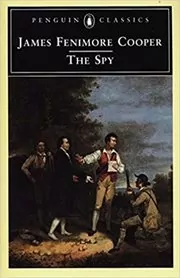
The Spy
by James Fenimore Cooper
1821
During the American Revolution in New York's neutral ground, peddler Harvey Birch moves between British and Continental lines, suspected as a traitor by all while secretly serving George Washington, in a tale of disguises, divided loyalties, and hard choices about honor.

The Pioneers
by James Fenimore Cooper
1823
In the frontier town of Templeton on Otsego Lake, aging hunter Natty Bumppo clashes with Judge Temple and his settlers over wasteful hunting and land use, as a mysterious young man and the judge's daughter are drawn into the dispute.
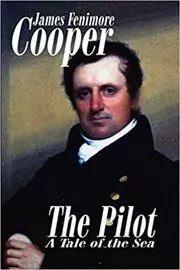
The Pilot
by James Fenimore Cooper
1824
Set during the American Revolution, this sea tale follows a mysterious pilot, modeled on John Paul Jones, as he guides American raiders along the stormy British coast, testing the crews' courage and their shifting ideas of loyalty and duty.
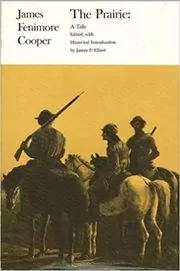
The Prairie
by James Fenimore Cooper
1824
On the newly opened Great Plains, an elderly frontiersman known only as the trapper joins a rough emigrant clan and a Pawnee war party, facing buffalo hunts, prairie fires, and skirmishes that force him to weigh solitude against one last act of service.
Lionel Lincoln
by James Fenimore Cooper
1825
Boston-born but raised in England, Major Lionel Lincoln returns with the British Army on the eve of Lexington, Concord, and Bunker Hill, struggling to reconcile family ties in Massachusetts with his sworn allegiance to the Crown.
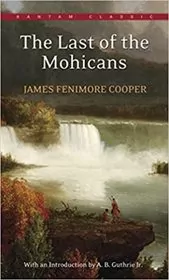
The Last of the Mohicans
by James Fenimore Cooper
1826
Amid the French and Indian War, scout Hawkeye and his Mohican companions Chingachgook and Uncas try to rescue Colonel Munro's daughters from the Huron leader Magua, in a fast moving story of pursuit, ambush, and tragic cross-cultural friendship.

The Red Rover
by James Fenimore Cooper
1827
Off the New England coast, a notorious pirate called the Red Rover tangles with young officer James Wilder, old sailor Dick Fid, and free black seaman Scipio Africanus, as shifting identities and sudden storms blur the line between outlaw and hero at sea.

Notions of the Americans
by James Fenimore Cooper
1828
Framed as letters from a European traveler, this semi fictional travelogue defends American democracy by praising its navy, schools, and social mobility, even as it glosses over some of the young nation's deeper conflicts and inequalities.

A Residence in France
by James Fenimore Cooper
1836
Part travel writing and part political sketch, this account describes Cooper's family life in France and journeys along the Rhine and into Switzerland, using everyday scenes to comment on monarchy, bureaucracy, and European society as seen by an American.

Gleanings in Europe
by James Fenimore Cooper
1836
Drawn from Cooper's years living abroad, these volumes collect his observations on English and continental life, mixing anecdotes about artists and politicians with sharp comparisons between European hierarchies and American republican ideals.

The Eclipse
by James Fenimore Cooper
1836
In this brief autobiographical piece, Cooper recalls watching the total solar eclipse of 1806 from Cooperstown as a boy, evoking the eerie midday darkness, villagers' reactions, and the way that single morning fixed itself in his memory.

Home as Found
by James Fenimore Cooper
1838
Back in the upstate New York town of Templeton, the Effinghams confront small town politics, newspaper feuds, and jealous neighbors, as their European polish collides with village democracy and Cooper gently mocks both sides.

Homeward Bound or, the Chase
by James Fenimore Cooper
1838
The Effingham family boards the packet ship Montauk to sail home from Europe in 1835, weathering Atlantic storms, brushes with warships and raiders off North Africa, and constant debates about manners, nationalism, and what it means to be an American abroad.
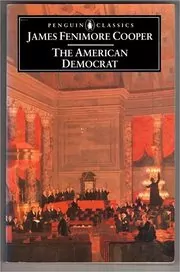
The American Democrat
by James Fenimore Cooper
1838
This compact political essay sets out Cooper's view of American democracy, warning about the power of public opinion, the press, and party leaders, and arguing for property rights and constitutional limits as safeguards for individual liberty.

The Chronicles of Cooperstown
by James Fenimore Cooper
1838
A local history of Cooperstown and Otsego County, this chronicle gathers anecdotes about the founding of the village, its early settlers, courts, and landmarks, preserving the small town world that shaped Cooper's imagination.

Old Ironsides
by James Fenimore Cooper
1839
Written after his main naval history, this shorter work tells the story of the frigate USS Constitution, explaining how the sturdy "Old Ironsides" was built, the War of 1812 actions that made her famous, and her later peacetime service.

The History of the Navy of the United States of America
by James Fenimore Cooper
1839
Cooper's extensive history of the early United States Navy traces campaigns from the Revolution through the Mexican War era, combining technical descriptions of ships and battles with portraits of officers he believed the young republic should remember.
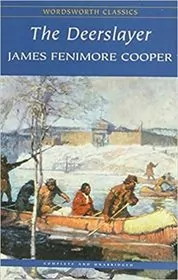
The Deerslayer
by James Fenimore Cooper
1840
At the still wilderness lake Cooper called Glimmerglass, the young hunter Deerslayer joins his friend Chingachgook to rescue a kidnapped Delaware woman, confronting scalp hunters, Iroquois raiders, and a first hard test of his strict personal code.

The Pathfinder
by James Fenimore Cooper
1841
Middle aged scout Natty Bumppo, now called Pathfinder, helps escort a young woman, Mabel Dunham, to a remote British post on Lake Ontario, facing treacherous waters, French allied raiders, and a love he ultimately cannot claim.

Richard Dale
by James Fenimore Cooper
1842
This biographical sketch follows Commodore Richard Dale from his youth in Virginia through service with John Paul Jones and later command in the new United States Navy, highlighting both his battle exploits and his quieter years as a merchant and civic leader.

The Two Admirals
by James Fenimore Cooper
1842
In this Royal Navy story set before the American Revolution, lifelong friends and fellow officers Sir Gervaise Oakes and Sir Thomas Bluewater confront storms, mutiny, and questions of command that put their honor and their bond under strain.
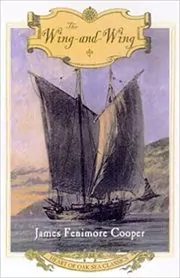
The Wing-and-Wing
by James Fenimore Cooper
1842
Against the backdrop of the Napoleonic Wars in the Mediterranean, French privateer Raoul Yvard and his swift lugger Le Feu-Follet outmaneuver British ships near Naples, while Raoul's romance with devout Italian Ghita forces him to weigh pride against faith.

Ned Myers
by James Fenimore Cooper
1843
Based on conversations with an old shipmate, Cooper recounts the hard life of sailor Ned Myers, from a rough childhood and early voyages to shipwrecks, imprisonment, and the everyday dangers of working before the mast in the age of sail.

Afloat and Ashore
by James Fenimore Cooper
1844
Young Miles Wallingford leaves his comfortable Hudson Valley estate to go to sea after his parents' deaths, narrating years of merchant voyages, shipwrecks, and his uneasy friendship with Neb, an enslaved stowaway who becomes his closest shipmate.

Satanstoe
by James Fenimore Cooper
1845
Told as the memoir of Cornelius Littlepage, this novel revisits colonial New York, from Dutch manor houses to forest campaigns, blending family romance, land speculation, and clashes with Native nations into a portrait of a society on the edge of revolution.

Lives Of Distinguished American Naval Officers
by James Fenimore Cooper
1846
This collection of biographies profiles early American naval leaders such as William Bainbridge, Richard Somers, John Shaw, William Shubrick, and Edward Preble, emphasizing their battles, shipboard decisions, and the character traits Cooper thought defined good command.

The Redskins
by James Fenimore Cooper
1846
Set a generation after Satanstoe, the last Littlepage manuscript returns to the family estate in the Adirondacks during anti-rent unrest, as masked "Indians" challenge long leases and the narrator weighs inherited rights against changing ideas of democracy.

The Crater
by James Fenimore Cooper
1847
Shipwrecked sailor Mark Woolston survives on a remote Pacific reef, helps raise a volcanic island into a thriving little colony, and then watches ambition, politics, and another cataclysm threaten everything the settlers have built.

The Oak Openings; or, The Bee Hunter
by James Fenimore Cooper
1848
In Michigan's oak savanna during the War of 1812, professional bee hunter Benjamin "Ben Buzz" Boden tends his hives, trades with Native neighbors, and is drawn into skirmishes that test his ingenuity, his faith, and his claim to the land.
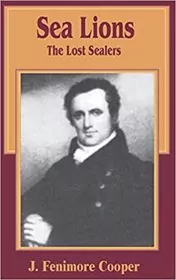
The Sea Lions
by James Fenimore Cooper
1849
Two rival sealing expeditions push deep into Antarctic waters and become trapped in the ice, forcing their crews to cooperate for survival while storms, hunger, and questions of faith strip them down to what really holds a life together.

New York
by James Fenimore Cooper
1851
An unfinished introduction to a larger history of Manhattan, this essay surveys New York City's natural harbor, commercial rise, and political tensions, arguing that its future as a world trading center depends as much on civic character as on geography.
Where to start with James Fenimore Cooper
If you want his frontier epic in story order: The Deerslayer → The Last of the Mohicans → The Pathfinder → The Pioneers → The Prairie.
If you prefer his early historical romances: Precaution → The Spy → The Pioneers → The Last of the Mohicans.
If you like sea adventures: The Pilot → The Red Rover → Afloat and Ashore → Miles Wallingford → The Sea Lions.
If you are curious about his politics and essays: The American Democrat → Notions of the Americans → Gleanings in Europe → New York → The History of the Navy of the United States of America.
James Fenimore Cooper sub-series and character series
Leatherstocking Tales books in order
Explore this seriesLeatherstocking Tales books in chronological order
James Fenimore Cooper collections, short stories, and related book types
Non-Fiction
Standalone James Fenimore Cooper books
Author bio
James Fenimore Cooper was born into a world where the American frontier was still only half settled, and he spent his life turning those forests and waterways into stories that readers recognized as their own country.
He was born on September 15, 1789, in Burlington, New Jersey, the eleventh of twelve children of William and Elizabeth Cooper. When he was still a toddler the family moved north to the new settlement of Cooperstown on Otsego Lake, a village his father had founded. Growing up between the lake, the woods, and a household full of talk about law and politics gave him both wilderness memories and a sense of public life to draw on later.
Cooper was sent to Yale at just thirteen and was known there as a strong Latin student, but his time ended abruptly after a series of pranks. Expelled in his third year, he went to sea as a common sailor on a merchant ship, then received a midshipman's warrant in the United States Navy in 1808. Months on coastal vessels and on Lake Ontario taught him the details of rigging, storms, and shipboard hierarchy that would anchor his later sea novels.
His father died in 1809, leaving property but also tangled debts, and in 1811 Cooper married Susan Augusta de Lancey, whose family had Loyalist roots. They settled into a country gentleman's life in New York, dividing time among farms, militia duties, local causes, and raising seven children. Their daughter Susan Fenimore Cooper would go on to write essays and nature sketches of her own.
The writing career started almost as a joke. In 1820, while reading a novel aloud, Cooper complained that he could do better and his wife challenged him to prove it. The result was Precaution, an English style tale of manners that he later dismissed but that taught him the mechanics of fiction. With his second book, The Spy, a Revolutionary War story set in Westchester County, he shifted to American material and quickly became one of the most widely read novelists in the English speaking world.
Over the next two decades he moved restlessly between genres but kept returning to two big canvases, the forest and the sea. The five Leatherstocking novels, beginning with The Pioneers and including The Last of the Mohicans, The Prairie, The Pathfinder, and The Deerslayer, follow scout Natty Bumppo from youth to old age while exploring land seizures, conservation, and fraught alliances with Native nations. In parallel, sea tales such as The Pilot, The Red Rover, and The Sea Lions used storms, chase scenes, and cramped decks to test courage, skill, and faith.
From 1826 to 1833 Cooper lived in Europe with his family, spending long stretches in Paris and traveling through England, Italy, Switzerland, and along the Rhine. He kept writing fiction but also took notes on politics, churches, and class systems that later surfaced in travel books like Gleanings in Europe and A Residence in France. Those years abroad sharpened his sense of how different the United States really was, and how quickly it might lose that difference.
Back home he turned more openly to controversy. In The American Democrat and the Littlepage trilogy, Satanstoe, The Chainbearer, and The Redskins, he attacked reckless land speculation, party newspapers, and what he saw as the tyranny of public opinion. His willingness to sue hostile editors for libel made him a lightning rod in the partisan press, but he kept using fiction and essays to argue for property rights, local traditions, and a more thoughtful democracy.
In his last years Cooper lived mainly in Cooperstown, restoring his family home and writing history. He produced History of the Navy of the United States of America and biographies of naval officers, drawing on his own service and the recollections of shipmates. He died there on September 14, 1851, the day before his sixty second birthday, leaving behind frontier epics like The Deerslayer and The Last of the Mohicans that still shape how readers imagine early America.









Edited by
Software engineer whose passion for tracking book recommendations from podcasts inspired the creation of MRB.
Lead investor at 3one4 Capital whose startup expertise and love for books helped shape MRB and its growth.
Comments
Did we miss something? Have feedback?
Help us improve this page by sharing your thoughts