
James Crumley Books in Order
Explore James Crumley books in order, with summaries, series notes, reading paths, and tips on where to start with his hardboiled crime fiction.
Last updated:
As an Amazon Associate, we earn from qualifying purchases (at no extra cost to you).
James Crumley books in publication order
10 books
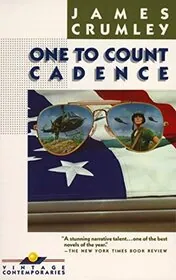
One to Count Cadence
by James Crumley
1969
In 1962, Sergeant Jacob “Slag” Krummel takes charge of a rebellious communications security unit at Clark Air Force Base. Their absurd military life turns darker when the men are secretly sent toward Vietnam.
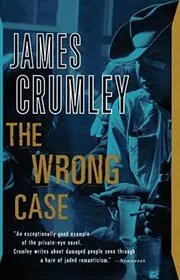
The Wrong Case
by James Crumley
1975
Milo Milodragovitch’s divorce business has dried up, so he takes a missing-person job from a young woman who catches his eye. The routine search opens onto an older crime and a town full of victims.
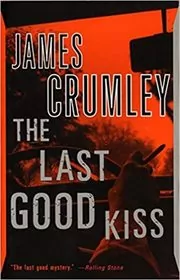
The Last Good Kiss
by James Crumley
1978
Montana investigator C.W. Sughrue is hired to find drunken novelist Abraham Trahearne, then stumbles into the decade-old disappearance of a young woman from Haight-Ashbury. The case becomes a bruising trip through America’s bars, highways, and secrets.
Recommended by
1 person Andy Greenwald recommended this book
Andy Greenwald
"One of my all-time favorite books." - Andy Greenwald
Andy Greenwald's recommendation of this book
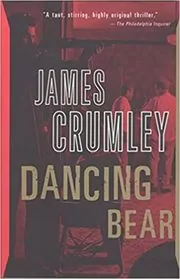
Dancing Bear
by James Crumley
1983
Milo has left private work for a security job when Sarah Weddington brings him a strange case involving an old woman on the run. Soon he’s dodging criminals, weapons, drugs, and memories he can’t outrun.
Recommended by
2 people Anthony Bourdain recommended this book
Anthony Bourdain
Anthony Bourdain tweeted about this book.
Anthony Bourdain's recommendation of this book - Andy Greenwald recommended this book
Andy Greenwald
"Sometimes I start reading other books. But then I remember this is the only one I like." - Andy Greenwald
Andy Greenwald's recommendation of this book
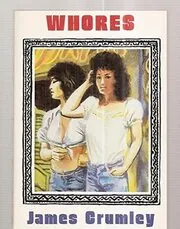
Whores
by James Crumley
1988
Crumley’s 1988 collection blends short fiction, nonfiction, and interview material, circling the same rough country as his novels. The pieces focus on damaged men, bad choices, bars, war memories, and the West.
Muddy Fork & Other Things
by James Crumley
1991
This collection gathers Crumley’s short fiction, essays, and stray pieces, mixing South Texas memories, Western landscapes, crime sketches, and restless men on the run from themselves. It’s a useful companion to the novels.
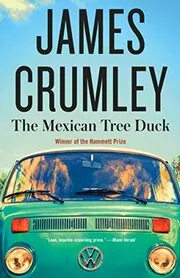
The Mexican Tree Duck
by James Crumley
1993
Needing cash after a jukebox disaster, retired Sughrue takes a small case about stolen fish. The trail widens to a kidnapped politician’s wife, rare pottery, and a gun-toting mother with her own agenda.
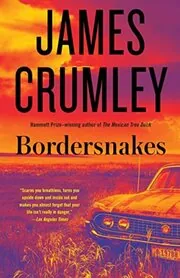
Bordersnakes
by James Crumley
1996
Gut-shot Sughrue and cheated Milo Milodragovitch are both looking for payback when their trails cross near the Mexican border. Their uneasy partnership turns a hunt for stolen money into a violent road trip through outlaw country.
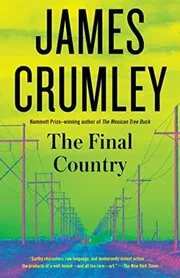
The Final Country
by James Crumley
2001
Milo is running a bar, washing dirty money, and watching his life sour when he’s hired to find a drug dealer’s killer. The search pulls him from Texas back toward Montana and old truths.
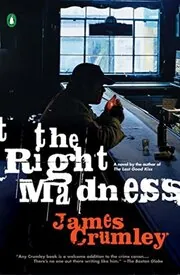
The Right Madness
by James Crumley
2005
Sughrue is pulled out of shaky domestic calm when a psychiatrist friend asks him to recover stolen patient files. What starts as a private favor turns deadly as suspects vanish, die, or drag him deeper into Missoula trouble.
Where to start with James Crumley
For the classic starting point: The Last Good Kiss → The Mexican Tree Duck → The Right Madness.
For Milo Milodragovitch: The Wrong Case → Dancing Bear → The Final Country.
For the crossover road trip: Bordersnakes after you’ve met Sughrue and Milo.
For the non-detective work: One to Count Cadence → Muddy Fork & Other Things → Whores.
James Crumley sub-series and character series
Milo Milodragovitch books in order
Explore this seriesMilo Milodragovitch books in chronological order
Standalone James Crumley books
Author bio
James Crumley was born in Three Rivers, Texas, on October 12, 1939, and grew up in Mathis, near Corpus Christi. His father, Arthur “Shorty” Crumley, worked in the oil fields, and his mother, Ruby Jewel, waited tables. Crumley was a strong student and a football player, which gave him a way out of small-town South Texas for a while.
He first went to Georgia Tech on a Navy ROTC scholarship, then left and served in the U.S. Army from 1958 to 1961, including time in the Philippines. After the Army, he earned a history degree from Texas College of Arts and Industries in 1964 and an MFA from the Iowa Writers’ Workshop in 1966.
His first novel grew out of that MFA work. One to Count Cadence, published in 1969, is a war novel about American soldiers in the Philippines and Vietnam, and it already has many of the things that would stay with him: anger, male friendship, bad systems, and people trying to drink their way through fear.
The turn toward detective fiction was almost accidental.
Crumley had not started out as a crime-fiction specialist. Poet Richard Hugo pushed him toward Raymond Chandler, and Crumley later found in Chandler and Ross Macdonald a form loose enough for his own obsessions. The result was The Wrong Case in 1975, the first Milo Milodragovitch novel, set in the kind of Western town where everyone knows too much and says too little.
Then came The Last Good Kiss in 1978, the book that introduced C.W. Sughrue and gave Crumley his most widely shared calling card. Sughrue is a Montana private investigator with a bad liver, a sharp mouth, and a soft spot he would rather not admit to. Milo is a little more wounded and reflective, but neither man is built for clean living.
The books are messy in the way life is messy.
Crumley’s detective novels often start with a missing person, stolen money, or a favor for a friend. Then the case spreads into old betrayals, road trips, drugs, guns, sex, bad weather, and bars where the conversation can turn dangerous fast. Dancing Bear, The Mexican Tree Duck, Bordersnakes, The Final Country, and The Right Madness all use crime plots as a way to push damaged men toward the truths they have been avoiding.
He also wrote stories, essays, screenplays, and fragments, collected in books such as Whores and Muddy Fork & Other Things. The nonfiction and short fiction show the same territory from a slightly different angle: South Texas heat, Montana nights, busted friendships, rough humor, and the feeling that the past has a long reach.
Crumley taught at the University of Montana and held visiting teaching posts around the country, including in Texas, Colorado, Oregon, and Pennsylvania. From the mid-1980s on, Missoula was his home base. The local bar scene, the writers passing through town, and the hard edges of the inland West all found their way into his work.
He died in Missoula on September 17, 2008, after long health problems. He was survived by his wife, Martha Elizabeth, a poet and artist, along with children, grandchildren, and many friends. His books never became neat, polite objects. That’s part of why readers still pass them along.



Edited by
Software engineer whose passion for tracking book recommendations from podcasts inspired the creation of MRB.
Lead investor at 3one4 Capital whose startup expertise and love for books helped shape MRB and its growth.
Comments
Did we miss something? Have feedback?
Help us improve this page by sharing your thoughts