
Iris Murdoch Books in Order
Explore all Iris Murdoch books in order, with short summaries, background on her life and philosophy, and guidance on the best places to start reading.
Last updated: 1 new book added
As an Amazon Associate, we earn from qualifying purchases (at no extra cost to you).
Iris Murdoch books in publication order
43 books
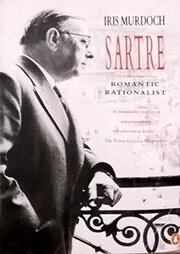
Sartre
by Iris Murdoch
1953
Sartre is Murdoch's concise study of Jean Paul Sartre as both novelist and philosopher. Written early in her career, it introduces his key ideas about freedom, consciousness, and commitment in clear, lively prose while also offering a gently critical perspective.
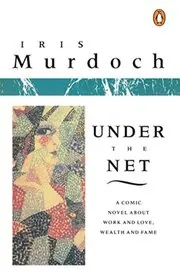
Under the Net
by Iris Murdoch
1954
Under the Net, Murdoch's debut novel, follows Jake Donaghue, a feckless translator and would be writer wandering through London after being evicted. His misadventures with an old philosopher friend, a film star dog, and a mime theatre mix slapstick with reflections on language and truth.
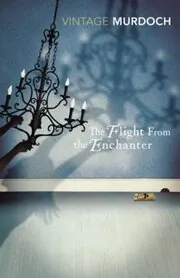
The Flight from the Enchanter
by Iris Murdoch
1956
The Flight from the Enchanter traces a group of Londoners who seem to orbit the enigmatic businessman Mischa Fox. A runaway schoolgirl, a suffragette magazine, Polish refugees, and a civil servant are all drawn into his influence, raising questions about freedom and fascination.

Something Special
by Iris Murdoch
1957
Something Special is a standalone short story set in 1950s Dublin, following Yvonne Geary as she weighs a steady suitor against her longing for a more glamorous life. In one intense evening she discovers what love, compromise, and escape might really look like.
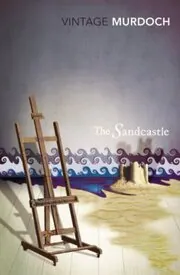
The Sandcastle
by Iris Murdoch
1957
The Sandcastle follows schoolmaster Bill Mor, whose cautious life and political ambitions are disturbed when young painter Rain Carter arrives to paint the retiring headmaster. As Mor falls in love, his family, colleagues, and conscience close in on him with competing claims.
Cloches
by Iris Murdoch
1958
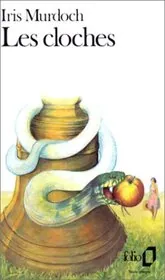
Cloches is the French edition of The Bell, bringing Murdoch's story of Imber Court, its troubled lay community, and the resurfacing of a legendary bell to francophone readers. It offers the same blend of spiritual questioning, romantic entanglement, and quiet English comedy.
The Bell
by Iris Murdoch
1958
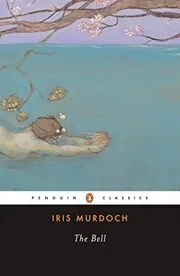
The Bell is set at Imber Court, a lay religious community beside an enclosed convent in the English countryside. When a legendary bell is found in the lake just as a new bell is due to arrive, hidden passions and spiritual ambitions collide with comic and tragic results.
A Severed Head
by Iris Murdoch
1961
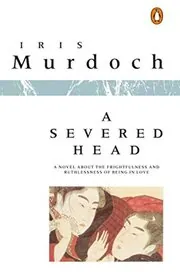
A Severed Head is a brisk, sardonic novel about wine merchant Martin Lynch Gibbon, whose affair with a younger woman is upended when his wife calmly announces she is leaving him for her psychoanalyst. A cascade of affairs and reversals exposes the absurdities of sophisticated self deception.
An Unofficial Rose
by Iris Murdoch
1962
An Unofficial Rose begins with a funeral and follows the Peronett family as widower Hugh and his son Randall both pursue long deferred loves. Set around a Kentish rose nursery, it is a many sided comedy of adultery, duty, and the cost of freedom.
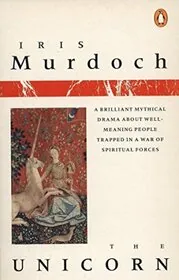
The Unicorn
by Iris Murdoch
1963
The Unicorn takes place at Gaze Castle, a remote house on the Irish coast where governess Marian Taylor arrives to find her employer Hannah mysteriously confined. Gothic cliffs, local legends, and intense loyalties frame a story about power, sacrifice, and the meaning of goodness.
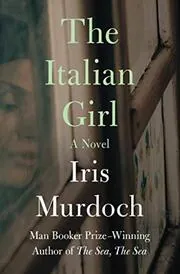
The Italian Girl
by Iris Murdoch
1964
The Italian Girl sends Edmund Narraway back to his grim family home for his mother's funeral, where he is drawn into old resentments, new affairs, and the presence of the loyal Italian servant Maggie. It is a compact novel of guilt, desire, and uneasy liberation.
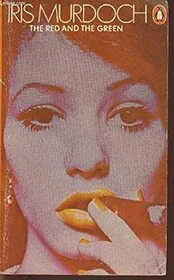
The Red and the Green
by Iris Murdoch
1965
The Red and the Green is set in Dublin in the week before the Easter Rising of 1916, following a tangle of Anglo Irish relatives divided by religion, politics, and desire. Murdoch mixes carefully researched history with farcical, sometimes painful family entanglements.
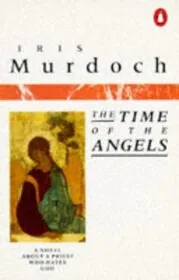
The Time of the Angels
by Iris Murdoch
1966
The Time of the Angels centers on Carel Fisher, an Anglican priest who has lost his faith yet presides over a bomb damaged London church and a shut in household. The novel asks whether morality can survive in a world where belief has collapsed.
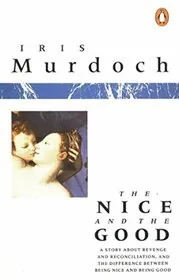
The Nice and the Good
by Iris Murdoch
1968
The Nice and the Good begins with a mysterious suicide in a Whitehall office and fans out to a coastal household full of intertwined romances. It blends blackmail, black magic, and seaside adventure with a serious inquiry into what it means to be truly good.
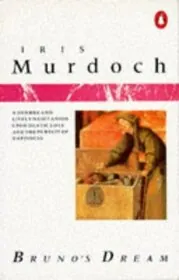
Bruno's Dream
by Iris Murdoch
1969
Bruno's Dream is set largely at the bedside of Bruno, a bedridden stamp collector contemplating his failures as the Thames threatens to flood his house. Children, lovers, and carers circle around him in a web of desire, resentment, comedy, and eventual forgiveness.
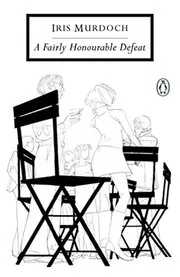
A Fairly Honourable Defeat
by Iris Murdoch
1970
A Fairly Honourable Defeat introduces Julius King, a cool manipulator who wagers he can destroy a loving gay partnership and sow havoc among his friends. What begins as a cruel game becomes a searching look at pride, forgiveness, and what real goodness might require.
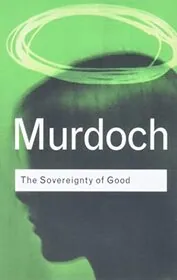
The Sovereignty of Good
by Iris Murdoch
1970
The Sovereignty of Good brings together three influential essays in which Murdoch challenges fashionable views of morality. She argues that goodness is linked to reality and loving attention, not just to free choice, and that art and prayer can reshape how we see.
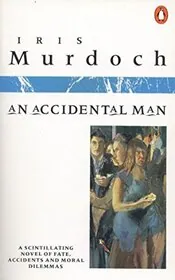
An Accidental Man
by Iris Murdoch
1971
An Accidental Man revolves around charming, hapless Austin Gibson Grey, who drifts through accidents, scandals, and small disasters, and the people who keep rescuing him. Set against the Vietnam era, the novel probes coincidence, moral responsibility, and how far we owe help to one another.
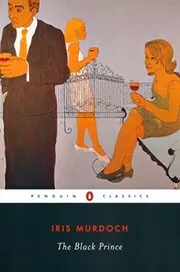
The Black Prince
by Iris Murdoch
1973
The Black Prince is a darkly comic, intensely self questioning story told by aging writer Bradley Pearson, who falls in love with his friend's young daughter and is later convicted of murder. Competing postscripts from other characters leave truth and motive deliberately uncertain.

The Three Arrows
by Iris Murdoch
1973
The Three Arrows is a stage play set in the imperial court of medieval Japan, using stylised scenes of rulers and courtiers to explore political power, loyalty, and the uneasy overlap between public duty and private desire.
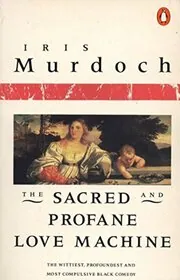
The Sacred and Profane Love Machine
by Iris Murdoch
1974
The Sacred and Profane Love Machine follows psychoanalyst Blaise Gavender, who has a respectable wife, a long term mistress, and a child in each household. When his double life starts to unravel, everyone around him must face tangled questions of love, loyalty, and self deception.

The Three Arrows and the Servants and the Snow
by Iris Murdoch
1974
The Three Arrows and the Servants and the Snow brings together two of Murdoch's political fables for the stage. One unfolds in a Japanese court, the other in a snowbound country house where resentful servants confront a young heir and his guests.
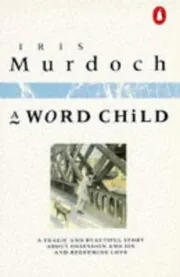
A Word Child
by Iris Murdoch
1975
A Word Child is narrated by Hilary Burde, a brilliant linguist turned disillusioned civil servant whose life was ruined by a past betrayal. Forced back into contact with the couple he wronged, he confronts memory, self hatred, and the possibility of change.
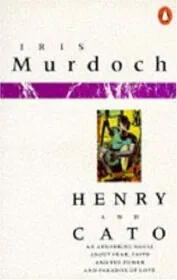
Henry and Cato
by Iris Murdoch
1976
Henry and Cato alternates between an art historian who unexpectedly inherits his family estate and a Catholic priest losing his faith and drawn to a dangerous young man. Their intersecting stories explore money, belief, sexuality, and the pull of home.
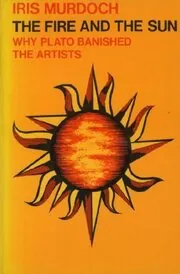
The Fire and the Sun
by Iris Murdoch
1976
The Fire and the Sun is Murdoch's study of Plato on art, imagination, and imitation. She explains why Plato was suspicious of artists, then asks what his arguments might still mean for modern discussions of beauty, morality, and artistic freedom.

A Year of Birds
by Iris Murdoch
1978
A Year of Birds is a sequence of twelve short poems, one for each month, each paired with a bird and a mood of the English year. Light, precise verses and wood engravings make it a quiet meditation on seasons, creatures, and time passing.
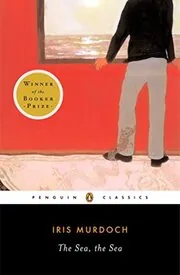
The Sea, The Sea
by Iris Murdoch
1978
The Sea, The Sea is narrated by retired theatre director Charles Arrowby, who retreats to a lonely house by the sea to write his memoirs and discovers his first love living nearby. His obsessive attempt to reclaim the past turns comic, cruel, and haunting.
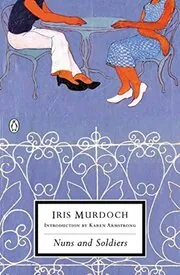
Nuns and Soldiers
by Iris Murdoch
1980
Nuns and Soldiers opens with the death of Guy Openshaw and follows his widow Gertrude and her friend Anne, an ex nun, as they try to remake their lives. Around them swirl a feckless painter, a patient Polish exile, and shifting patterns of loyalty and love.
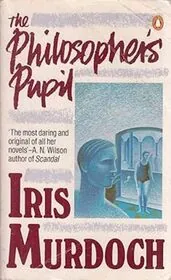
The Philosopher's Pupil
by Iris Murdoch
1983
The Philosopher's Pupil is set in the spa town of Ennistone, where the return of a celebrated but unnerving philosopher stirs up old grievances. Murdoch weaves together family drama, small town gossip, and questions about pride, cruelty, and moral change.
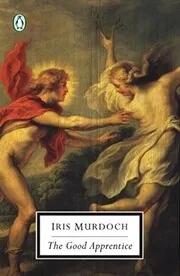
The Good Apprentice
by Iris Murdoch
1985
The Good Apprentice contrasts two young men, guilt ridden Edward and self consciously virtuous Stuart, as they search for redemption in a complicated family network. It is a large, generous novel about responsibility, spiritual hunger, and the difficulty of being good.

Acastos
by Iris Murdoch
1986
Acastos: Two Platonic Dialogues presents imagined conversations among Socrates, Plato, and friends about art, eros, and religion. Written as drama, these dialogues let Murdoch test her own ideas about goodness and faith in the voices of classical philosophers.
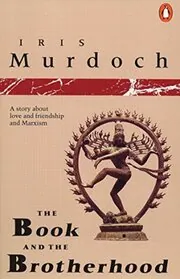
The Book and the Brotherhood
by Iris Murdoch
1987
The Book and the Brotherhood follows a group of Oxford friends who once promised to fund a grand Marxist treatise. Years later, the chosen author returns, the book still unwritten, and his presence throws their marriages, ideals, and loyalties into crisis.
Existentialist Political Myth
by Iris Murdoch
1989
Existentialist Political Myth is a short philosophical essay in which Murdoch examines how existentialist ideas about freedom and authenticity can harden into simplified political stories, and why those myths can both attract and mislead modern minds.
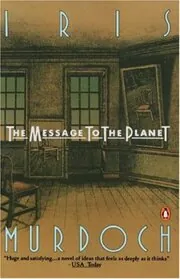
The Message to the Planet
by Iris Murdoch
1989
The Message to the Planet centers on Marcus Vallar, a troubled former mathematician and painter who may or may not be a healer. When an old pupil brings him back into London society, his charisma and breakdown unsettle friends, lovers, and believers.
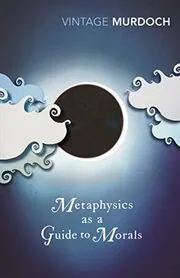
Metaphysics as a Guide to Morals
by Iris Murdoch
1992
Metaphysics as a Guide to Morals is Murdoch's most ambitious philosophical book, a wide ranging meditation on religion, art, language, and ethics in a post religious age. She asks how ideas of the Good can still orient ordinary life.
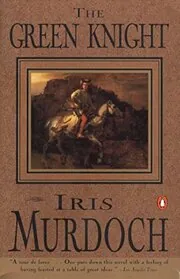
The Green Knight
by Iris Murdoch
1993
The Green Knight reimagines a medieval challenge tale in modern London, as an attempted killing, a mysterious stranger, and one devoted dog unsettle a group of friends and sisters. Murdoch uses the near crime to explore guilt, forgiveness, and grace.

Joanna Joanna
by Iris Murdoch
1994
Joanna Joanna is a stage play Murdoch wrote in 1969 and published decades later in a small limited edition. It offers her characteristic interest in love, freedom, and self knowledge in dramatic rather than novelistic form.
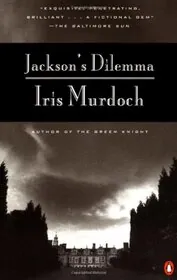
Jackson's Dilemma
by Iris Murdoch
1995
Jackson's Dilemma, Murdoch's final novel, circles around a broken engagement and the quiet, puzzling figure of Jackson, a man who always seems to help others yet never quite belongs. It is a spare, melancholy study of love, duty, and drift.

The One Alone
by Iris Murdoch
1995
The One Alone is a brief radio play in dialogue form, staging an intense exchange between a Prisoner, an Angel, and an Interrogator. In a stark symbolic setting Murdoch probes guilt, judgment, and the possibility of inner freedom.

Existentialists and Mystics
by Iris Murdoch
1997
Existentialists and Mystics brings together Murdoch's key essays on ethics, art, and twentieth century thinkers. She writes about Plato, Sartre, Simone Weil, and other figures while arguing that attention, love, and the Good should sit at the heart of moral life.
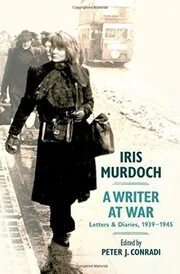
Iris Murdoch, A Writer at War
by Iris Murdoch
2002
Iris Murdoch, A Writer at War collects her wartime diaries and letters from 1939 to 1945, following her from Oxford theatres to government offices and refugee work. It shows a young writer testing her voice in the shadow of war.
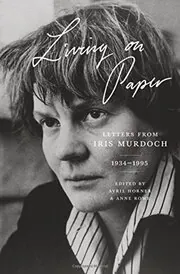
Living on Paper
by Iris Murdoch
2015
Living on Paper gathers Iris Murdoch's letters from her teenage years to the mid 1990s, tracing her friendships, love affairs, politics, and working habits. Together they offer a candid, often funny record of how she thought and wrote.
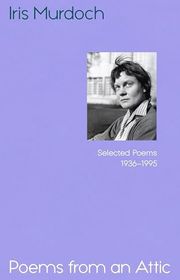
Poems from an Attic
by Iris Murdoch
2025
Gathering poems discovered in Iris Murdoch’s former home, this collection spans nearly six decades of writing. Published and previously private pieces explore love, friendship, marriage, and heartbreak, offering a personal perspective alongside her novels and philosophy.
Where to start with Iris Murdoch
If you want her essential novels first: Under the Net → The Bell → The Sea, The Sea
If you enjoy tangled love stories and moral drama: A Severed Head → The Black Prince → The Good Apprentice
If you are curious about her philosophy: The Sovereignty of Good → Metaphysics as a Guide to Morals → Existentialists and Mystics
If you prefer late, reflective fiction: The Book and the Brotherhood → The Message to the Planet → The Green Knight → Jackson's Dilemma
Iris Murdoch collections, short stories, and related book types
Short Stories/Novellas
Plays
Non-Fiction Books
Collections
Standalone Iris Murdoch books
Author bio
Iris Murdoch was born in Dublin in 1919 and grew up in London, where books, music, and talk filled a small rented flat. She would go on to become both a widely read novelist and an original moral philosopher, always trying to see people more clearly.
As a child she was bright and bookish, educated first at small progressive schools and then at Badminton School in Bristol. At Somerville College, Oxford, she switched from studying English to the demanding Greats course, immersing herself in philosophy, classics, and ancient history.
World War II shaped her twenties. After taking a first in 1942 she worked at the Treasury, then joined the United Nations Relief and Rehabilitation Administration, helping refugees in Brussels and Austria. She had briefly been a member of the Communist Party as a student, but the war and its aftermath pushed her away from rigid ideology and toward a more sceptical, humane politics.
After the war Murdoch studied philosophy at Newnham College, Cambridge, before returning to Oxford as a fellow of St Anne's College. There she taught generations of students, argued late into the night with colleagues, and began publishing technical essays alongside a short book on Jean Paul Sartre that introduced existentialism to many English speaking readers.
Her first novel, Under the Net, appeared in 1954. It follows a drifting translator through comic scrapes in postwar London, but under the farce sits a serious interest in language, freedom, and how we fail to understand one another. Over the next four decades she wrote 26 novels, including The Bell, A Severed Head, The Black Prince, The Good Apprentice, and the Booker Prize winning The Sea, The Sea.
Readers come to her fiction for crowded households, messy love affairs, and sudden reversals, but also for the sense that moral questions really matter. Her books return again and again to obsession, friendship, erotic entanglement, and the way one domineering person can enchant a whole circle. London flats, country houses, convents, and seaside villages become testing grounds for mercy, self deception, and change.
Alongside the novels she kept thinking in a more formal way about ethics. In works such as The Sovereignty of Good, Metaphysics as a Guide to Morals, and the essays collected in Existentialists and Mystics, she argued that morality is less about isolated choices and more about how we attend to reality. Her phrase the 'fat relentless ego' sums up the inner chatter she thought good art, careful attention, and genuine love could cut through.
In 1956 she married John Bayley, a shy, sharp critic who later wrote about their life together. They settled in Oxford among bicycles, cats, and crowded bookshelves. She kept up a heavy teaching load while also drafting novels and letters at a roll top desk, walking the same local streets that often reappear in her fiction.
In the 1970s and 1980s Murdoch received honours, honorary degrees, and finally a damehood, but she was wary of attention and protective of her working time. In the 1990s, signs of Alzheimer's disease began to appear, gradually stripping away the fluent language that had been central to her life. She died in Oxford in 1999.
Since then her letters, war time diaries, and philosophical essays have shown new readers how closely her thinking, teaching, and storytelling were entwined. Whether you approach her through the wild comedy of the novels or the patient arguments of the essays, her work keeps asking the same demanding question: how can we learn to see other people as clearly and kindly as they deserve.
Edited by
Software engineer whose passion for tracking book recommendations from podcasts inspired the creation of MRB.
Lead investor at 3one4 Capital whose startup expertise and love for books helped shape MRB and its growth.
Comments
Did we miss something? Have feedback?
Help us improve this page by sharing your thoughts