
Iceberg Slim Books in Order
See Iceberg Slim's books in order, with brief summaries, life background, reading order tips, and guidance on where to start with his gritty street classics.
Last updated:
As an Amazon Associate, we earn from qualifying purchases (at no extra cost to you).
Iceberg Slim books in publication order
10 books
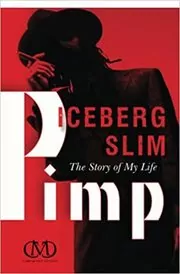
Pimp
by Iceberg Slim
1967
Pimp is Iceberg Slim's raw memoir of his years running prostitutes across Chicago and the Midwest, tracking his rise from teenage hustler to seasoned pimp and his brutal education in power, addiction, racism, and the cost of staying ice cold.
Recommended by
2 people Dave Chappelle recommended this book
Dave Chappelle
"Written by a black American who was a pimp in the 40s." - Dave Chappelle
Dave Chappelle's recommendation of this book  Dwayne Johnson recommended this book
Dwayne Johnson
"After watching a documentary about him, I [picked up this book]." - Dwayne Johnson
Dwayne Johnson's recommendation of this book
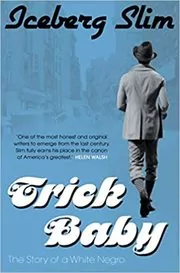
Trick Baby
by Iceberg Slim
1967
Trick Baby follows Johnny "White Folks" O'Brien, a light-skinned son of a black sex worker who can pass as white, and his mentor Blue as they run high-risk cons, exposing racism, loyalty, and the price of living by the hustle.
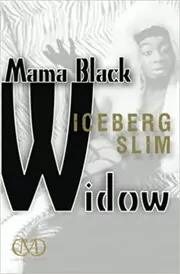
Mama Black Widow
by Iceberg Slim
1969
Mama Black Widow tells the first-person story of Otis Tilson, a black drag queen whose family flees the rural South for Chicago, only to be pulled into a ghetto world of racism, addiction, sexual violence, and slow, heartbreaking family ruin.
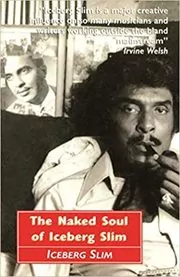
The Naked Soul of Iceberg Slim
by Iceberg Slim
1971
The Naked Soul of Iceberg Slim gathers personal essays in which Slim looks back on his years as a pimp, addict, and ex-con in Los Angeles, confronting corrupt police, broken relationships, and his struggle to change in a country he sees as deeply unjust.
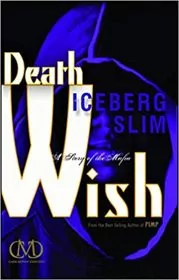
Death Wish
by Iceberg Slim
1977
Death Wish is a Chicago mafia thriller that pits power hungry mob boss Jimmy Collucci, determined to rule the city's crime family, against Jessie "Black Warrior" Taylor, a vengeful rival whose personal war threatens to tear the organization apart.
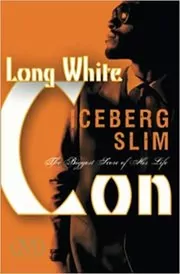
Long White Con
by Iceberg Slim
1977
Long White Con continues the story of Johnny "White Folks" O'Brien after the death of his mentor Blue, following him from Chicago to Canada as he assembles a team of grifters and stakes everything on one enormous, high-risk scam.
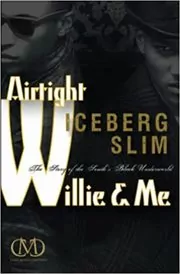
Airtight Willy and Me
by Iceberg Slim
1981
Airtight Willy and Me collects six fast, brutal stories about hustlers, con artists, and small-time crooks, from clever swindles to bloody payback and a doomed heist, showcasing Slim's sharp ear for street talk and the hard choices people make to survive.
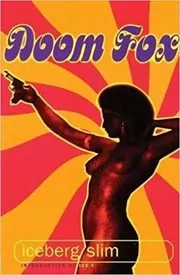
Doom Fox
by Iceberg Slim
1998
Doom Fox follows Joe "Kong" Allen, a tough South Los Angeles prizefighter whose love for beautiful neighbor Reba pulls him into a sprawling web of hustlers, pimps, preachers, and crooks from the postwar years through the rise of modern street life.
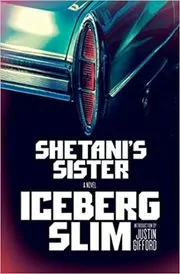
Shetani's Sister
by Iceberg Slim
2015
Shetani's Sister centers on a deadly cat and mouse game between LAPD vice detective Russell Rucker, trying to clean up a violent prostitution ring, and master pimp Shetani, whose heroin-addicted stable and twisted obsession with one young woman drive the streets toward chaos.
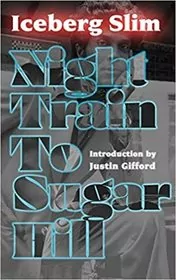
Night Train to Sugar Hill
by Iceberg Slim
2019
Night Train to Sugar Hill is a late, politically charged novel set in 1980s Los Angeles, where ex con Baptiste O'Leary watches the crack epidemic ravage his neighborhood and his own family while he weighs revenge, survival, and the possibility of collective resistance.
Where to start with Iceberg Slim
If you want his life story: Pimp: The Story of My Life → The Naked Soul of Iceberg Slim.
If you like con-game crime: Trick Baby → Long White Con.
If you want a family tragedy: Mama Black Widow.
If you prefer mob and street wars: Death Wish → Night Train to Sugar Hill.
If you enjoy short, gritty snapshots: Airtight Willie & Me.
Iceberg Slim collections, short stories, and related book types
Short Story Collections
Standalone Iceberg Slim books
Author bio
Iceberg Slim was born Robert Lee Maupin in Chicago in 1918 and later became known to readers as Robert Beck, the name he took after leaving the pimping life behind. Before he was a writer, he was a working pimp who turned his own history into some of the starkest street literature of the twentieth century.
He spent part of his childhood in Milwaukee and Rockford before his mother brought him back to Chicago, where he was drawn to hustlers, gamblers, and pimps who seemed to hold real power compared with the low wage jobs open to most Black men at the time. Those early years gave him a close up view of both the promises and the limits of the so called American dream.
As a young man he briefly attended Tuskegee Institute, but campus life could not compete with the pull of the street. By his late teens he was learning the pimp business from older men, bouncing between Midwestern cities, and already starting the cycle of arrests and prison terms that would shape his outlook.
For more than twenty years he worked as a pimp, especially on Chicago's South Side, staying in the game until his early forties. The nickname Iceberg came from his reputation for staying cool under pressure, never letting the women who worked for him or the rivals watching him see him lose his temper.
In 1961 a ten month stretch in solitary confinement in a Cook County jail forced him to confront what that life had cost him. When he was released he moved to Los Angeles, took the last name Beck from his mother's husband, and tried to reinvent himself as an insecticide salesman who could support a family without living on other people's pain.
In Los Angeles he met Betty Shue, who became his common law wife and the mother of his children. Betty encouraged him to turn his stories into a book, and together they started drafting the pages that would become Pimp: The Story of My Life, published in 1967 and reprinted again and again as it found a large audience among Black readers and beyond.
Pimp was followed by the con man novel Trick Baby, the family tragedy Mama Black Widow, the essay collection The Naked Soul of Iceberg Slim, the long con caper Long White Con, the mafia story Death Wish, and the story collection Airtight Willie & Me. Across these books he kept returning to hustlers, sex workers, gangsters, and broken families, writing in street language that felt fiercely specific to its moment and still recognizable decades later.
Even after his death readers were still seeing new work. The posthumously published novels Doom Fox, Shetani's Sister, and Night Train to Sugar Hill pushed his stories into later decades, from the years after World War II through the crack epidemic in 1980s Los Angeles, while keeping the same focus on people living at the edge of the law.
His voice reached far beyond paperback racks. Trick Baby was adapted into a feature film in the early 1970s, and decades later the documentary Iceberg Slim: Portrait of a Pimp introduced his life and work to a new generation of viewers and artists who already felt his influence in hip hop and street literature.
Beck spent his final years in Los Angeles, struggling with health and money problems even as his books quietly passed from reader to reader. He died there on April 28, 1992, from complications related to diabetes and liver failure, but his harsh, clear eyed stories of pimps, hustlers, and the people around them are still being discovered by new readers who come looking for the truth behind the myth of the streets.






%20-%20FORTUNE%2C%20Book%201.jpg)
%20-%20FORTUNE%2C%20Book%202.jpg)
Edited by
Software engineer whose passion for tracking book recommendations from podcasts inspired the creation of MRB.
Lead investor at 3one4 Capital whose startup expertise and love for books helped shape MRB and its growth.
Comments
Did we miss something? Have feedback?
Help us improve this page by sharing your thoughts