
Hermann Hesse Books in Order
Explore Hermann Hesse's books in order with concise summaries, background on his life and themes, and suggestions on where to start reading his work.
Last updated:
As an Amazon Associate, we earn from qualifying purchases (at no extra cost to you).
Hermann Hesse books in publication order
27 books
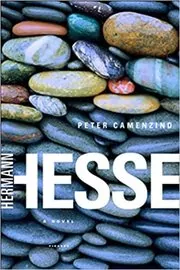
Peter Camenzind
by Hermann Hesse
1904
Peter Camenzind leaves his Swiss mountain village dreaming of becoming a writer and a citizen of the wider world, only to discover through travel, love, friendship, and loss that compassion for one fragile life can matter more than grand artistic success.
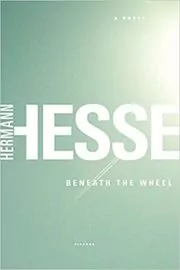
Beneath the Wheel
by Hermann Hesse
1906
Gifted schoolboy Hans Giebenrath is pushed relentlessly toward academic glory at a rigid seminary, but the pressure, isolation, and loss of his one real friend reveal how an education that ignores the whole person can destroy the very soul it claims to uplift.
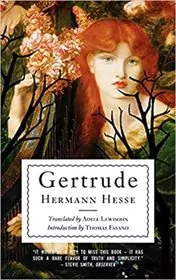
Gertrude
by Hermann Hesse
1910
Told as the memoir of composer Kuhn, this novel follows his intense friendship with charismatic singer Heinrich Muoth and his unrequited love for Gertrude Imthor, showing how tangled relationships and suffering are transmuted into the music that defines his life.
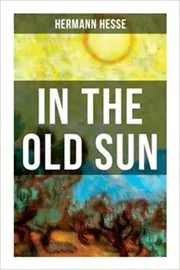
In the Old Sun
by Hermann Hesse
1914
In a shabby former inn now used as a poorhouse, four aging drifters known as the Sun brothers bicker, reminisce, and cling to their pride, creating a bittersweet portrait of stubborn lives pushed to society's margins.
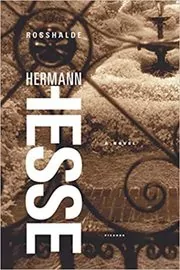
Rosshalde
by Hermann Hesse
1914
On his country estate Rosshalde, successful painter Johann Veraguth lives separate from his wife yet bound to her by their young son, and a looming family crisis forces him to decide between emotional safety and a more dangerous search for spiritual renewal.
Knulp
by Hermann Hesse
1915
This novella follows Knulp, a charming vagabond who wanders from town to town in southern Germany, trading stories and songs for shelter while quietly questioning whether his free, rootless life has been a gift or a failure.

Strange News from Another Star
by Hermann Hesse
1918
Strange News from Another Star collects eight symbolic fairy tales written around the First World War, in which earthquakes, distant stars, and mysterious messengers lead ordinary people into dreamlike realms where they confront war, guilt, desire, and the possibility of wisdom.
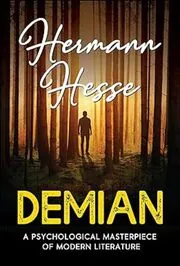
Demian
by Hermann Hesse
1919
Emil Sinclair grows up feeling torn between his safe, respectable family world and a darker realm of instinct and rebellion, and his enigmatic schoolmate Max Demian becomes a guide who pushes him toward self-knowledge, heresy, and the courage to follow his own path.
Recommended by
1 person Jack Edwards recommended this book
Jack Edwards
"Influence the 'Blood, Sweat, and Tears' music video." - Jack Edwards
Jack Edwards's recommendation of this book
Klingsor's Last Summer
by Hermann Hesse
1919
Klingsor, a forty-something painter determined to live intensely, spends a blazing summer in the Italian-Swiss countryside chasing color, women, and wine, haunted by premonitions of death and the fear that his art will never fully capture what he feels.
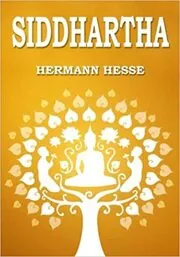
Siddhartha
by Hermann Hesse
1922
Siddhartha, the son of a respected Brahmin, abandons his sheltered life to seek enlightenment through asceticism, worldly pleasure, business, and fatherhood, finally learning beside a river that wisdom comes from patient listening rather than borrowed doctrines.
Recommended by
16 people Naval Ravikant recommended this book
Naval Ravikant
"So good that it may as well be non-fiction." - Naval Ravikant
Naval Ravikant's recommendation of this book  David Blaine recommended this book
David Blaine
"[He] says, 'Love is stronger than hate. Soft is stronger than hard. Water is stronger than stone.'" - David Blaine
David Blaine's recommendation of this book  Emma Watson recommended this book
Emma Watson
"Was recommended to me by a friend." - Emma Watson
Emma Watson's recommendation of this book  Wim Hof recommended this book
Wim Hof
Wim Hof's answer to "What do you give to people as gifts?"
Wim Hof's recommendation of this book  Neil Strauss recommended this book
Neil Strauss
Neil Strauss recommended this book in the "Tools of Titans" book.
Neil Strauss's recommendation of this book  Bryan Johnson recommended this book
Bryan Johnson
"Love [this book]." - Bryan Johnson
Bryan Johnson's recommendation of this book +10
More recommendations
- Navdeep Chandel
"It’s a nice book about a journey of an evolution of a young man into an adult." - Navdeep Chandel
- Tim Ferriss
"Consider reading or rereading this short gem." - Tim Ferriss
- Fred Wilson
"I loved [this book] when I read it in college. I think it really impacted me." - Fred Wilson
- Patrick O'Shaughnessy
"An old classic." - Patrick O'Shaughnessy
- Phil Jackson
Phil Jackson recommended this book on Twitter.
- Lex Fridman
Lex Fridman mentioned this book on Instagram.
- Justin Kan
"One of two books I’ve lived my life by since I read 20 years ago!" - Justin Kan
- Harry Styles
"A friend gave me [this book] when we started travelling together. It makes a lot of sense to me. I think it’s a really important book." - Harry Styles
- James Clear
"[One of] the 10 best fiction books." - James Clear
- Jack Edwards
"About a man who is searching for his faith but finds everything he needs within himself." - Jack Edwards
- Navdeep Chandel
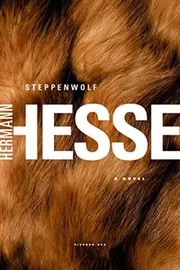
The Steppenwolf
by Hermann Hesse
1927
Harry Haller, a solitary intellectual who sees himself as half man and half wolf, drifts through a nameless European city until a chance meeting pulls him into a surreal world of music, erotic encounters, and satire, forcing him to confront his divided self.
Recommended by
1 person Amanda Palmer recommended this book
Amanda Palmer
"Has a fantastical realism that pierces to the bottom of the psyche. I've re-read and re-read this sucker every five years." - Amanda Palmer
Amanda Palmer's recommendation of this book
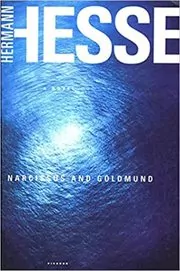
Narcissus and Goldmund
by Hermann Hesse
1930
In medieval Germany, brilliant monk Narcissus and his impetuous student Goldmund choose radically different paths, one devoted to thought and faith, the other to wandering and carnal love, and years later their reunion becomes a moving debate about art, duty, and the meaning of a life.
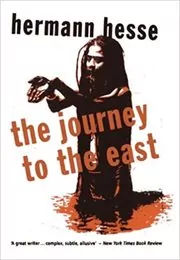
The Journey to the East
by Hermann Hesse
1932
A writer known only as H. H. recalls how he joined a mysterious League on a pilgrimage to the East, then later loses faith and must search for the vanished servant Leo, discovering that service, memory, and loyalty are at the heart of the journey.
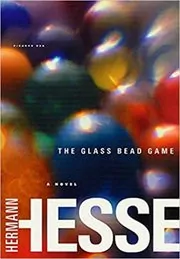
The Glass Bead Game
by Hermann Hesse
1943
In a distant future province devoted to pure scholarship, gifted student Joseph Knecht rises through a monastic order of intellectuals who play an elaborate symbolic game, then begins to doubt whether a life of contemplation alone can answer the demands of the real world.
Recommended by
2 people Paul Stamets recommended this book
Paul Stamets
"One of my favorite books." - Paul Stamets
Paul Stamets's recommendation of this book  Tyler Cowen recommended this book
Tyler Cowen
"About the beauty of organised structures and how we play them in game-like fashion and how much they entrance us." - Tyler Cowen
Tyler Cowen's recommendation of this book
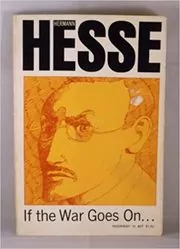
If The War Goes On
by Hermann Hesse
1946
This collection gathers Hesse's essays, open letters, and reflections on war and politics from 1914 to 1948, tracing his development as a pacifist voice who distrusted mass hysteria and defended the dignity of individual conscience in dark times.
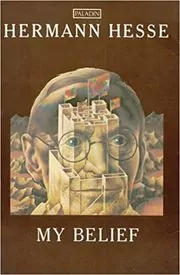
My Belief
by Hermann Hesse
1957
My Belief brings together decades of Hesse's essays on writers, Eastern and Western religion, art, and everyday ethics, offering an informal companion to his fiction and a clear view of the questions that drove his lifelong inner search.
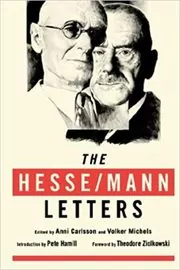
The Hesse/Mann Letters
by Hermann Hesse
1968
The Hesse/Mann Letters collects decades of correspondence between Hermann Hesse and fellow novelist Thomas Mann, as they discuss books, family, exile, and Germany's upheavals, revealing a deep, sometimes wary friendship anchored in shared humanist values.
Poems
by Hermann Hesse
1971
A compact selection of Hesse's lyric poems from his early decades, this volume moves from youthful longing and wanderlust to meditations on home, nature, faith, and solitude, giving a more intimate, musical version of themes from his novels.
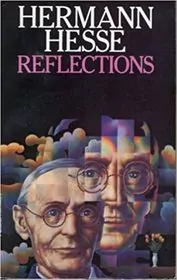
Reflections
by Hermann Hesse
1971
Reflections offers brief pieces selected from Hesse's books and letters, arranged as short meditations on work, leisure, nationalism, friendship, and art, ideal for dipping into when you want a few pages of clear, quietly provocative thought.
Stories of Five Decades
by Hermann Hesse
1972
Spanning nearly fifty years of writing, Stories of Five Decades presents twenty three short tales that trace Hesse's shift from romantic sketches to more surreal, symbolic pieces, all circling questions of identity, calling, and the cost of staying true to oneself.

Short Literature History
by Hermann Hesse
1975
Short Literature History provides a brief survey of literary development, touching on major movements and writers in clear, accessible prose, designed for readers who want a quick orientation before exploring the primary texts themselves.
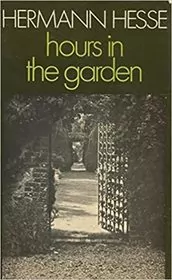
Hours in the Garden
by Hermann Hesse
1979
Written late in life, Hours in the Garden gathers long meditative poems in which Hesse tends plants, remembers illness and war, and watches the seasons in his Swiss garden, finding small, practical tasks charged with quiet spiritual meaning.
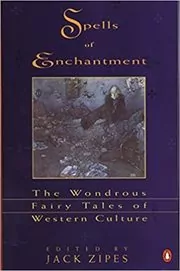
Spells of Enchantment
by Hermann Hesse
1991
Spells of Enchantment is a large anthology of more than sixty literary fairy tales by writers across Western history, arranged chronologically so readers can watch the classic motifs of magic, danger, and transformation shift from era to era.

Siddhartha, Demian, and Other Writings
by Hermann Hesse
1992
This volume in the German Library series brings together Siddhartha, Demian, and a selection of shorter pieces, offering a compact introduction to Hesse's central concerns with spiritual awakening, rebellion against convention, and the search for an authentic self.
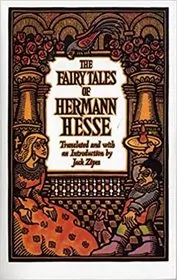
The Fairy Tales of Hermann Hesse
by Hermann Hesse
1995
This collection gathers twenty two of Hesse's fantastic tales written between 1904 and 1933, blending European folk motifs with Eastern philosophy in dreamlike stories about misfits, kings, artists, and wanderers searching for peace in a confusing world.
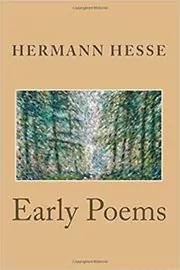
Early Poems
by Hermann Hesse
2017
Early Poems showcases Hesse's youthful verse, filled with images of forests, rivers, and distant cities, and with the restless longing, homesickness, and religious questioning that would later shape the mood of his prose.
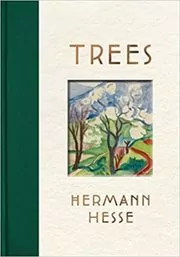
Trees
by Hermann Hesse
2022
Trees gathers Hesse's short texts and paintings inspired by trees, presenting essays, fragments, and poems that treat trunks, branches, and rings as symbols of endurance, growth, and individuality, a gentle invitation to see nature as a mirror of the inner life.
Where to start with Hermann Hesse
If you want a spiritual journey: Siddhartha → Demian → Narcissus and Goldmund
If you prefer psychological novels: Demian → The Steppenwolf → The Glass Bead Game
If you like quieter early work: Peter Camenzind → Beneath the Wheel → Gertrude
If you want something short and symbolic: The Journey to the East → Klingsor's Last Summer → Strange News from Another Star
If you are curious about his essays: If The War Goes On → My Belief → Reflections
Hermann Hesse collections, short stories, and related book types
Short Story Collections
Non-Fiction
Standalone Hermann Hesse books
Author bio
Hermann Hesse was born in 1877 in the small Black Forest town of Calw, in what is now southwestern Germany, to a family of Protestant missionaries with deep ties to India and the Baltic region. His childhood moved between Calw and Basel, in a home shaped by strict Pietist faith and an unusually international outlook.
As a boy he was both gifted and difficult. At fourteen he entered the Maulbronn seminary, did well in Latin and Greek, then fled in a burst of rebellion that led to expulsions, depression, and a brief stay in a therapeutic institution. Very early he decided he wanted to be nothing but a writer.
After short stints in a clock factory and other apprenticeships, he found steadier work in a Tübingen bookshop. Surrounded by theology, philosophy, and classical literature, he read voraciously in the German Romantics and in Nietzsche, and began publishing poems and short prose. Small volumes like Romantic Songs and One Hour After Midnight gave him a foothold in the literary world.
In 1904 the novel Peter Camenzind was unexpectedly successful and allowed him to leave bookselling and write full time. That same year he married Maria Bernoulli and settled near Lake Constance. Over the next decade he wrote early novels such as Beneath the Wheel, Gertrude, and Rosshalde, often returning to sensitive boys and artists crushed by rigid schools, family expectations, or loveless marriages.
Hesse traveled to India and Southeast Asia before the First World War, an experience that renewed his fascination with Hinduism and Buddhism. When war broke out he moved to neutral Switzerland, worked with prisoners of war, and published essays that criticized nationalism and militarism. The backlash, combined with the death of his father, his eldest son’s illness, and his wife’s mental breakdown, pushed him into a severe personal crisis and eventually into Jungian analysis.
The encounter with depth psychology changed his work. Demian, written in 1917 and published in 1919, used myth and dream images to tell the story of a young man’s painful individuation. Shortly afterward Hesse settled in the hillside village of Montagnola in the Swiss canton of Ticino, where he lived the rest of his life, dividing his days between writing, walking, painting watercolors, and an immense correspondence with readers.
In Montagnola he wrote the books that made him widely known: the Indian parable Siddhartha, the tormented urban novel Steppenwolf, the medieval friendship story Narcissus and Goldmund, the enigmatic novella Journey to the East, and finally The Glass Bead Game, set in a future province devoted to pure intellect. Across these stories he kept circling the same questions, how a person can stay whole in a divided world, how to reconcile discipline with instinct, West with East, solitary searching with human ties.
In 1946 Hesse received the Nobel Prize in Literature for his life's work. After the Second World War he lived quietly in Switzerland, but in the 1960s his books, especially Siddhartha and Steppenwolf, were rediscovered by young readers who saw in them a guide to spiritual exploration and a critique of materialist society.
By the time of his death in 1962, Hesse had lived through three German regimes and two world wars, and had become a German Swiss citizen who distrusted all rigid ideologies. His novels and essays remain personal documents, more like letters from a thoughtful friend than monuments of high culture, which is why readers still turn to him when they are unsure where their own path leads.






Edited by
Software engineer whose passion for tracking book recommendations from podcasts inspired the creation of MRB.
Lead investor at 3one4 Capital whose startup expertise and love for books helped shape MRB and its growth.
Comments
Did we miss something? Have feedback?
Help us improve this page by sharing your thoughts