
Henry Marsh Books in Order
Browse Henry Marsh books in order, with quick summaries, memoir highlights, and guidance on where to start with his writing on surgery and mortality.
Last updated:
As an Amazon Associate, we earn from qualifying purchases (at no extra cost to you).
Henry Marsh books in publication order
4 books
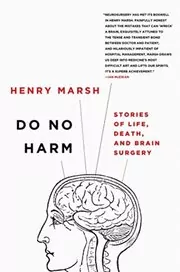
Do No Harm
by Henry Marsh
2014
Marsh opens the door to the operating theatre and the split-second decisions of brain surgery. Drawing on triumphs, failures, and haunting complications, he shows how much skill, luck, and strain sit behind every operation.
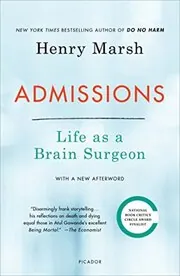
Admissions
by Henry Marsh
2017
Retired from full-time practice, Marsh works pro bono in Ukraine and Nepal while looking back on his years in brain surgery. He writes about medical uncertainty, aging, and the burden of trying to relieve suffering when there are no easy answers.
The Evolution Of Light From Living Human Subject
by Henry Marsh
2019
This short 1842 medical treatise examines reports of light emitted by living bodies. Marsh surveys human cases, luminous animals, and early scientific theories in an attempt to explain a strange biological phenomenon.
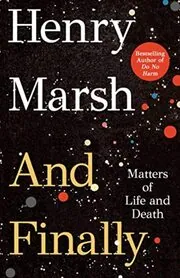
And Finally
by Henry Marsh
2023
After a lifetime as a neurosurgeon, Marsh becomes the patient when he is diagnosed with advanced cancer. He reflects on illness, family, old age, and what still matters when the future suddenly feels much shorter.
Where to start with Henry Marsh
If you want the best starting point: Do No Harm
If you want the memoirs in order: Do No Harm → Admissions → And Finally
If you want his most personal book about illness and mortality: And Finally
Henry Marsh collections, short stories, and related book types
Non-Fiction
Standalone Henry Marsh books
Author bio
Henry Marsh was born in Oxford in 1950, the youngest of four children. His father taught law at the university, and his mother had fled Nazi Germany before the war. He spent part of his childhood in Oxford, then moved with his family to London, where he went to Westminster School. From there he returned to Oxford and studied politics, philosophy and economics, not medicine.
Medicine arrived sideways.
After an unhappy stretch as a student, Marsh left that first path and worked as a hospital porter in the north of England. Watching surgery up close changed him. He later trained at the Royal Free Medical School in London, became a Fellow of the Royal College of Surgeons in 1984, and in 1987 was appointed consultant neurosurgeon at Atkinson Morley's and St George's Hospital. The work was exacting, practical, and never as tidy as outsiders liked to imagine.
He spent decades operating on brains in a field where a few millimetres can mean speech, memory, movement, or catastrophe. That tension runs through everything he writes. Marsh is drawn to the hard mix of craft and uncertainty, the need to decide quickly, and the fact that success can look almost ordinary while failure can stay with a doctor for years. He retired from full-time NHS work in 2015.
He has never written about medicine as if it were clean heroism.
Another major part of his life was Ukraine. He began going there in the early 1990s, teaching local surgeons, bringing equipment, and operating in hospitals that had far fewer resources than the ones he knew in London. That work became the subject of the documentary The English Surgeon, which introduced many viewers to him. After retirement he kept travelling and lecturing abroad, including in Ukraine and Nepal.
For most readers, Do No Harm is the doorway in. The book takes you into the operating theatre, but its real pull is Marsh's blunt honesty about what the job does to a person. He writes about moments of triumph, yes, but also about mistakes, bad calls, equipment failures, and the dread that can build before a difficult case. Readers tend to like the lack of varnish. They also like the dry humour, the impatience with hospital bureaucracy, and the way he keeps bringing the patient's life, not just the procedure, back to the centre.
Admissions widens the frame. It looks back on his training, his retirement, his years working abroad, and the burden of trying to reduce suffering when medicine deals in probabilities rather than promises. It is also more openly personal. Marsh writes about aging, family life, regret, ambition, and the uneasy fact that extending life is not always the same as helping someone live well. It is a thoughtful book without ever sounding pleased with itself.
Then And Finally turns the story around. After being diagnosed with advanced cancer, Marsh finds himself on the other side of the consultation room, facing scans, treatment, dependence, and the slow erosion of control. The book is full of mortality, but not only mortality. He writes about love, irritation, old age, science, the natural world, and the small routines that keep meaning alive. Readers who come for the medical insight often stay for the candor about fear and the plainspoken refusal to offer easy lessons.
Marsh has also been seen in Your Life in Their Hands, another documentary that followed surgeons at work. He was made a CBE in 2010. He is married to the anthropologist and writer Kate Fox, and in recent years has divided his time between London and Oxford while continuing to teach, lecture, and stay involved in medicine beyond the hospital job he left behind.






Edited by
Software engineer whose passion for tracking book recommendations from podcasts inspired the creation of MRB.
Lead investor at 3one4 Capital whose startup expertise and love for books helped shape MRB and its growth.
Comments
Did we miss something? Have feedback?
Help us improve this page by sharing your thoughts