
Helluva War Mystery Books in Order
Part ofBeverle Graves Myers Books in OrderExplore the Helluva War Mystery by Beverle Graves Myers and Joanne Dobson, with reading order, a quick summary, and background on its wartime New York setting.
Last updated:
As an Amazon Associate, we earn from qualifying purchases (at no extra cost to you).
Helluva War Mystery books in publication order
1 book
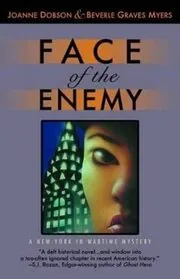
Face of the Enemy
by Beverle Graves Myers
2012
New York, December 1941. After a Japanese artist is swept up in wartime suspicion and then linked to her dealer's murder, nurse Louise Hunter and detective Michael McKenna must cut through fear, prejudice, and politics to find the real killer.
Helluva War Mystery books in chronological order
Series background & context
The Helluva War Mystery line moves away from baroque Venice and into a very different kind of pressure cooker. Co-written by Beverle Graves Myers and Joanne Dobson, it begins with Face of the Enemy, set in New York in the first shocked weeks after Pearl Harbor. The city is crowded, restless, and suddenly suspicious of itself. Patriotism is real, but so are fear, rumor, and the quick urge to look for enemies close to home.
The murder matters, but so does the climate around it.
At the center is Louise Hunter, a private nurse from Kentucky who is trying to make a life for herself in New York. When the FBI sweeps up Masako Fumi, the Japanese wife of Louise's patient, Louise refuses to treat it as simple wartime necessity. She knows Masako as a person, not a slogan, and that clear-eyed refusal is what pulls her into the case. Things get worse fast when Masako's art dealer is found dead and suspicion swings toward her all over again.
Louise brings the civilian side of the story, with all the limits and risks that come with it. NYPD detective Michael McKenna brings the official investigation. He is working the homicide from inside the system, but he is not blind to how politics can distort a case before the facts have even settled. Their paths meet in a story where the challenge is not only finding a killer, but pushing back against the panic, ambition, and prejudice that keep trying to decide the outcome in advance.
This is also an ensemble wartime mystery. Around Louise and McKenna are artists, patients, reporters, boardinghouse residents, and government men, each showing a different corner of the city. That wider cast gives the story its home-front texture. You see how war enters hospitals, rented rooms, galleries, and police offices long before it arrives as battlefield news. It is a mystery about public events, but it stays grounded in private lives.
The New York setting matters as much as Venice matters in the Tito Amato books, just in a different key. Instead of carnival masks and opera intrigue, you get winter streets, crowded institutions, cultural suspicion, and a city learning how quickly civil liberties can narrow under pressure. The period detail is there, but it is used in service of tension rather than spectacle. Everything feels a little tighter, a little colder, and much more exposed to the machinery of the state.
It is a classic whodunit with a hard knot of history inside it.
If you like historical mysteries that do more than dress modern characters in period clothes, this line has a lot to offer. The appeal is the blend of crime plot and moral pressure. Face of the Enemy asks who committed murder, but it also asks who gets treated as fully human when a nation is frightened. That question gives the story its weight, and it is what makes this wartime branch of Myers's work feel different from, but very much connected to, her other mysteries.










Edited by
Software engineer whose passion for tracking book recommendations from podcasts inspired the creation of MRB.
Lead investor at 3one4 Capital whose startup expertise and love for books helped shape MRB and its growth.
Comments
Did we miss something? Have feedback?
Help us improve this page by sharing your thoughts