
Hellraiser Books in Order
Part ofClive Barker Books in OrderBrowse the Hellraiser books and comics by Clive Barker in order, with summaries of each volume, background on the Cenobites, and tips for reading through this dark, interconnected mythos.
Last updated:
As an Amazon Associate, we earn from qualifying purchases (at no extra cost to you).
Hellraiser books in publication order
5 books
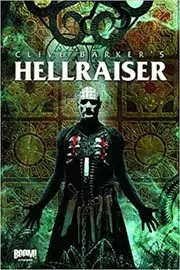
Clive Barker's Hellraiser Vol. 1
by Clive Barker
2011
The opening volume of the modern Hellraiser comic finds the Hell Priest restless in his eternal role and plotting an escape, even if it means betraying his own Cenobites and drawing Kirsty Cotton back into the labyrinth’s orbit.

Clive Barker's Hellraiser Vol. 2
by Clive Barker
2012
As the series continues, Kirsty and her Harrowers confront new cults and configurations while the Priest’s secret plan for freedom moves forward, threatening both Hell’s hierarchy and the fragile barrier between its torments and Earth.

Clive Barker’s Hellraiser Vol. 3
by Clive Barker
2012
This volume deepens the fallout from the Priest’s rebellion, revealing shifting alliances among Cenobites, human acolytes, and would‑be saviors as the puzzle boxes open pathways to a war over who will define suffering and salvation.

Clive Barker's Hellraiser Vol. 4
by Clive Barker
2012
Further along in the saga, old bargains unravel and new Cenobites rise as the consequences of trying to rewrite Hell’s rules become impossible to contain, pushing familiar characters toward grim, irrevocable choices.

Clive Barker's Hellraiser Vol. 5
by Clive Barker
2013
The concluding arc of this comic run brings the long game between Kirsty, the Priest, and their enemies to a bloody climax, tying together human ambition, LeMarchand’s boxes, and the ultimate fate of Hell’s order.
Hellraiser books in chronological order
Series background & context
The Hellraiser sequence gathers Clive Barker’s prose and comics set around the infamous puzzle box and the order of beings known as the Cenobites. It began with the novella The Hellbound Heart and has since grown into novels, graphic series, and companion volumes that explore just how far someone might go in pursuit of new sensations.
At the core is a simple device: an intricate box built by a master craftsman. To some it is just an antique; to others it is a doorway. When solved, it calls the Cenobites—hyper‑disciplined explorers of experience who no longer distinguish between pleasure and pain. They are not interested in punishment in any moral sense. They are interested in experiment.
The Hellbound Heart introduces this world in a tight, vicious story about a hedonist who opens the box and a family that pays the price for his escape from their attentions. Years later Barker returned to the mythos in The Scarlet Gospels, throwing his occult detective Harry D’Amour into direct conflict with the Hell Priest and following their struggle deep into the geography of Hell itself.
Comics such as Clive Barker’s Hellraiser continue and rework that continuity, following familiar characters as they question their roles, change allegiances, and even attempt to overturn Hell’s hierarchy. Other volumes act as guides and scrapbooks, full of images, fragments, and marginal stories that flesh out the history of the box, its maker, and the mortals who seek it.
Across all of these works the tone is rich, baroque, and unflinching. Barker uses gore and sadomasochistic imagery, but he’s just as interested in boredom, faith, addiction, and the human urge to push beyond ordinary limits. The Cenobites may be demons, but the desire that summons them is recognizably ours.
If you’re new to the Hellraiser books, this page lays out a suggested reading order, starting with The Hellbound Heart, then moving through key graphic volumes and on to The Scarlet Gospels and related companions, so you can watch the mythology deepen step by bloody step.
















Edited by
Software engineer whose passion for tracking book recommendations from podcasts inspired the creation of MRB.
Lead investor at 3one4 Capital whose startup expertise and love for books helped shape MRB and its growth.
Comments
Did we miss something? Have feedback?
Help us improve this page by sharing your thoughts