
Hector Malot Books in Order
Explore Hector Malot books in order, with short book summaries, key series background, alternate titles, and simple suggestions on where to start.
Last updated:
As an Amazon Associate, we earn from qualifying purchases (at no extra cost to you).
Hector Malot books in publication order
14 books
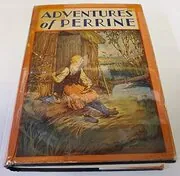
Adventures of PerrineWindemere Series
by Hector Malot
1934
This adaptation of En Famille follows Perrine, an orphaned girl who makes her way to northern France and hides her identity while working near her grandfather's mills. It's a steady, moving story of grit, kindness, and earning a home.
Conscience
by Hector Malot
2009
A debt-ridden doctor in Paris convinces himself that conscience is a weak guide, then acts on that belief. Conscience is a dark, sharp novel about ambition, crime, and the mental cost of trying to live above guilt.
Conscience — Volume 1
by Hector Malot
2011
The first part introduces Victor Saniel, a talented Paris doctor whose debts and ambition begin to twist his thinking. What starts as a debate about conscience soon turns into a dangerous temptation.
Conscience — Volume 4
by Hector Malot
2011
Success brings Saniel no peace. Haunted by sleeplessness, fear, and the return of what he tried to bury, the final volume follows conscience closing in on a man who thought he could outreason it.

Conscience Volume 2
by Hector Malot
2011
Saniel moves from dark speculation toward action, convincing himself that intelligence can outargue guilt. Money, fear, and careful planning drive this tense middle section of Malot's psychological crime novel.

Conscience Volume 3
by Hector Malot
2011
The consequences widen as suspicion falls in the wrong place and Saniel struggles to protect the life he wants. This volume sharpens the novel's mix of crime, social pressure, and mounting dread.
Nobody’s Girl
by Hector Malot
2011
After her mother dies, Perrine walks across France to find the grandfather who may not welcome her. Hiding her name and earning her keep at his textile works, she builds a place for herself through patience, courage, and quick thinking.

Nobody's Child
by Hector Malot
2013
Another English version of Sans Famille, this book follows Remy after he is separated from the only home he knows and sold to Vitalis. Their travels bring hunger, music, danger, and a long search for his real family.
Conscience, Complete
by Hector Malot
2015
Victor Saniel is a gifted Paris doctor with talent, ambition, and crushing debts. When he decides that crime might be the fastest path upward, Malot turns the story into a tense study of guilt, fear, and self-justification.

Doctor Claude
by Hector Malot
2015
Doctor Claude follows a gifted physician whose marriage to Véronique turns into a legal nightmare after her death points toward poison. Malot mixes jealousy, science, and courtroom drama in a tense story about reputation and suspicion.

Sans Famille
by Hector Malot
2017
Rémi, a foundling raised in rural France, is sold to a wandering performer and pushed into a life of travel, hunger, and chance. As he crosses France and England, he keeps searching for family, work, and a true home.
The Boy Wanderer, or No Relations
by Hector Malot
2017
An English retelling of Rémi's story, this version follows the boy's years on the road with Vitalis, Capi, and later Mattia. Adventure, hardship, and the question of his real identity drive the book forward.

Episodes from Sans Famille
by Hector Malot
2018
This shortened selection follows Rémi from village life to the open road with Vitalis and his animal troupe. It keeps the heart of Malot's orphan adventure while moving quickly through the best-known episodes.

Nobody's Boy
by Hector Malot
2018
Sold away by his foster father, young Rémi joins the traveling musician Vitalis and crosses France performing for food and shelter. It's a hard, big-hearted road story about survival, friendship, and finding where he belongs.
Where to start with Hector Malot
If you want the book Malot is best known for: Nobody's Boy → Sans Famille
If you prefer a heroine-led classic: Nobody’s Girl → Adventures of PerrineWindemere Series
If you want his darker adult fiction: Conscience, Complete → Doctor Claude
If you'd like a shorter path into Rémi's story: Episodes from Sans Famille → Nobody's Boy
If you enjoy comparing English versions: The Boy Wanderer, or No Relations → Nobody's Child
Hector Malot sub-series and character series
Standalone Hector Malot books
Author bio
Hector Malot was born in La Bouille, on the Seine in Normandy, in 1830. When he was still a child his family moved to Bosc-Bénard-Commin, where the quieter country setting fed his love of reading, long walks, and close observation of everyday life. Those two worlds, river traffic and rural France, never really left his fiction.
He was sent to boarding school in Rouen at a young age and later continued his studies in Paris. School seems to have bored him more than it shaped him, but it gave him city life, provincial life, and class difference at close range, all things he would use later.
His father wanted him to follow a sensible path, so Malot studied law in Rouen and Paris. He did the work, but without much conviction. Stories pulled harder. After trying, and failing, to get a play staged, he supported himself by writing articles and notices, then moved fully into journalism and fiction.
A retreat to the countryside helped.
Back at his parents' home in Moisselles, he finally finished Les Amants, published in 1859. It was the first part of Les Victimes d'amour, and its success gave him the start he needed. He went on to work as a literary critic for L'Opinion nationale and a dramatic critic for Lloyd français, all while publishing novel after novel, often at a brisk pace.
Malot wrote for adults as well as younger readers, and he produced dozens of books across his career. His best-known work is Sans famille, usually read in English as Nobody's Boy. It follows the foundling Rémi across France and into England, but the appeal goes beyond the plot. Malot is very good at hunger, cold, luck, friendship, and the plain stubborn wish to belong somewhere.
He returned to some of those concerns in En famille, known in English as Nobody's Girl. Perrine's story is quieter than Rémi's, but no less strong. Readers tend to like how practical she is, and how much of the book is built from work, travel, language, and patience rather than pure spectacle. Malot also had a darker side, which shows in adult novels like Conscience and Doctor Claude, books shaped by ambition, money, guilt, and the pressure of public respectability.
Family life mattered to him too. He married Anna Dariès in 1867, and they had a daughter, Lucie. After Anna's death, he remarried in 1881, to Marthe Oudinot de La Faverie, who was herself a writer. The couple traveled widely, including trips around the Mediterranean, and travel kept feeding the sense of movement that runs through so much of his work.
He liked putting people under pressure.
Again and again, Malot wrote about children trying to survive, adults trapped by money, and characters forced to test what they really believe. Even in the adventure books, there is usually a sharp social edge, child labor, poverty, class, factories, debt, and the uneasy gap between comfort and hardship. In 1894 he decided to stop writing fiction, and in 1896 he published the autobiographical Le Roman de mes romans, a look at how his books came to be. He died in Fontenay-sous-Bois in 1907, but Nobody's Boy and Nobody's Girl kept traveling long after him, through translations, classroom editions, film, and television.












Edited by
Software engineer whose passion for tracking book recommendations from podcasts inspired the creation of MRB.
Lead investor at 3one4 Capital whose startup expertise and love for books helped shape MRB and its growth.
Comments
Did we miss something? Have feedback?
Help us improve this page by sharing your thoughts