
Harry Palmer Books in Order
Part ofLen Deighton Books in OrderSee Len Deighton’s Harry Palmer novels in order, with short summaries and simple guidance on how to follow the unnamed British spy’s adventures from The Ipcress File onward.
Last updated:
As an Amazon Associate, we earn from qualifying purchases (at no extra cost to you).
Harry Palmer books in publication order
8 books
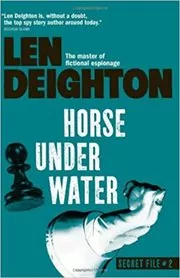
Horse Under Water
by Len Deighton
1962
Dispatched to a small Portuguese fishing village, the narrator joins a diving operation to a sunken U‑boat, chasing forged currency, heroin and a Nazi collaborator list while trying to work out which of his allies plans to betray him.

The Ipcress File
by Len Deighton
1962
An unnamed, bespectacled British agent is tasked with finding kidnapped scientists and stumbles into a brainwashing conspiracy that runs from Soho to nuclear test sites, told in a sardonic first‑person voice that reshaped the modern spy thriller.

Funeral in Berlin
by Len Deighton
1964
To broker the defection of a Soviet scientist, the nameless spy travels to tense, divided Berlin, where a sham funeral, Israeli agents and a smooth local fixer turn a simple exchange into a maze of competing agendas and double‑crosses.

Billion-Dollar Brain
by Len Deighton
1966
Sent to Helsinki on a routine assignment, the narrator is drawn into a private anti‑communist campaign run by a Texan billionaire and a vast computer, racing from the Baltic to Texas as a reckless scheme to ignite war spirals out of control.
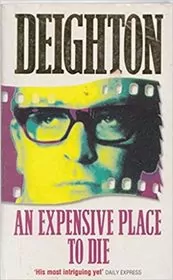
An Expensive Place to Die
by Len Deighton
1967
In 1960s Paris, a British agent dispatched on a straightforward delivery finds himself entangled with an exclusive clinic on Avenue Foch that trades in drugs, sex and blackmail, forcing him to choose carefully whom to deceive and whom to protect.

Spy Story
by Len Deighton
1974
Now living under the name Pat Armstrong, the former field agent works at a London war‑gaming centre, only to be swept aboard a nuclear submarine under Arctic ice where a planned defection and a murder attempt blur the line between exercise and reality.
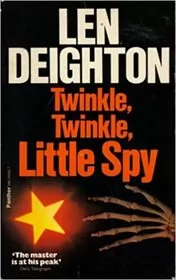
Twinkle, Twinkle Little Spy / Catch a Falling Spy
by Len Deighton
1976
Guarding a defecting Soviet space scientist should be routine, but the unnamed British spy is outmanoeuvred by American rivals and KGB watchers, following a blood‑streaked trail from the Sahara desert to New York and Dublin as loyalties shift around him.

Only When I Larf
by Len Deighton
2026
Three charming fraudsters—Silas, Liz and Bob—recount the same elaborate cons in clashing voices, as big international swindles slide toward disaster and each narrator quietly rewrites the truth, making this comic thriller as much about storytelling as about crime.
Harry Palmer books in chronological order
Series background & context
The series often called “Harry Palmer” on screen is, on the page, built around an unnamed British intelligence officer. He is a working‑class Londoner with a sharp tongue, thick glasses and very little patience for the Oxbridge men who run his department.
Readers first meet him in The IPCRESS File, working for a small, secretive outfit nicknamed WOOC(P). His world is a mix of cheap offices, bad food, fiddly expense claims and sudden, alarming assignments. When a string of top scientists vanish, he is drawn into a brainwashing plot that stretches from Soho basements to nuclear test sites, narrated in a dry, funny voice that undercuts the more glamorous myths of spying.
In Horse Under Water he is sent to a Portuguese fishing village to help search a sunken U‑boat, where forged currencies, heroin and a Nazi collaborator list are all in play. Funeral in Berlin moves him to the divided city to arrange the defection of a Soviet scientist, only for a sham funeral, Israeli agents and a smooth Berlin fixer to twist the deal into something far more dangerous.
Billion‑Dollar Brain throws him into the orbit of an unhinged Texan billionaire and a vast private computer, plotting an amateur war in the Baltic. An Expensive Place to Die relocates the action to Paris, where a fashionable clinic on Avenue Foch offers drugs and sex to the rich while secretly filming them for blackmail, and where the narrator discovers that allies, enemies and clients can swap places overnight.
Later, Spy Story finds him under the name Pat Armstrong at a London war‑gaming centre that uses real intelligence to simulate battles. A mission aboard a nuclear submarine under Arctic ice blurs the line between exercises and the real thing. Yesterday’s Spy and Twinkle, Twinkle, Little Spy connect his work to the aftershocks of the Second World War and to a defecting Soviet space scientist, taking him from the Mediterranean and France to New York, Dublin and the Sahara desert.
Across the books the pleasures are consistent: convoluted plots, throwaway jokes, technical detail about everything from weapons to restaurant kitchens, and an unusual amount of time spent on the mechanics of being a mid‑ranking employee. The unnamed spy cooks elaborate meals, worries about pay, and distrusts almost everyone he works with.
On film, starting with the 1965 adaptation of The IPCRESS File, Michael Caine turned the nameless narrator into Harry Palmer, adding a further layer of identity to a character who already lives behind layers of cover names. Readers coming from the movies will find the same sardonic tone and many of the same set‑pieces, but the novels go deeper into paperwork, politics and the small, sour jokes of everyday espionage.












Edited by
Software engineer whose passion for tracking book recommendations from podcasts inspired the creation of MRB.
Lead investor at 3one4 Capital whose startup expertise and love for books helped shape MRB and its growth.
Comments
Did we miss something? Have feedback?
Help us improve this page by sharing your thoughts