
Harry Kemelman Books in Order
Browse Harry Kemelman books in order, from Rabbi Small to The Nine Mile Walk, with brief summaries, series notes, and easy where-to-start tips.
Last updated:
As an Amazon Associate, we earn from qualifying purchases (at no extra cost to you).
Harry Kemelman books in publication order
13 books
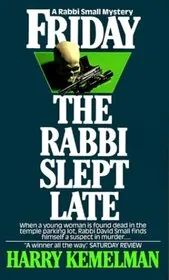
Friday the Rabbi Slept Late
by Harry Kemelman
1964
Newly arrived in Barnard's Crossing, Rabbi David Small is already struggling with synagogue politics when a young woman's body is found near the temple. With incriminating evidence pointing at him, he must clear his name and find the killer.
Saturday the Rabbi Went Hungry
by Harry Kemelman
1966
On the eve of Yom Kippur, Barnard's Crossing is already tense when a congregant is found dead in his car. What looks like suicide may be murder, and Rabbi Small has to read the people around him carefully.

The Nine Mile Walk
by Harry Kemelman
1967
This collection gathers Kemelman's Nicky Welt stories, classic puzzle mysteries driven by language and logic. The title tale begins with an offhand remark and opens into a striking chain of deductions that may point to murder.
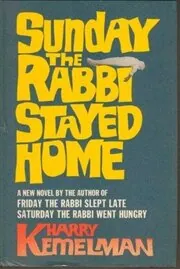
Sunday the Rabbi Stayed Home
by Harry Kemelman
1969
As Passover nears and his synagogue contract comes under pressure, Rabbi Small accepts a temporary campus role. There he walks into a murder tied to drugs, racial tension, and the bitter politics already waiting back home.
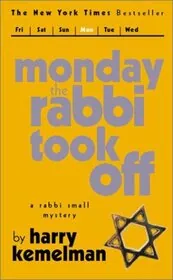
Monday the Rabbi Took Off
by Harry Kemelman
1972
Rabbi Small heads to Israel for a long-needed break, but Jerusalem offers no peace for long. After a bombing, he teams up with an Israeli detective and follows a trail of terrorism, politics, and divided loyalties.
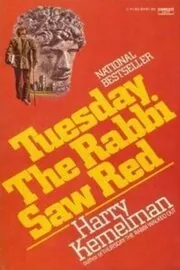
Tuesday the Rabbi Saw Red
by Harry Kemelman
1973
Trying to escape synagogue conflict, Rabbi Small takes a part-time college teaching job. A bombing and a colleague's death pull him into a campus world of feuding faculty, angry students, and too many tidy alibis.
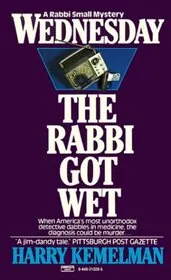
Wednesday the Rabbi Got Wet
by Harry Kemelman
1976
Barnard's Crossing is busy with meditation schemes and temple politics when an elderly man dies after receiving the wrong medication. Rabbi Small looks past easy answers as suspicion closes around a pharmacist and his estranged son.
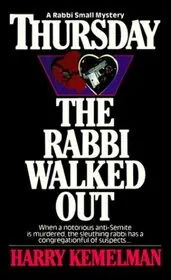
Thursday the Rabbi Walked Out
by Harry Kemelman
1978
When a rich, openly anti-Semitic town leader is murdered, suspicion quickly lands on members of Rabbi Small's synagogue. Small has to cut through old grudges and false assumptions before the wrong people pay for the crime.
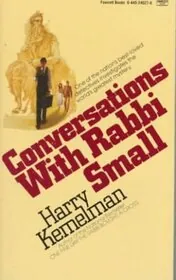
Conversations with Rabbi Small
by Harry Kemelman
1981
On vacation in the mountains, Rabbi Small meets a young woman considering conversion before marriage. Instead of a murder case, the book offers a searching, often lively conversation about Judaism, belief, history, and everyday practice.
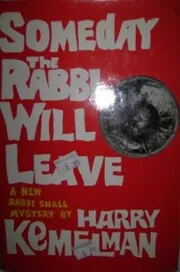
Someday the Rabbi Will Leave
by Harry Kemelman
1985
A fight over an interfaith wedding puts Rabbi Small on a collision course with the synagogue's new power broker. Then a hit-and-run death throws politics, suspicion, and the rabbi's own future into the same knot.
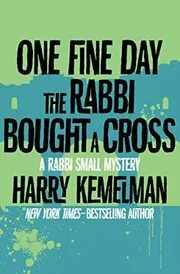
One Fine Day the Rabbi Bought a Cross
by Harry Kemelman
1987
A trip to Israel for a belated bar mitzvah turns dangerous when an American is murdered. Rabbi Small finds himself untangling religious extremism, politics, and a larger conspiracy far from Barnard's Crossing.
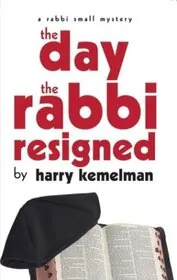
The Day the Rabbi Resigned
by Harry Kemelman
1992
Rabbi Small finally leaves the synagogue to pursue academic life, only to find a university just as fraught as a temple board. When an ambitious professor dies in a suspicious car crash, he is drawn back into detection.
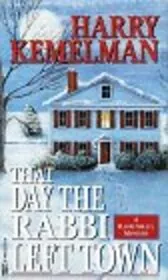
That Day the Rabbi Left Town
by Harry Kemelman
1996
Now teaching Judaic studies in Boston, Rabbi Small hopes temple politics are behind him. But when a colleague is found dead in his car and the new rabbi in Barnard's Crossing is implicated, Small has one more case to solve.
Where to start with Harry Kemelman
If you want the classic Rabbi Small setup: Friday the Rabbi Slept Late → Saturday the Rabbi Went Hungry → Sunday the Rabbi Stayed Home
If you like campus mysteries and faculty feuds: Tuesday the Rabbi Saw Red → The Day the Rabbi Resigned → That Day the Rabbi Left Town
If you want Rabbi Small outside Massachusetts: Monday the Rabbi Took Off → One Fine Day the Rabbi Bought a Cross
If you want pure logic-puzzle short stories: The Nine Mile Walk
Harry Kemelman sub-series and character series
The Rabbi Small Mysteries books in order
Explore this seriesThe Rabbi Small Mysteries books in chronological order
Harry Kemelman collections, short stories, and related book types
Short Story Collections
Author bio
Harry Kemelman was born in Boston, Massachusetts, on November 24, 1908, and grew up in nearby Marblehead. His parents were East European Jewish immigrants, and that mix of inherited tradition and New England daily life stayed close to him. He studied English literature at Boston University, graduating in 1930, then earned a master's degree in English philology from Harvard the next year. The scholar in him arrived early.
Before he was a novelist, he was a teacher. He taught in schools around Boston before World War II, then worked during the war as a wage administrator for the Army Transportation Corps and later for the War Assets Administration. Afterward he did freelance writing, spent time in business, and eventually returned to the classroom, teaching English at the Benjamin Franklin Institute of Technology and Boston State College.
His first break as a writer came in short mystery fiction. He began publishing in Ellery Queen's Mystery Magazine, often using New England professor Nicky Welt as his amateur sleuth. The best known of those stories, The Nine Mile Walk, became famous for the way it turns a scrap of language into a whole criminal case.
Then he found the material that would define him.
Kemelman was deeply involved in Jewish community life in Marblehead and helped form the town's first modern synagogue. He first tried to write a straight novel about suburban Jewish life, but an editor encouraged him to fold that world into a mystery. On the way home after that conversation, he looked at a synagogue parking lot and realized it would make a perfect place to hide a body. That flash of dark practicality became Friday the Rabbi Slept Late.
Published in 1964, Friday the Rabbi Slept Late made a lot of people notice him at once. It became a bestseller and won the Edgar Award for Best First Novel in 1965. More important for his long run as a writer, it introduced Rabbi David Small, a quiet, stubborn Conservative rabbi in Barnard's Crossing, Massachusetts, who solves crimes with patience, close listening, and a Talmud-trained habit of seeing the third side of an argument.
The books kept coming for more than thirty years: Saturday the Rabbi Went Hungry, Sunday the Rabbi Stayed Home, Tuesday the Rabbi Saw Red, Wednesday the Rabbi Got Wet, and later The Day the Rabbi Resigned and That Day the Rabbi Left Town. Readers came for the murders, but they also came for the synagogue board fights, the neighborhood gossip, the dry humor, and the plainspoken explanations of Jewish law and custom.
That was his real trick.
Kemelman wrote mysteries, but he also wrote about assimilation, family expectations, interfaith tension, and the question of what a rabbi is supposed to do in modern American life. Barnard's Crossing is fictional, but it feels lived in, a Massachusetts town of committees, small grudges, and earnest arguments. Even when the books travel to a college campus or to Israel, they keep returning to the push and pull between tradition and convenience.
His work reached television as well. Friday the Rabbi Slept Late became a 1976 TV movie, and Lanigan's Rabbi followed as a short-lived series in 1977. Kemelman later became a full-time writer, and he spent his final years in Marblehead, where he died on December 15, 1996, at eighty-eight. By then his books had been translated widely, and he had made a very specific corner of American Jewish life feel open to anyone willing to sit down, listen, and think things through.



Edited by
Software engineer whose passion for tracking book recommendations from podcasts inspired the creation of MRB.
Lead investor at 3one4 Capital whose startup expertise and love for books helped shape MRB and its growth.
Comments
Did we miss something? Have feedback?
Help us improve this page by sharing your thoughts