
Gordon Ferris Books in Order
Explore Gordon Ferris books in order, with Douglas Brodie and Danny McRae guides, quick summaries, and helpful advice on where to start reading.
Last updated:
As an Amazon Associate, we earn from qualifying purchases (at no extra cost to you).
Gordon Ferris books in publication order
7 books

Truth Dare Kill
by Gordon Ferris
2007
In bomb-scarred London, former Glasgow policeman Danny McRae works as a private investigator while battling memory gaps and blackouts. A wealthy woman's confession sends him after a missing man and back toward his own dark past.

The Unquiet Heart
by Gordon Ferris
2008
Private investigator Danny McRae and reporter Eve Copeland strike a useful partnership in rationed London, then fall in love. When Eve disappears, Danny follows a trail of black market deals, old enemies, and Cold War shadows into Berlin.

The Hanging Shed
by Gordon Ferris
2010
Back from the war, Douglas Brodie returns to Glasgow to save his scarred childhood friend Hugh Donovan from the gallows. His search through the Gorbals uncovers gang violence, corrupt authority, and buried local secrets.
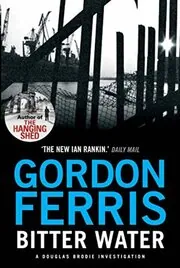
Bitter Water
by Gordon Ferris
2012
Working as a crime reporter in sweltering 1946 Glasgow, Douglas Brodie follows a gang of vigilantes called the Glasgow Marshals. Public anger, corruption, and a string of brutal attacks pull him and Sam Campbell into dangerous moral ground.

Pilgrim Soul
by Gordon Ferris
2013
In Glasgow's brutal winter of 1947, Douglas Brodie takes what looks like a small burglary case from the city's Jewish community. It opens into murder, stolen gold, refugees, and horrors that reach back to the camps.

Gallowglass
by Gordon Ferris
2014
Douglas Brodie is declared dead after being jailed for kidnapping and murdering a banker. With the case against him seemingly airtight and the gallows looming, he has to uncover who framed him and why.

Money Tree
by Gordon Ferris
2014
A struggling woman in rural India finds her life colliding with a faded American reporter and a Scottish banker with a conscience. Their intersecting stories expose the human cost of debt, finance, and power in a globalized world.
Where to start with Gordon Ferris
If you want postwar Glasgow crime: The Hanging Shed → Bitter Water → Pilgrim Soul → Gallowglass
If you prefer a damaged private eye in London: Truth Dare Kill → The Unquiet Heart
If you want the crossover between both strands: Truth Dare Kill → The Unquiet Heart → Pilgrim Soul
If you want a contemporary global thriller: Money Tree
Gordon Ferris sub-series and character series
Author bio
Gordon Ferris grew up in Kilmarnock, in the west of Scotland, and he was born on January 25, Burns Day. He has joked that his mother took that as a sign of future literary fortune. Whether or not he believed it then, the story suits the tone of his fiction, grounded, sharp, and very Scottish without ever pushing too hard on the label.
Writing was there early, but novels were not his first line of work. Ferris worked as a computer programmer, then as an executive in the Ministry of Defence, and later as a consultancy partner in the banking division of Price Waterhouse. That kind of background matters more than it might sound. His books are full of institutions, money, secrets, and people trying to stay human inside systems that are not especially kind.
It was a roundabout route into fiction.
Ferris has said he began writing when long-haul flights left him with hours to fill, and that enforced stillness finally pushed him toward the page. There is something pleasingly unsentimental about that beginning. No grand myth, no dramatic conversion, just time, persistence, and a mind that clearly liked worrying away at questions of guilt, loyalty, memory, and survival.
His first novel, Truth Dare Kill, appeared in 2007 and introduced Danny McRae, a former Glasgow policeman and wartime agent trying to make a living as a private investigator in bomb-damaged London. The Unquiet Heart followed, taking Danny deeper into black markets, espionage, and the moral fog of postwar Europe. Readers who click with these books usually like Danny's bruised voice, his unreliable memory, and the sense that peace has officially arrived while private damage is still unfolding everywhere.
Then Ferris turned to Douglas Brodie. The Hanging Shed brought him a much wider readership and showed how well he could use postwar Glasgow as both setting and pressure cooker. Brodie is an ex-cop, soldier, journalist, and all-purpose magnet for trouble, and Ferris uses him to explore gang power, church influence, class, corruption, and the long emotional hangover of the war. Bitter Water, Pilgrim Soul, and Gallowglass build on that world, mixing fast-moving cases with a strong feel for the city and the people trying to rebuild inside it.
That in-between world is where Ferris does some of his best work.
A lot of his fiction turns on damaged men, capable women, and institutions that fail the people who most need help. Samantha Campbell in the Brodie books and Eve Copeland in the Danny McRae novels are good examples. They are not there to decorate the hero or flatter him. Ferris gives them intelligence, nerve, and real agency, which helps keep the books from feeling like simple period throwbacks.
He has also stepped outside the 1940s. Money Tree moves into a contemporary, international story about debt, finance, and inequality, shifting the action to India, New Delhi, New York, and the people caught between those worlds. Even there, the concerns are familiar. Ferris is still interested in what power does to ordinary lives, and in how money can shape moral choices long before anyone starts talking about right and wrong.
What readers usually get from Gordon Ferris is not polish for its own sake. It is momentum, atmosphere, and a clear interest in the mess left behind by war, class, and money. He took the long way to becoming a novelist, but that may be part of why the books feel lived in. They come from someone who knows that public systems and private damage are never really separate.











Edited by
Software engineer whose passion for tracking book recommendations from podcasts inspired the creation of MRB.
Lead investor at 3one4 Capital whose startup expertise and love for books helped shape MRB and its growth.
Comments
Did we miss something? Have feedback?
Help us improve this page by sharing your thoughts