
Golden Oecumene Books in Order
Part ofJohn C Wright Books in OrderSee the Golden Oecumene books in order by John C Wright, with summaries, series background, and where-to-start advice for new readers.
Last updated:
As an Amazon Associate, we earn from qualifying purchases (at no extra cost to you).
Golden Oecumene books in publication order
3 books
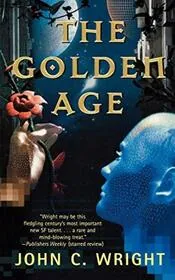
The Golden Age
by John C Wright
2002
In a dazzling far-future utopia, Phaethon begins to suspect that his memories have been altered and his ambitions stolen. Recovering the truth means challenging a civilization that would rather remain safe than admit real danger exists.
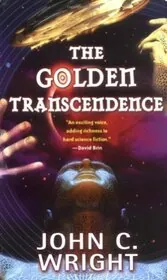
The Golden Transcendence
by John C Wright
2003
Phaethon's long fight with memory, exile, and hidden enemies reaches its climax here. To save the people and civilization he loves, he must face the Nothing Sophotech and decide whether transcendence is salvation or annihilation.
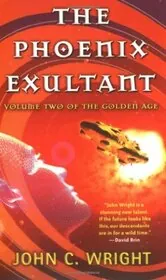
The Phoenix Exultant
by John C Wright
2003
Exiled from the glittering systems that once defined his life, Phaethon must learn to live without the Mentality's support. His struggle to reclaim his ship becomes a struggle to uncover how thoroughly he has been deceived.
Golden Oecumene books in chronological order
Series background & context
The Golden Oecumene books are far-future science fiction with grand machinery and a very personal core. The main character is Phaethon, a brilliant and ambitious man living in a solar-system civilization so wealthy and technologically advanced that most people treat risk as something outgrown. Minds can live in virtual thoughtspaces, artificial intelligences handle much of the labor of society, and death has been pushed far enough away to seem almost optional.
That world is called the Golden Oecumene, and at first glance it looks like a polished utopia. Almost everyone is rich, almost everyone is long-lived, and the great Sophotechs, machine minds of astonishing power, help hold the civilization together. But Wright is interested in the cost of comfort. A society built to avoid danger can also forget how to deal with novelty, ambition, and enemies who do not play by polite rules.
Phaethon becomes the person who collides with those limits. In The Golden Age, he finds himself cut off from his own past, forced to recover missing memories and rediscover the dream that once drove him. The mystery is not only who altered his mind, but why. That carries into The Phoenix Exultant and The Golden Transcendence, where exile, political struggle, and the threat of the Nothing Sophotech widen the story from one man's memory problem into a test of the civilization itself.
Memory is the hinge.
Because of that, the books keep asking what identity means in a world where consciousness can be copied, edited, masked, and mediated through systems larger than any ordinary human being can fully understand. Phaethon wants not merely comfort, but enterprise, exploration, and the freedom to act. That puts him at odds with a society that has become very good at preserving itself and not always as good at telling the truth.
The tone is dense, idea-rich, and often exhilaratingly large in scale. Readers should expect future politics, machine intelligence, philosophical argument, and a setting where even a personal dispute can have solar-system consequences. But for all the elaborate worldbuilding, the series still reads as a quest: one man trying to remember who he was, what he wanted, and whether a shining civilization deserves to keep transcending if it can no longer face the dark outside itself.




Edited by
Software engineer whose passion for tracking book recommendations from podcasts inspired the creation of MRB.
Lead investor at 3one4 Capital whose startup expertise and love for books helped shape MRB and its growth.
Comments
Did we miss something? Have feedback?
Help us improve this page by sharing your thoughts