
Godfrey Turton Books in Order
Explore Godfrey Turton's books in order, with quick summaries, reading suggestions, and background on his historical novels, history books, and other work.
Last updated:
As an Amazon Associate, we earn from qualifying purchases (at no extra cost to you).
Godfrey Turton books in publication order
9 books

My Lord of Canterbury
by Godfrey Turton
1967
In a fictional diary written near the end of his life, Thomas Cranmer looks back on service to Henry VIII and England's religious upheaval. Personal doubt, political survival, and faith collide as he approaches execution under Mary Tudor.

The Emperor Arthur
by Godfrey Turton
1968
Turton recasts the Arthur legend as a struggle for post-Roman Britain. Young knight Pelleas serves Arthur amid Saxon pressure and conflict between Christianity and older pagan traditions, while magic and prophecy shadow the political fight.

Builders of England's Glory
by Godfrey Turton
1969
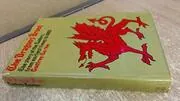
A narrative history of Tudor England, from the family's Welsh roots to Elizabeth I's death in 1603. Turton moves reign by reign, weighing the rulers' ambitions, failures, and lasting impact on the English crown.
The Dragon's Breed
by Godfrey Turton
1970
An accessible history of the Tudor line, tracing its Welsh beginnings through Elizabeth I's death in 1603. Turton follows the dynasty's monarchs and the wars, religious upheavals, and family rivalries that shaped their rule.
The Devil's Churchyard
by Godfrey Turton
1971
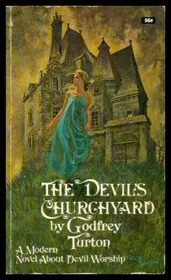
Schoolteacher Kate Evans finds a sinister old book in a haunted glen and becomes a target for the Reverend Oswald Brink's ritual plans. With Jim Tranmire and unlikely allies, she must escape before the danger turns lethal.

The Festival of Flora
by Godfrey Turton
1972
Threatened with losing his ancestral home to a munitions development, Dick Saltwick is pulled between modern England and Roman Britain. His divided loyalties include Joan in the present and the alluring Flora in the distant past.

The Syrian Princesses
by Godfrey Turton
1974
Turton follows Julia Domna, Julia Maesa, Julia Soaemias, and Julia Mamaea, four women from Syria whose families held power in Rome. This narrative history of the Severan court is full of succession struggles, war, and uneasy alliances.

The Moon Dies
by Godfrey Turton
1984
A short, illustrated work paired with Shirley Mungapen's wood engravings. Its meditative presentation turns toward mortality, myth, and the passage of time rather than a conventional plot-driven narrative.

There Once Was a City
by Godfrey Turton
2011
This elusive Turton title survives in a modern edition, but reliable plot details are scarce. It will appeal most to readers exploring the less documented corners of his small, hard-to-find bibliography.
Where to start with Godfrey Turton
For Tudor history through one man's eyes: My Lord of Canterbury.
For a Tudor dynasty overview: Builders of England's Glory → The Dragon's Breed.
For ancient Roman politics: The Syrian Princesses.
For Arthurian Britain: The Emperor Arthur.
For a darker gothic tale: The Devil's Churchyard.
Godfrey Turton collections, short stories, and related book types
Non-Fiction
Standalone Godfrey Turton books
Author bio
Godfrey Turton, often cataloged under his full name, Godfrey Edmund Turton, was a British writer born on January 4, 1901. He died on November 24, 1985, at the age of eighty-four. Publicly available accounts of his childhood and private life are limited, so the broad outline of his career is clearer than the early years that led to it.
He came to publishing late. Turton's first widely recorded novel, My Lord of Canterbury, appeared in 1967, when he was already in his mid-sixties.
Contemporary publishing coverage described him as an Oxford don. That background fits the books he went on to write, though his work does not stay in the classroom. He liked historical figures facing pressure, divided loyalties, family claims, religious conflict, and the hard work of holding power.
History was the thread that held his writing together.
In My Lord of Canterbury, Turton turns to Thomas Cranmer, the Archbishop of Canterbury who helped steer England through Henry VIII's break with Rome. He frames the novel as Cranmer looking back near the end of his life, which gives the story room for both court politics and private uncertainty. Readers who enjoy Tudor history told from close inside the action will find that book a natural starting point.
The Emperor Arthur moves much further back, into post-Roman Britain. It treats the Arthur legend as a tale of military pressure, political leadership, Christian influence, and lingering older beliefs. Turton did not only write about famous rulers, though. The Devil's Churchyard is a modern gothic suspense novel about a schoolteacher, a haunted glen, and an escalating occult threat, while The Festival of Flora shifts between contemporary England and Roman Britain.
His nonfiction stayed close to the same interests. Builders of England's Glory follows the Tudor dynasty from its Welsh roots to Elizabeth I's death, and The Dragon's Breed covers much of the same long Tudor story in another narrative history. Both books show Turton's preference for history driven by people, not just dates, treaties, and family trees.
With The Syrian Princesses, he leaves England for imperial Rome. The book follows Julia Domna, Julia Maesa, Julia Soaemias, and Julia Mamaea, women from Syria whose families stood at the center of Severan power. His later The Moon Dies, illustrated with wood engravings by Shirley Mungapen, takes a more reflective and poetic form.
Turton's books can feel rooted in the period in which they were written, especially in their language and pacing. Still, the subjects remain easy to recognize: rulers trying to keep control, people making choices under religious or political strain, and the past refusing to stay neatly settled. His compact bibliography rewards readers who like history with a story attached to it.
A posthumous modern edition of There Once Was a City later brought another hard-to-find Turton title back into circulation. Much about the man remains private, but the books leave a clear trail through Tudor England, Roman politics, Arthurian Britain, and stranger corners of modern fiction.









Edited by
Software engineer whose passion for tracking book recommendations from podcasts inspired the creation of MRB.
Lead investor at 3one4 Capital whose startup expertise and love for books helped shape MRB and its growth.
Comments
Did we miss something? Have feedback?
Help us improve this page by sharing your thoughts