
Geraldine Brooks Books in Order
Explore Geraldine Brooks's books in order, with quick summaries, series background, and simple where to start guidance for her historical novels and nonfiction.
Last updated:
As an Amazon Associate, we earn from qualifying purchases (at no extra cost to you).
Geraldine Brooks books in publication order
10 books
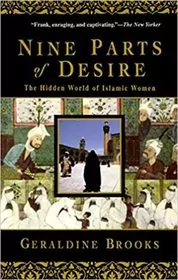
Nine Parts of Desire
by Geraldine Brooks
1994
Drawing on years as a reporter in the Middle East, Brooks listens to Muslim women from many countries and walks of life. Their stories reveal how faith, politics and custom shape daily choices, challenging simple Western stereotypes about veiling, family and freedom.
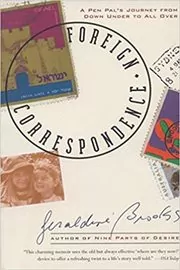
Foreign Correspondence
by Geraldine Brooks
1997
As a restless girl in suburban Sydney, Brooks escapes through pen pals from America, Europe and the Middle East. Decades later, she tracks them down across the globe, uncovering unexpected fates and rethinking what home, ambition and adulthood really mean.
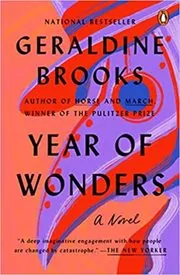
Year of Wonders
by Geraldine Brooks
2001
In 1666, young widow Anna Frith watches bubonic plague descend on her Derbyshire village. When the townsfolk choose to quarantine themselves, she and the rector's wife become healers, confronting fear, superstition and faith as death closes in around them.
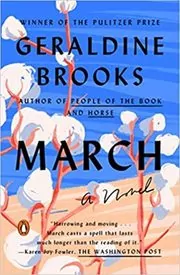
March
by Geraldine Brooks
2005
Brooks imagines the missing story of Mr March, the idealistic father from Little Women, as he leaves Concord to serve as a Union chaplain in the Civil War. Amid slavery and battlefield trauma, his beliefs, marriage and sense of himself are tested.
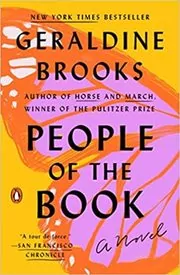
People of the Book
by Geraldine Brooks
2008
Australian conservator Hanna Heath is called to restore the Sarajevo Haggadah, a rare illuminated Jewish manuscript. Tiny clues in its pages lead back through centuries, tracing the hidden lives of the people who saved the book from war, fire and persecution.
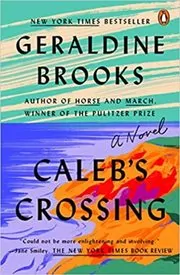
Caleb's Crossing
by Geraldine Brooks
2011
Set between Martha's Vineyard and colonial Cambridge, this novel follows Bethia Mayfield, a minister's daughter who secretly befriends Caleb, a Wampanoag youth bound for Harvard. As Caleb crosses cultures and oceans, Bethia confronts gender limits, faith, and the costs of empire.
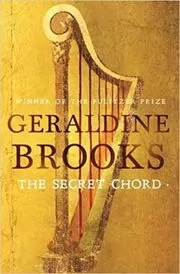
The Secret Chord
by Geraldine Brooks
2015
Reimagining the life of King David, this novel is narrated by the prophet Nathan as he records his ruler's story. It reveals a gifted musician and warrior whose brilliance, violence and family betrayals ripple through his kingdom and household.
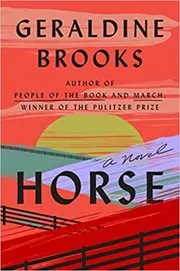
Horse
by Geraldine Brooks
2022
Spanning 1850s Kentucky, 1950s New York and present day Washington, this novel revolves around Lexington, a legendary racehorse. An enslaved groom, an art historian and a scientist each uncover his legacy, exposing tangled histories of talent, greed and American racism.

On Tim Winton
by Geraldine Brooks
2022
In this extended essay, Brooks reflects on the fiction of Australian novelist Tim Winton, from his working class characters to his spiritual themes and love of the ocean. She explores how place, faith and language shape his stories and her own reading life.

Memorial Days
by Geraldine Brooks
2025
After the sudden death of her husband, journalist Tony Horwitz, Brooks finds herself overwhelmed by grief and practical demands. Three years later, she retreats to a remote Australian island, sifting through memories, rituals and landscapes as she slowly learns how to live with loss.
Where to start with Geraldine Brooks
If you want her big historical novels: Year of Wonders → March → People of the Book → Horse.
If you're interested in faith and the past: Caleb's Crossing → The Secret Chord.
If you prefer her nonfiction and journalism roots: Nine Parts of Desire → Foreign Correspondence → Memorial Days.
If you enjoy writers on writing: On Tim Winton.
Geraldine Brooks collections, short stories, and related book types
Non-Fiction Books
Writers on Writers Books
Standalone Geraldine Brooks books
Author bio
Geraldine Brooks was born in Sydney in 1955 and grew up thinking the important stories were happening far away. Over time she proved herself wrong. First as a foreign correspondent, then as a novelist and memoirist, she has spent decades turning overlooked corners of history, and the rooms of her own life, into vivid, human scale narratives.
She grew up in the inner west suburb of Ashfield, the daughter of Lawrie Brooks, an American big band singer turned newspaper sub editor, and Gloria, who had left the country town of Boorowa to work in radio publicity. Money was tight, but there were books, newspapers and long conversations about politics and justice.
At Bethlehem College, a Catholic girls' school, she discovered that reading could be a way out of the constraints of class and geography. At the University of Sydney she studied arts and joined the campus paper. After graduating she joined the Sydney Morning Herald, where she wrote features on environmental issues and local politics and learned how to chase stubborn stories to the end.
In 1982 she won the Greg Shackleton scholarship to study journalism at Columbia University in New York. That move changed everything. She stayed in the United States, joined the Wall Street Journal and spent more than a decade reporting from conflict zones in the Middle East, Africa and the Balkans. Her and her husband Tony Horwitz's coverage of the Gulf war earned one of the top awards in international reporting.
Brooks and Horwitz married in a small village in southern France in 1984, and she later converted to Judaism. Both were endlessly curious about how ordinary people live under pressure. Those years on the road became the spine of her first books, the nonfiction works Nine Parts of Desire and Foreign Correspondence, which draw on her encounters with Muslim women and on the pen pals who once helped her imagine life beyond suburban Sydney.
In her late thirties she began to turn toward fiction. Year of Wonders reimagines the true story of an English village that chose to quarantine itself during a seventeenth century plague. March follows the absent father from Louisa May Alcott's Little Women into the American Civil War and won the Pulitzer Prize for Fiction in 2006, bringing many new readers to her work.
Later novels such as People of the Book, Caleb's Crossing, The Secret Chord and Horse take similar leaps from a fragment of fact, a historic figure or a fragile object. Across these stories she is drawn to people who cross borders of faith, language and race, and to the quiet details that connect domestic life to the large forces of history.
Alongside the novels, Brooks has continued to write essays, lectures and memoir. She has reflected on Muslim women's lives, on her own childhood in Australia, and on the work of other writers in On Tim Winton and her Boyer Lectures, later collected as The Idea of Home. Her shelves now hold honours that include major Australian prizes, international book awards and, in 2025, the Library of Congress Prize for American Fiction.
Brooks and Horwitz raised two sons and for many years divided their time between Virginia, Sydney and the island of Martha's Vineyard in Massachusetts. After Horwitz died suddenly in 2019, she wrote the memoir Memorial Days, a clear eyed account of grief, marriage and the rituals that can help the living go on. She continues to write from a farmhouse on Martha's Vineyard and from the Australian coast, carrying both hemispheres into every story.






Edited by
Software engineer whose passion for tracking book recommendations from podcasts inspired the creation of MRB.
Lead investor at 3one4 Capital whose startup expertise and love for books helped shape MRB and its growth.
Comments
Did we miss something? Have feedback?
Help us improve this page by sharing your thoughts