
Frank Lloyd Wright Books in Order
Browse Frank Lloyd Wright books in order, with short summaries, key architecture titles, and clear advice on where to start with his writings.
Last updated:
As an Amazon Associate, we earn from qualifying purchases (at no extra cost to you).
Frank Lloyd Wright books in publication order
32 books
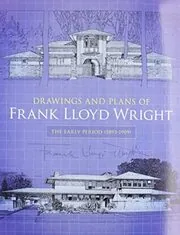
Drawings and Plans of Frank Lloyd Wright
by Frank Lloyd Wright
1910
Reproducing the rare Wasmuth portfolio of the early period, this book collects drawings and plans from 1893 to 1909. It is invaluable for seeing the structure, geometry, and ambition behind Wright's first mature work.
Studies & Executed Buildings of Frank Lloyd Wright
by Frank Lloyd Wright
1910
This handsome reprint of the Wasmuth folio gathers built and unbuilt designs from Wright's crucial Oak Park years. It shows the range of his early imagination while preserving one of the publications that first made his reputation in Europe.
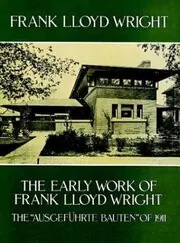
The Early Work of Frank Lloyd Wright
by Frank Lloyd Wright
1911
This volume revisits the Oak Park period through photographs and material from the famous Wasmuth publication. It is a strong introduction to Wright's first major houses and buildings, including the years when his architectural language was crystallizing.
The Disappearing City
by Frank Lloyd Wright
1932
Wright's 1932 argument against the crowded industrial city introduces the Broadacre vision that shaped much of his later planning thought. Short and provocative, it asks what happens when cars, land, and individual freedom remake American life.
Genius and the Mobocracy
by Frank Lloyd Wright
1949
Part tribute and part polemic, this book uses Louis Sullivan to think about genius, public taste, and the fate of modern architecture. It also offers one of Wright's most personal records of his early formation in Chicago.
The Future of Architecture
by Frank Lloyd Wright
1953
This substantial collection of lectures and essays gathers Wright on architecture, democracy, technology, and the city. It shows both the breadth of his thinking and the persistence of his argument that buildings should serve life, not fashion.
The Natural House
by Frank Lloyd Wright
1954
Wright turns to the American home, especially the Usonian house, and asks how ordinary families might live with more light, space, and dignity. He writes about planning, materials, cost, and the quiet radicalism of simpler domestic design.
A Testament
by Frank Lloyd Wright
1957
Written near the end of his life, this book is Wright taking stock of his principles, projects, and long career. It blends memoir, manifesto, and illustrated survey, and it feels like a final statement from someone still eager to argue.

The Living City
by Frank Lloyd Wright
1958
Wright expands his Broadacre City ideas into a full argument about decentralized living, mobility, land, and democratic space. It is less about one building than about how an entire American landscape might be reorganized.
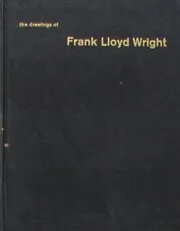
Drawings of Frank Lloyd Wright
by Frank Lloyd Wright
1962
This illustrated volume focuses on Wright's drawings as both design tools and finished images. It is useful for seeing how plans, perspectives, and presentation pieces carried the energy of his architecture long before construction began.
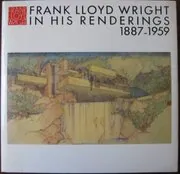
Frank Lloyd Wright in his Renderings, 1887-1959
by Frank Lloyd Wright
1967
A visual study of 200 selected renderings, this book treats Wright's presentation drawings as artworks in their own right. It is a strong choice for readers who want to see how color, line, and atmosphere sold the design.
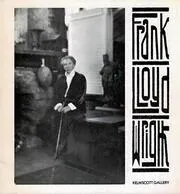
Writings and Buildings
by Frank Lloyd Wright
1967
This survey pairs Wright's own words with a wide visual record of his buildings, drawings, and plans. It works well as an overview, especially for readers who want theory and built work side by side.
Organic Architecture
by Frank Lloyd Wright
1970
A short but important text based on Wright's 1939 lectures in London. He connects architecture to democracy, spirit, and everyday life, while arguing that good design must grow from place, purpose, and the people who use it.
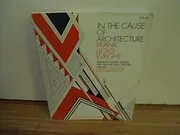
In the Cause of Architecture, Frank Lloyd Wright
by Frank Lloyd Wright
1975
This collection brings together Wright's famous essays under the banner of In the Cause of Architecture. It traces his thinking across decades and shows how consistently he returned to site, materials, freedom, and the organic whole.
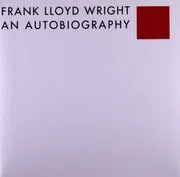
Frank Lloyd Wright
by Frank Lloyd Wright
1977
Wright's autobiography mixes childhood memories, professional battles, design ideas, and self-portrait. It is personal, selective, and sometimes grandstanding, but it remains the clearest place to hear how he wanted his own life and work understood.
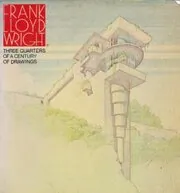
Three-Quarters of a Century of Drawings
by Frank Lloyd Wright
1981
This exhibition volume surveys roughly seventy-five years of Wright's drawings, from early plans to late renderings. It lets readers watch ideas change on paper while keeping the confidence, rhythm, and theatrical flair that mark his graphic work.
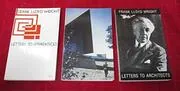
Letters to Apprentices
by Frank Lloyd Wright
1982
Selected letters to Taliesin apprentices show Wright as teacher, mentor, disciplinarian, and recruiter. They offer a close look at how he imagined architectural education, not just as drafting, but as a way of living, working, and paying attention.
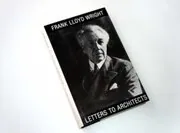
Letters to Architects
by Frank Lloyd Wright
1984
A revealing collection of Wright's correspondence with fellow architects, critics, and colleagues. It shows him defending organic architecture, arguing with peers, and measuring himself against the profession he helped reshape.
Letters to Clients
by Frank Lloyd Wright
1986
These letters show Wright in the middle of real projects, explaining ideas, solving problems, persuading patrons, and pushing designs forward. They turn abstract principles into day-to-day architecture, with all the charm, friction, and negotiation that requires.
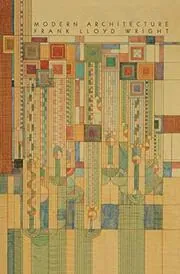
Modern Architecture
by Frank Lloyd Wright
1987
These are Wright's 1930 Kahn Lectures, where he sets out a forceful case for organic architecture. He attacks empty historicism, questions the skyscraper city, and defines the principles that drove much of his later writing.
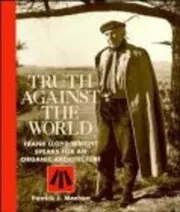
Truth Against the World
by Frank Lloyd Wright
1987
This collection gathers Wright speaking directly about organic architecture in lectures, interviews, and public remarks. The appeal is his voice, combative, funny, stubborn, and fully convinced that buildings shape the way people live.
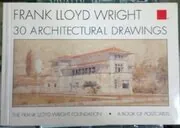
30 Architectural Drawings
by Frank Lloyd Wright
1991
A postcard book that reproduces 30 Wright drawings from houses and public buildings. It is brief, but it nicely shows how his presentation drawings carried mood, structure, and landscape as powerfully as the finished buildings.
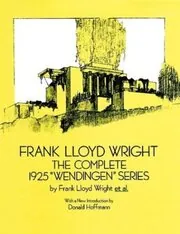
Frank Lloyd Wright
by Frank Lloyd Wright
1992
This facsimile restores the complete 1925 Wendingen issues devoted to Wright. Part monograph and part design object, it shows how European readers encountered his buildings, drawings, and ideas between the Prairie years and his later comeback.
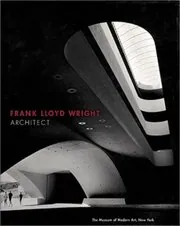
Frank Lloyd Wright, Architect
by Frank Lloyd Wright
1994
This large museum catalog surveys Wright's career from early houses to late monuments with essays, plans, drawings, and photographs. It balances scholarship and visuals well, making it one of the stronger single-volume overviews.
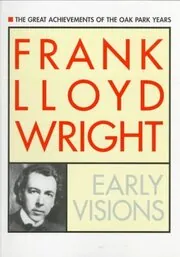
Frank Lloyd Wright
by Frank Lloyd Wright
1995
Focused on Wright's Oak Park and Chicago years, this illustrated survey highlights the early houses and buildings that shaped his career. It is a good visual guide to the period when the Prairie style was taking form.
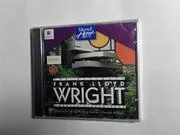
The Ultimate Frank Lloyd Wright
by Frank Lloyd Wright
1995
This multimedia CD-ROM offers interactive tours of major Wright buildings, a large image archive, and a design tool inspired by his work. It is less a conventional book than a digital introduction to Wright on screen.
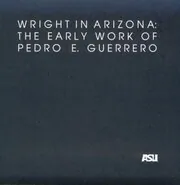
Wright in Arizona
by Frank Lloyd Wright
1996
Built around Pedro E. Guerrero's photographs, this slim book captures Wright's Arizona years and the desert buildings around him. It is especially useful for seeing how Taliesin West and related work responded to light, stone, and heat.
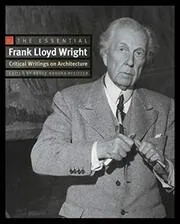
The Essential Frank Lloyd Wright
by Frank Lloyd Wright
2008
This one-volume collection gathers Wright's most important writings on architecture, cities, houses, ornament, and nature. It is broad, argumentative, and revealing, a good way to see how his ideas developed across decades.
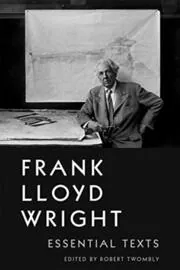
Frank Lloyd Wright
by Frank Lloyd Wright
2009
An accessible anthology of Wright's key essays from the early twentieth century through the late 1930s. Headnotes and context make it a strong entry point for readers who want his ideas without tackling his longest books.
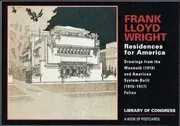
Residences for America
by Frank Lloyd Wright
2010
This volume centers on Wright's housing ideas through drawings from the 1910 Wasmuth folio and the American System-Built houses. It shows how he imagined beautiful, modern homes that could still feel humane, open, and distinctly American.
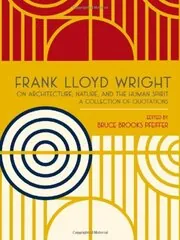
Frank Lloyd Wright on Architecture, Nature, and the Human Spirit
by Frank Lloyd Wright
2011
A compact quotation book that gathers Wright on design, nature, craft, freedom, and the human spirit. It works as a quick introduction to his voice, sharp, idealistic, argumentative, and often unexpectedly practical.
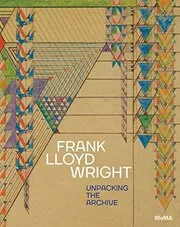
Unpacking the Archive
by Frank Lloyd Wright
2017
Published with the major 2017 exhibition, this book reopens Wright's career through objects from his vast archive. Essays, drawings, models, and photographs show not one neat story, but a restless mind working across buildings, cities, ornament, and media.
Where to start with Frank Lloyd Wright
If you want his core ideas: The Essential Frank Lloyd Wright → Modern Architecture → The Future of Architecture
If houses are your main interest: The Natural House → Residences for America → A Testament
If you like letters and personality: Letters to Apprentices → Letters to Architects → Letters to Clients
If you want a visual overview first: Frank Lloyd Wright, Architect → Unpacking the Archive → Drawings of Frank Lloyd Wright
Frank Lloyd Wright collections, short stories, and related book types
Non-Fiction
Author bio
Frank Lloyd Wright was born in Richland Center, Wisconsin, on June 8, 1867, and grew up in the farm country and rolling hills of southwestern Wisconsin. That landscape stayed with him. Long before he had a name for organic architecture, he was learning to look at terrain, weather, stone, trees, and horizon as parts of one picture.
His family had strong Welsh roots, and the Lloyd Jones side of the family mattered a lot to him. As a young man he spent time in Madison, studied engineering courses at the University of Wisconsin, and left for Chicago in 1887 looking for architectural work. He first worked for Joseph Lyman Silsbee, then moved to Adler and Sullivan, where Louis Sullivan became the major early influence on his thinking.
Chicago gave him the city, but Wisconsin gave him the ground beneath his buildings.
By 1893 he had opened his own practice in Oak Park. The houses that made his name pushed away from boxed-in Victorian rooms and toward flowing interiors, long horizontal lines, low roofs, deep eaves, porches, terraces, and a stronger link between inside and outside. Those Prairie houses were not all the same, but they share a feeling that space should move instead of stop.
He kept returning to the house as a testing ground. Even when he designed offices, schools, hotels, temples, museums, and grand urban schemes, he came back to questions of shelter, family life, privacy, light, and how a room should open to the land. Readers who move through his work will notice the same themes again and again: honest materials, built-in furnishings, strong hearths, open plans, and buildings that seem to belong to their sites rather than land on them.
Part of that writing life came from necessity. His buildings looked different from much of what surrounded them, and he used essays, lectures, and books to explain what he was doing and defend it in public. Modern Architecture, The Disappearing City, The Natural House, The Future of Architecture, and A Testament show him thinking on the page about houses, cities, machines, democracy, ornament, and nature. The writing can be sharp, funny, repetitive, stubborn, and unexpectedly practical, sometimes all within a few pages.
He was never shy on the page.
That confidence is part of why his books still feel alive. He did not write like a neutral historian. He wrote like someone trying to win an argument, teach a lesson, defend a principle, and redesign daily life all at once. His letters to apprentices, clients, and fellow architects show the same mix of teacher, performer, craftsperson, and problem-solver.
Wright's personal life was turbulent, and his career had periods of public backlash, financial strain, and private loss. But he kept working through all of it, and the later decades brought some of his best known buildings, including Fallingwater, the Johnson Wax headquarters, Taliesin West, and the Guggenheim Museum. In 1932, he and Olgivanna Lloyd Wright founded the Taliesin Fellowship, an apprenticeship community that combined work, study, performance, and everyday life.
He also thought big, sometimes very big. In The Disappearing City and The Living City he argued for a decentralized American future shaped by land, mobility, and individual freedom rather than dense industrial centers. Whether that vision feels liberating or impossible, it shows how seriously he treated architecture as more than style. For Wright, buildings were tied to politics, technology, work, and the shape of ordinary life.
In his later years he moved seasonally between Taliesin in Wisconsin and Taliesin West in Arizona, still drawing, lecturing, and revising his ideas well past the age when most people slow down. He died in 1959, but the range of the work still feels startling: houses, offices, schools, city plans, stained glass, furniture, essays, lectures, and thousands of drawings. That is why readers keep coming back. Wright did not only leave buildings behind, he left an ongoing argument about how people might live.






Edited by
Software engineer whose passion for tracking book recommendations from podcasts inspired the creation of MRB.
Lead investor at 3one4 Capital whose startup expertise and love for books helped shape MRB and its growth.
Comments
Did we miss something? Have feedback?
Help us improve this page by sharing your thoughts