
Forrest Carter Books in Order
Explore Forrest Carter books in order, with quick summaries, Josey Wales series background, and a simple guide to where to start with each book.
Last updated:
As an Amazon Associate, we earn from qualifying purchases (at no extra cost to you).
Forrest Carter books in publication order
4 books
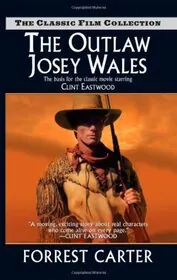
The Outlaw Josey Wales / Gone To Texas
by Forrest Carter
1973
After raiders kill his family during the Civil War, Missouri farmer Josey Wales becomes a guerrilla and then a hunted outlaw. On the road to Texas, revenge slowly gives way to uneasy friendship and the hope of a new life.
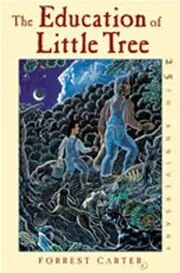
The Education of Little Tree
by Forrest Carter
1976
After he loses his parents, Little Tree goes to live with his grandparents in the Appalachian mountains and learns their lessons about nature, work, and dignity. The story follows his childhood with warmth, humor, and growing contact with a harsher outside world.
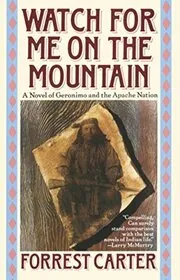
Watch for Me on the Mountain
by Forrest Carter
1976
This novel imagines Geronimo's last fight against the U.S. Cavalry, following him as war leader, medicine man, and hunted man. It mixes survival, memory, and long historical grief into a harsh frontier story.
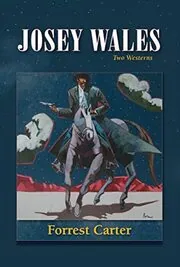
The Vengeance Trail of Josey Wales
by Forrest Carter
1989
Peace does not last for Josey Wales. When fresh violence pulls him south into Mexico, he rides after the men responsible, facing hard country, shifting loyalties, and the cost of keeping vengeance alive.
Where to start with Forrest Carter
If you want the Josey Wales Westerns: The Outlaw Josey Wales / Gone To Texas → The Vengeance Trail of Josey Wales
If you want the best-known coming-of-age novel: The Education of Little Tree
If you want a historical frontier epic: Watch for Me on the Mountain
If you want a quick sense of his range: The Education of Little Tree → The Outlaw Josey Wales / Gone To Texas → Watch for Me on the Mountain
Forrest Carter sub-series and character series
Forrest Carter collections, short stories, and related book types
Non-Fiction
Standalone Forrest Carter books
Author bio
Forrest Carter was the pen name of Asa Earl Carter, a writer whose life is impossible to separate from the politics he came out of. Born on September 4, 1925, in Oxford, near Anniston, Alabama, he grew up in Calhoun County, served in the U.S. Navy during World War II, and later studied journalism at the University of Colorado.
He first became known not as a novelist, but as a political agitator and radio voice in Alabama.
After the war he married his high school sweetheart, India Thelma Walker, and they had four children. In the 1950s he worked in Birmingham radio, published the white supremacist magazine The Southerner, and took part in racist organizing. In the 1960s he wrote speeches for George Wallace and is widely linked to Wallace's most notorious segregation-era rhetoric.
That history matters.
After an unsuccessful run for Alabama governor in 1970, he stepped away from politics and built a new public identity as Forrest Carter. In the early 1970s he left Alabama, spent time in Florida and Texas, and turned to fiction. That reinvention led to The Rebel Outlaw: Josey Wales, later republished as Gone to Texas, a hard Western about a former Confederate guerrilla trying to outrun both his enemies and his own rage.
The Josey Wales books, including The Vengeance Trail of Josey Wales, became the center of his short writing career. Readers who respond to them usually like the blunt prose, the campfire storytelling, and the way the books mix gunfights with questions of loyalty, betrayal, and makeshift family. The first novel reached a much larger audience when Clint Eastwood adapted it into the film The Outlaw Josey Wales in 1976.
That same year he published The Education of Little Tree, the book most closely tied to his name. Framed as the childhood memories of an orphaned boy raised by Cherokee grandparents in the Appalachian mountains, it offered lessons about nature, work, family, and distrust of institutions. Many readers connected with its warm voice and simple life lessons. Years later, after a paperback reissue, it became a major bestseller and won a booksellers' award, even as its autobiographical claim was exposed as false.
He kept returning to outsiders under pressure.
In Watch for Me on the Mountain, his novel about Geronimo, you can see the same interests again: survival, resistance, harsh landscapes, and people forced to live beyond the reach of ordinary law. Across his fiction, the central figures are often hunted men, suspicious of government, bound by kinship or friendship, and trying to hold on to some private code in a violent world. His style is lean and direct, built for momentum more than polish.
Carter died in Abilene, Texas, on June 7, 1979, while still in mid-career and reportedly working on more projects, including an unfinished sequel to The Education of Little Tree. His legacy is deeply tangled: a brief but influential run as a novelist, a famous Western adaptation, a bestselling book, and a false identity that eventually collapsed under scrutiny. Reading Forrest Carter now means holding all of that at once.






Edited by
Software engineer whose passion for tracking book recommendations from podcasts inspired the creation of MRB.
Lead investor at 3one4 Capital whose startup expertise and love for books helped shape MRB and its growth.
Comments
Did we miss something? Have feedback?
Help us improve this page by sharing your thoughts