
Flannery O'Connor Books in Order
This page lists Flannery O'Connor books in order, with short summaries of the novels, stories, essays, and letters, plus help choosing where to start.
Last updated: 1 new book added
Coming soonNext book: Flannery O'Connor on Writing (2027) · Pre-order on Amazon
As an Amazon Associate, we earn from qualifying purchases (at no extra cost to you).
Flannery O'Connor books in publication order
12 books
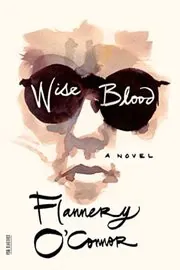
Wise Blood
by Flannery O'Connor
1952
Hazel Motes, a young veteran bent on escaping belief, lands in a seedy Southern city and founds the Church Without Christ. Around him gather false prophets, hustlers, and hangers-on, as O'Connor turns spiritual crisis into dark comedy.

A Good Man Is Hard To Find
by Flannery O'Connor
1955
O'Connor's first story collection brings together ten sharp, often brutal pieces about families, drifters, pride, and grace in the South. The famous title story sits beside other standouts that mix comic detail with moral shock.

The Artificial N***er
by Flannery O'Connor
1955
In this short story, Mr. Head takes his grandson Nelson from the country into Atlanta, hoping to teach him a lesson about the city. The trip goes badly, exposing pride, fear, and prejudice in ways neither of them can control.
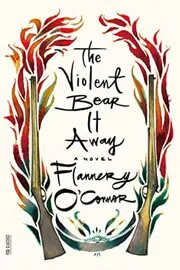
The Violent Bear It Away
by Flannery O'Connor
1960
Fourteen-year-old Francis Marion Tarwater tries to outrun the prophetic calling forced on him by his great-uncle. As he is pulled between rural zeal and his schoolteacher uncle's rational world, the novel turns fierce, strange, and deeply unsettling.

Everything That Rises Must Converge
by Flannery O'Connor
1965
This posthumous collection gathers nine late stories set in a changing South, where class, race, faith, and family tensions keep colliding. It includes some of O'Connor's best-known work, written with bite, pity, and unnerving clarity.
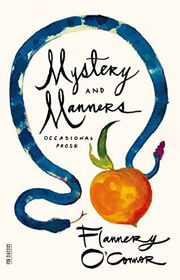
Mystery and Manners
by Flannery O'Connor
1969
This essay collection shows O'Connor thinking aloud about fiction, regional writing, teaching, and religion. It is the place to hear her explain how stories work, while still sounding dry, funny, and very much herself.
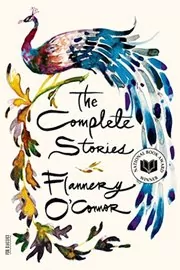
The Complete Stories
by Flannery O'Connor
1971
Winner of the National Book Award, this volume brings together all thirty-one of O'Connor's stories in chronological order. It is the best single book for seeing her range, from early apprentice work to the devastating late masterpieces.
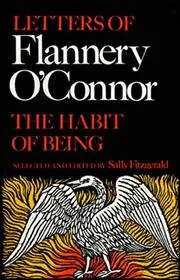
The Habit of Being
by Flannery O'Connor
1978
Edited by Sally Fitzgerald, this large collection of letters follows O'Connor from 1948 to the last days of her life. It opens up her daily writing life, friendships, illness, humor, and hard thinking about faith and fiction.
Presence of Grace and Other Book Reviews
by Flannery O'Connor
1983
This posthumous volume gathers more than a hundred book reviews O'Connor wrote for Catholic newspapers in Georgia. It shows her as a sharp, funny reader, with strong opinions about fiction, faith, and what makes prose come alive.

Flannery O'Connor
by Flannery O'Connor
2003
This selected volume focuses on O'Connor as a spiritual writer, drawing from her fiction, essays, and letters. It includes the complete story Revelation and gives a clear sense of how faith, suffering, and grace shaped her work.
Plough Quarterly No. 4: Earth
by Bill McKibben, Eugene H. Peterson, N. T. Wright, Elizabeth Lev, Calvin DeWitt, Jane Tyson Clement, Wendell Berry, Barbara Kingsolver, John Reid Muir, Flannery O'Connor, Pope John Paul II & Peter Mommsen
2015
The fourth issue of Plough Quarterly considers how faith can shape care for the natural world. Essays, stories, art, interviews, and other pieces from scientists, farmers, writers, and artists examine environmental responsibility, agriculture, creation, and human relationships with the earth.

Flannery O'Connor on Writing
by Flannery O'Connor
2027
Letters, reviews, interviews, and talks reveal Flannery O’Connor’s thinking about fiction and the writer’s craft. Her advice to fellow writers explores the demands of storytelling, bringing practical observations into conversation with her understanding of art and belief.
Where to start with Flannery O'Connor
If you want the best entry point: A Good Man Is Hard To Find → Everything That Rises Must Converge → The Complete Stories
If you want the novels first: Wise Blood → The Violent Bear It Away
If you want O'Connor on writing and belief: Mystery and Manners → The Habit of Being
If you want a compact spiritual sampler: Flannery O'Connor → Mystery and Manners
Flannery O'Connor collections, short stories, and related book types
Short Story Collections
Non-Fiction
Standalone Flannery O'Connor books

by Bill McKibben, Eugene H. Peterson, N. T. Wright, Elizabeth Lev, Calvin DeWitt, Jane Tyson Clement, Wendell Berry, Barbara Kingsolver, John Reid Muir, Flannery O'Connor, Pope John Paul II & Peter Mommsen
2015
Author bio
Flannery O'Connor was born in Savannah, Georgia, on March 25, 1925, and spent her childhood in a close Catholic family as the only child of Regina Cline and Edward O'Connor. She was an avid reader early, but she was also a sharp-eyed observer with a gift for drawing people a little askew. After her family moved to Milledgeville in 1938, the small towns, farms, churches, and country roads of Georgia became the landscape she would keep returning to on the page.
When she was fifteen, her father died of lupus. That loss stayed with her. She remained in Milledgeville, attended Georgia State College for Women as a day student in an accelerated program, and drew cartoons for the campus paper while quietly building the habits of a writer.
She could draw before most people knew she could write.
In 1945 she went to the University of Iowa on a journalism scholarship, then quickly realized fiction was where she belonged. Paul Engle admitted her to the Writers' Workshop, and the change mattered. Her first published story, The Geranium, appeared in 1946, and her master's thesis became a story collection of the same name. Those Iowa years also gave her the first real drafts of Wise Blood, the novel that would announce her.
After Iowa she spent time at Yaddo in New York, then lived for nearly two years with Sally and Robert Fitzgerald in Ridgefield, Connecticut. It was a good working stretch. She kept shaping Wise Blood, learned to trust the oddness of her own voice, and deepened the mix that readers now recognize right away, hard comedy, spiritual argument, physical detail, and sudden violence. When Wise Blood appeared in 1952, with Hazel Motes trying to outrun belief in a shabby Southern landscape, it showed how interested O'Connor was in false prophets, spiritual hunger, pride, and the trouble people make when they try to save themselves.
Then lupus cut into the middle of her working life.
In 1950 O'Connor was diagnosed with the same disease that had killed her father, and in 1951 she returned permanently to Andalusia, the family farm outside Milledgeville. She lived there with her mother, wrote in the mornings, and did her best to protect that work time. She also reviewed books for Catholic newspapers in Georgia, answered a remarkable number of letters, welcomed visitors, and raised peafowl that became closely associated with her. Her life could look narrow from the outside, house, farm, church, letters, but the work that came out of it was anything but small.
The later books are some of the strongest. A Good Man Is Hard To Find brought her short fiction to a wider audience in 1955, and The Violent Bear It Away followed in 1960 with another fierce story about calling, resistance, and belief. The stories gathered in Everything That Rises Must Converge, published after her death, take on race, class, family strain, and the shock of a changing South. Again and again, O'Connor wrote about salesmen, preachers, grandmothers, farm wives, proud intellectuals, and drifters who think they understand themselves right up until the moment they do not.
She stayed close to home, but her fiction never felt housebound.
Readers often come to O'Connor for the dark humor, the grotesque turns, and the famous shocks, then stay for the moral pressure underneath. Her stories are rooted in the South, but not in a postcard version of it. She writes buses, boarding houses, tenant farms, city streets, cheap rooms, sermons, family quarrels, and people who use good manners to hide vanity or fear. If you want her explaining craft in her own voice, Mystery and Manners is the place to go. If you want the private version of that voice, The Habit of Being shows her wit, discipline, and fierce intelligence in letters.
O'Connor died in Milledgeville on August 3, 1964, after complications from lupus, when she was only thirty-nine. Her reputation kept growing after her death. The Complete Stories won the National Book Award in 1972, and it remains the clearest one-volume map of what made her matter: a writer who could be funny and severe at once, skeptical about human vanity, and still alert to the possibility of grace.








Edited by
Software engineer whose passion for tracking book recommendations from podcasts inspired the creation of MRB.
Lead investor at 3one4 Capital whose startup expertise and love for books helped shape MRB and its growth.
Comments
Did we miss something? Have feedback?
Help us improve this page by sharing your thoughts