
First Contact Books in Order
Part ofSteven Erikson Books in OrderFollow Steven Erikson’s First Contact science fiction series in order, with summaries, themes, and background on how Rejoice reimagines alien intervention and humanity’s response.
Last updated:
As an Amazon Associate, we earn from qualifying purchases (at no extra cost to you).
First Contact books in publication order
1 book
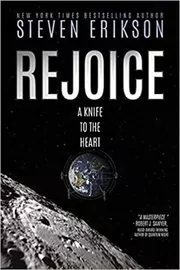
Rejoice, a Knife to the Heart
by Steven Erikson
2018
When exclusion zones appear across Earth and violence suddenly stops working, abducted science-fiction writer Samantha August is told by an alien-run AI that humanity is under Intervention. Rejoice uses her arguments and the global fallout to ask what real change might cost our species.
First Contact books in chronological order
Series background & context
Under the umbrella of First Contact, Erikson has written a thoughtful, near‑future novel that asks what happens if an alien arrival simply sidesteps humanity’s usual scripts. Instead of fleets in the sky or diplomatic summits, Rejoice, a Knife to the Heart imagines an intervention that removes our ability to keep behaving as we have.
The book opens with Canadian science‑fiction writer Samantha August being abruptly taken from a city street in a beam of light. She wakes in a small, white room in orbit, talking to an AI that calls itself Adam and speaks on behalf of a coalition of advanced civilisations. They have decided that Earth remains valuable as a living world, but that the way humans run it is not.
While Samantha argues, questions and slowly decides how much she is willing to help, the Intervention begins below. Exclusion zones appear across the globe where human access is cut off and ecosystems are allowed to recover. Acts of violence, from domestic abuse to war, are physically halted. Weapons fail. Oil extraction and other forms of large‑scale environmental damage abruptly stop working.
The narrative moves between Samantha’s extended conversations with Adam and a wide range of people on the ground: politicians, religious leaders, media figures, soldiers, activists and ordinary citizens. Many are furious that their power has been taken away; others see a brief, terrifying chance to rebuild how things work. The aliens themselves never step onto the stage. Their presence is felt only through the constraints they impose and through Samantha’s uneasy role as potential spokesperson.
Rather than focusing on hardware or alien physiology, the story leans into social, economic and ethical questions. What if you could not hide pollution, violence or exploitation behind borders or secrecy? What happens to markets, faiths and nation-states when entire systems of enforcement and extraction vanish overnight? Erikson uses the familiar first‑contact frame to poke at capitalism, nationalism and our habit of calling obviously unsustainable arrangements “normal”.
If you come from Malazan, you’ll recognise his preoccupation with power structures and with how individuals respond when those structures suddenly shift. Here, though, the scale is our own world, and the battles are fought with arguments, media spin and quiet acts of resistance rather than swords.
It’s less a story about aliens than a thought experiment about us, using science fiction to ask what we would cling to and what we might finally be willing to let go.















Edited by
Software engineer whose passion for tracking book recommendations from podcasts inspired the creation of MRB.
Lead investor at 3one4 Capital whose startup expertise and love for books helped shape MRB and its growth.
Comments
Did we miss something? Have feedback?
Help us improve this page by sharing your thoughts