
Farseer Books in Order
Part ofRobin Hobb Books in OrderFind all the Farseer books by Robin Hobb in order, with quick summaries, series background, Six Duchies reading order notes and where to begin Fitz’s story.
Last updated:
As an Amazon Associate, we earn from qualifying purchases (at no extra cost to you).
Farseer books in publication order
5 books

Assassin's Apprentice
by Robin Hobb
1995
Taken from his mother to the royal keep, the bastard boy Fitz is trained in secret as an assassin while learning he carries two dangerous magics. As Outislander raiders terrorize the coasts, his loyalty to the Farseers is tested again and again.
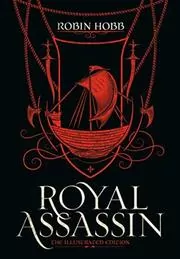
Royal Assassin
by Robin Hobb
1996
Fitz returns to Buckkeep still damaged from poison, bound more deeply than ever to his wolf Nighteyes and to the king. As Red Ship raids escalate, treachery at court forces him to juggle secret assassinations, forbidden Wit magic and a doomed love.
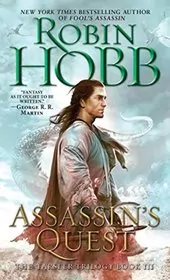
Assassin's Quest
by Robin Hobb
1997
Raised from the edge of death, Fitz escapes the usurper king and sets out across mountains and legend to find his missing king in waiting. His journey toward the Elderling road and stone dragons will decide the fate of the Six Duchies and his own.
Words Like Coins
by Robin Hobb
2012
In a drought stricken corner of the Six Duchies, hedge witch apprentice Mirrifen struggles with her own fears when tiny, dangerous pecksies move into the farmstead. Their bargains and tempers force her to weigh the power of promises, etiquette and the literal weight of words.
The Willful Princess and the Piebald Prince
by Robin Hobb
2013
Set long before Fitz's time, this tale follows lowborn Felicity, companion to headstrong Princess Caution, who loves a Witted stableman. When Caution bears a piebald marked son, courtly fear of the Wit and buried truths about his birth ignite a deadly legend.
Farseer books in chronological order
Series background & context
The Farseer trilogy is the starting point for the Realm of the Elderlings, told as the retrospective memoir of FitzChivalry Farseer. The books follow Fitz from the age of six through young adulthood as he serves the royal line of the Six Duchies first as a stable boy and then as a secret assassin. The narration is intimate and often painful, full of the hindsight of an older man who knows how badly things can go.
In Assassin's Apprentice a nameless child is dropped at a military outpost and presented as the bastard son of Chivalry, heir to the throne. Chivalry gives up his position rather than set off a succession crisis, leaving the boy to be raised by his loyal man Burrich in the shadow of Buckkeep Castle. Drawn into the notice of King Shrewd, Fitz is slowly trained by the king’s hidden assassin, Chade, while learning to navigate a court that will never fully accept him.
Two forms of magic shape the series. The royal Skill allows telepathic communication and sharing of strength within the Farseer line, but it is dangerous and addictive. The Wit, an older magic that bonds humans to animals, is seen as filthy and corrupting, punishable by hanging. Fitz turns out to carry both, linking him to the royal coterie and to his wolf partner Nighteyes, yet forced to hide his Witted nature even from many friends.
Around him, the Six Duchies are under siege from Red Ship Raiders who “Forge” their captives, stripping them of empathy and leaving them as brutal, empty husks. Verity, the new king in waiting, fights the war with the Skill while internal politics rot the court from within. Over Royal Assassin and Assassin's Quest, Fitz is dragged between his obligations to the crown, his love for the maid Molly, his bond with Nighteyes and his fraught friendship with the Fool as he is sent on missions that scar both body and mind.
The trilogy is less about battlefield heroics than about endurance, loyalty and the cost of being useful to powerful people. Fitz is never entirely on the inside; as a bastard, an assassin and a Witted man he is always half in shadow, making choices that matter hugely while almost no one is allowed to credit him. The books linger on trauma, disability and recovery as much as on intrigue, and they do not promise neat rewards for doing the right thing.
For new readers, Farseer is usually the best entry point into Hobb’s work. It stands alone well, but it also lays the emotional groundwork and political history that echo through Liveships, Tawny Man, Rain Wild and Fitz and the Fool, turning later encounters with dragons, Elderlings and distant cities into payoffs for seeds planted here.
Edited by
Software engineer whose passion for tracking book recommendations from podcasts inspired the creation of MRB.
Lead investor at 3one4 Capital whose startup expertise and love for books helped shape MRB and its growth.
Comments
Did we miss something? Have feedback?
Help us improve this page by sharing your thoughts