
Eugene Burdick Books in Order
This page lists Eugene Burdick books in order, with short summaries, coauthor pages, background on his work, and a quick guide to where to start reading.
Last updated:
As an Amazon Associate, we earn from qualifying purchases (at no extra cost to you).
Eugene Burdick books in publication order
9 books
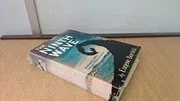
The Ninth Wave
by Eugene Burdick
1956
Mike Freesmith claws his way up through California politics by turning fear, resentment, and media savvy into raw power. Burdick's first novel is a hard look at how ambition can hollow out public life.
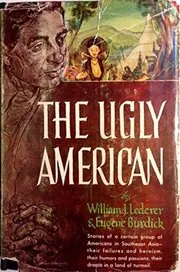
The Ugly American
by Eugene Burdick
1958
Set in the fictional nation of Sarkhan, this linked novel shows how American arrogance and cultural blindness can wreck foreign policy. Its strongest moments come from people who listen, learn local realities, and work far outside embassy walls.
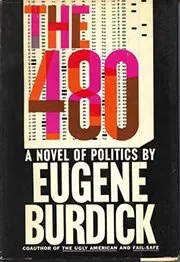
The 480
by Eugene Burdick
1964
In a race for the Republican nomination, operatives use polling, segmentation, and computer models to manufacture a candidate. Burdick's political thriller feels strikingly modern as it asks how much democracy can survive data-driven manipulation.

Ninas Book
by Eugene Burdick
1965
During World War II, Nina helps an American flier escape occupied France, then endures the long cost of war herself. Their postwar reunion in Paris turns the novel into a story of survival, memory, and love altered by history.
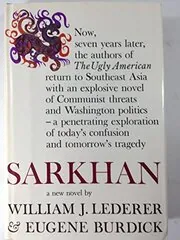
Sarkhan
by Eugene Burdick
1965
A businessman and a professor try to stop a communist takeover in the fictional Southeast Asian nation of Sarkhan. Burdick and William J. Lederer mix local politics, Washington pressure, and Cold War nerves into a tense return to the world of The Ugly American.

A Role in Manila
by Eugene Burdick
1966
This posthumous collection gathers fifteen tales of war, aftermath, peace, and adventure, many shaped by Burdick's Pacific experience. The stories mix tense action with uneasy moral choices and the lingering effects of conflict.

American Voting Behavior
by Eugene Burdick
1977
Edited by Burdick and Arthur J. Brodbeck, this volume studies how party loyalty, social groups, and campaigns shape the American vote. It is a serious political science collection, but it also shows the ideas Burdick later pushed into fiction.

Blue of Capricorn
by Eugene Burdick
1987
A blend of travel writing, reportage, and fiction, this book moves through Oceania and lingers on its islands, peoples, and collisions between locals and outsiders. It shows Burdick in a looser, more reflective mode than his political thrillers.

Fail-Safe
by Eugene Burdick
1999
A technical failure sends American nuclear bombers toward Moscow, and officials on both sides scramble to stop the unthinkable. Burdick and Harvey Wheeler turn command rooms, phone lines, and split-second choices into tight Cold War suspense.
Where to start with Eugene Burdick
If you want his best-known foreign policy novel: The Ugly American → Sarkhan
If you want Cold War suspense: Fail-Safe
If you want campaign politics and power games: The Ninth Wave → The 480
If you want Pacific writing and shorter pieces: Blue of Capricorn → A Role in Manila
If you want the academic side of his work: American Voting Behavior
Eugene Burdick collections, short stories, and related book types
Non-Fiction
Standalone Eugene Burdick books
Author bio
Eugene Burdick was born in Sheldon, Iowa, on December 12, 1918, but California shaped most of his life. His family moved to Los Angeles when he was four, and that West Coast upbringing stayed in the background of his work, especially his eye for ambition, reinvention, and public performance.
He studied psychology at Stanford and finished his degree in 1942, just as the United States was deep in World War II. Burdick served in the U.S. Navy in the Pacific and reached the rank of lieutenant commander. The war gave him firsthand experience of military life, chain of command, and the strange mix of boredom and danger that later turned up again in his fiction.
Writing came into public view soon after. His story Rest Camp on Maui, drawn from those wartime years, received O. Henry Prize recognition in 1947 and helped mark him as a writer to watch. Soon after that he went to Oxford as a Rhodes Scholar, earned a doctorate at Magdalen College, and studied British labor politics with the same seriousness he brought to fiction.
Back in the United States, Burdick joined the political science faculty at the University of California, Berkeley. He taught, wrote scholarly work, and edited American Voting Behavior, but he was never only an academic. He kept turning public questions into stories, asking how power works, how institutions fail, and what people do when systems start running faster than conscience.
He never really separated politics from storytelling.
That blend is all over The Ninth Wave, his first novel, a dark look at political manipulation in California, and The 480, which imagined campaigns built around polling, voter categories, and computer-driven strategy long before that became familiar language. Readers who click with Burdick usually like this side of him most. He is sharp about ambition, skeptical of experts who think they can engineer public life, and very good at showing how private weakness turns into public trouble.
His best-known book is The Ugly American, written with William J. Lederer. Set in the fictional Southeast Asian country of Sarkhan, it argues that American influence abroad can fail when officials do not listen, learn, or understand the people around them. Burdick and Lederer returned to that world in Sarkhan. With Harvey Wheeler, he also wrote Fail-Safe, the Cold War thriller about a nuclear crisis set off by error inside the military system. Those books made him widely known, and two of them were adapted for the screen.
He could move beyond straight political fiction, though. Blue of Capricorn mixes fact and fiction in writing about the Pacific and its peoples, while Nina's Book follows war, imprisonment, survival, and a difficult reunion in postwar Europe. Burdick died suddenly of a heart attack on July 26, 1965, at just forty-six, leaving behind his wife, Carol, and their three children.
It was a short career, but not a small one.
What keeps Burdick interesting is how current his worries still feel. He wrote about Americans abroad, nuclear command systems, data-driven politics, and the gap between official confidence and lived reality. Even when the details are rooted in the 1950s and 1960s, the pressure points feel familiar.
















Edited by
Software engineer whose passion for tracking book recommendations from podcasts inspired the creation of MRB.
Lead investor at 3one4 Capital whose startup expertise and love for books helped shape MRB and its growth.
Comments
Did we miss something? Have feedback?
Help us improve this page by sharing your thoughts