
Etgar Keret Books in Order
Explore Etgar Keret's books in order, with short summaries, standout collections, and clear where-to-start guidance for his stories, memoir, and graphic work.
Last updated:
As an Amazon Associate, we earn from qualifying purchases (at no extra cost to you).
Etgar Keret books in publication order
18 books

Kneller's Happy Campers
by Etgar Keret
1998
After dying by suicide, a young man lands in an afterlife populated by others who made the same choice. When he learns his girlfriend may be somewhere in this shabby next world, he sets off on a strange, sad, and darkly comic search.
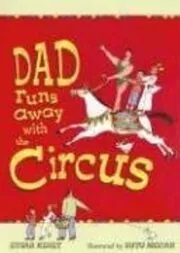
Dad Runs Away with the Circus
by Etgar Keret
2000
When their father disappears to join the circus, two children narrate the mix of worry, wonder, and hurt he leaves behind. The picture book turns family disruption into something funny, bittersweet, and oddly hopeful.
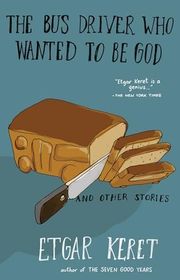
The Bus Driver Who Wanted To Be God & Other Stories
by Etgar Keret
2001
This early English collection gathers Keret's brief, darkly funny stories alongside the novella Kneller's Happy Campers. Everyday frustration, desire, violence, and absurdity keep colliding in pieces that move fast and leave a sting behind.

Gaza Blues
by Etgar Keret
2004
This joint volume with Samir El-Youssef brings Israeli and Palestinian lives into the same book without smoothing over the tension. The stories are darkly funny, politically charged by circumstance, and deeply interested in ordinary people under pressure.

Pizzeria Kamikaze
by Etgar Keret
2004
In this graphic retelling of Kneller's Happy Campers, a heartbroken young man lands in an afterlife for suicides and goes looking for the girlfriend he lost. The setup is bizarre, funny, and sad in equal measure.
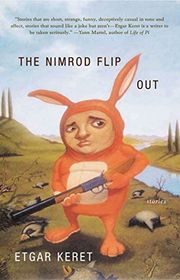
The Nimrod Flipout
by Etgar Keret
2005
These stories begin in ordinary frustration and veer into the absurd, whether the subject is love, bodies, memory, or military life. Keret keeps them short, strange, and surprisingly tender, even when the ground keeps shifting.
Jetlag
by Etgar Keret
2006
Five of Keret's short stories become graphic novellas here, each drawn by a different artist. The result is a moody, visually varied set of tales where love, violence, and absurdity keep folding into each other.

Missing Kissinger
by Etgar Keret
2007
Keret's breakthrough collection is packed with very short stories about soldiers, awkward desire, humiliation, and flashes of grace. The tone is cool, funny, and bruised, and the pieces often turn from silliness to pain in a line or two.

The Girl on the Fridge
by Etgar Keret
2008
This selection from Keret's early work is full of magicians, failed lovers, odd children, and people one step from disaster. The stories are brisk, surreal, and emotionally precise, even when the premises sound like jokes.
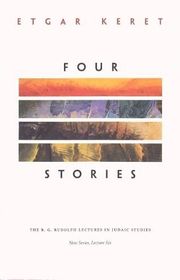
Four Stories
by Etgar Keret
2010
This slim booklet pairs Keret's lecture Second Generation with four stories, including Siren and Foreign Language. It works as a compact introduction to his mix of humor, memory, family history, and moral unease.

Cheesus Christ
by Etgar Keret
2012
A fast-food world starts sliding into the bizarre as ordinary people chase money, meaning, and a little grace. Keret turns the setup into a darkly comic jolt, brief, absurd, and sharper than it first looks.
Grab the Cuckoo by the Tail
by Etgar Keret
2012
An upbeat would-be investor tries to rescue a depressed friend with promises of easy money and a brighter future. The plan is shaky from the start, which makes the story funny, uneasy, and unexpectedly sad.

Suddenly, a Knock on the Door
by Etgar Keret
2012
A man with a gun demands a story, and that opening shock sets the tone for a collection where the living and the dead, the comic and the cruel, sit side by side. These stories are playful, strange, and deeply human.

Long-Haired Cat-Boy Cub
by Etgar Keret
2013
Left to amuse himself at the zoo while his father talks business, a tired little boy turns the day into a wild adventure of escaped animals and airships. It is funny, sweet, and very clearly a plea to be heard.
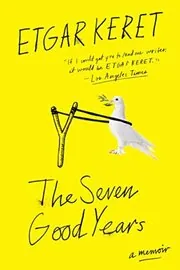
The Seven Good Years
by Etgar Keret
2013
Keret's memoir follows the years between the birth of his son and the death of his father, with war, illness, and family chaos always close by. The pieces are brief, funny, and more moving than their light touch first suggests.

Todd
by Etgar Keret
2013
Todd asks a writer friend for a story that will help him get women into bed. What follows is a funny, meta exchange about loneliness, performance, and the gap between the stories people want and the ones they need.
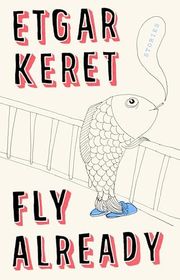
Fly Already
by Etgar Keret
2019
In these later stories, Keret keeps the absurd humor but adds even more tenderness and dread. Parents, lovers, and lonely drifters move through warped versions of everyday life, trying to connect before the moment slips away.
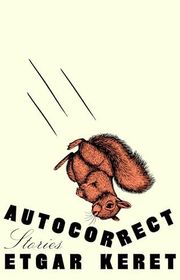
Autocorrect
by Etgar Keret
2025
This collection brings Keret's short fiction into the digital age, using alternate realities, future tech, and small everyday glitches to ask what still makes us human. The stories are funny, uneasy, and warmer than their setups might suggest.
Where to start with Etgar Keret
If you want the essential short stories: The Bus Driver Who Wanted To Be God & Other Stories → The Girl on the Fridge → Suddenly, a Knock on the Door
If you want his most personal book: The Seven Good Years
If you want newer, more reflective stories: Fly Already → Autocorrect
If you want the graphic side of his work: Pizzeria Kamikaze → Jetlag
If you're reading with kids: Long-Haired Cat-Boy Cub → Dad Runs Away with the Circus
Etgar Keret collections, short stories, and related book types
Short Stories/Novellas
Short Story Collections
Picture Books
Graphic Novels
Non-Fiction
Author bio
Etgar Keret was born in Ramat Gan, Israel, in 1967 and grew up near Tel Aviv in a secular family. He is the youngest of three children, and both of his parents were Holocaust survivors from Poland. That family history, along with the push and pull of ordinary Israeli life, sits quietly behind a lot of his work.
He did not come to writing through a tidy literary plan. Keret has said that he started writing during his compulsory army service, after the death of a close friend left him looking for a way to make sense of fear, grief, and the strange logic of daily life. The short story suited him, maybe because it let him move fast, get at the truth sideways, and stop before a feeling turned into a speech.
That shape became his signature.
Books like Missing Kissinger, The Bus Driver Who Wanted to Be God & Other Stories, and The Girl on the Fridge introduced readers to the kind of story only Keret seems to tell: a few pages long, spoken in plain language, funny until they are not, and full of people who are lonely, hopeful, embarrassed, or just trying to get through the day. A bus driver misses mercy by seconds. A magician's trick goes wrong. A love story swerves into something sadder and stranger.
His work often lives right on the edge between the everyday and the absurd. Parents, soldiers, children, deadpan slackers, and men making bad decisions wander through Tel Aviv apartments, army bases, buses, cafes, and afterlives that look suspiciously like shabby suburbs. The jokes land quickly, but so do the jolts of loss, guilt, tenderness, and missed connection.
He can also stretch that world into other forms. Kneller's Happy Campers sends a heartbroken narrator through an afterlife for suicides. Pizzeria Kamikaze, made with illustrator Asaf Hanuka, retells that story as a graphic novel. And with his wife, Shira Geffen, Keret co-directed Jellyfish, the film that won the Camera d'Or at Cannes in 2007.
Then came The Seven Good Years, a memoir built from brief scenes between the birth of his son, Lev, and the death of his father. It shows what longtime readers already knew: the surreal humor was never just a trick. Keret writes about family, illness, war, and parenthood in a way that stays light on its feet without pretending life is light.
His later collections, especially Fly Already and Autocorrect, keep asking the same big questions in new shapes. How do people miss each other so often. How do they keep trying anyway. And what happens to intimacy when technology, violence, and distraction keep crowding the room.
Over time, that work traveled far beyond Israel. His books have been translated into more than forty languages, and Fly Already won the Sapir Prize in Israel before its English translation picked up a National Jewish Book Award. Those facts matter, but readers usually stay for the same reason, the stories feel odd and intimate at once.
He writes small stories with a long echo.
Keret lives in Tel Aviv with Geffen and their son, and he teaches creative writing at Ben-Gurion University of the Negev. He has also kept up a steady life in film, television, journalism, and essays. Across all of it, the voice is recognizable: casual, alert, a little baffled by the world, and still curious about people even when they are at their worst.

















Edited by
Software engineer whose passion for tracking book recommendations from podcasts inspired the creation of MRB.
Lead investor at 3one4 Capital whose startup expertise and love for books helped shape MRB and its growth.
Comments
Did we miss something? Have feedback?
Help us improve this page by sharing your thoughts