
Ellen Ullman Books in Order
This page lists Ellen Ullman books in order, with quick summaries, a simple guide to where to start, and background on her fiction and technology writing.
Last updated:
As an Amazon Associate, we earn from qualifying purchases (at no extra cost to you).
Ellen Ullman books in publication order
4 books
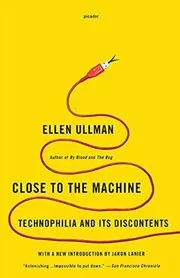
Close to the Machine
by Ellen Ullman
1997
Ullman's memoir of life as a programmer during the early tech boom looks past the glamour to the logic, office politics, and loneliness of the job. It is a sharp, deeply human account of turning messy lives into code.
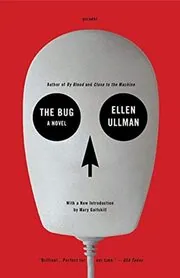
The Bug
by Ellen Ullman
2003
At a startup in 1984, software tester Roberta Walton uncovers a baffling flaw nicknamed the Jester, and programmer Ethan Levin cannot let it go. The hunt becomes a tense story about obsession, ambition, and the human cost of code.
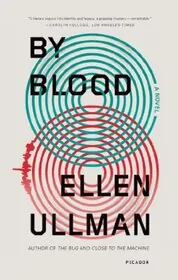
By Blood
by Ellen Ullman
2012
In 1970s San Francisco, a disgraced professor overhears a young lesbian's therapy sessions and becomes obsessed with her search for her biological family. His secret meddling turns the story into a dark, tense mystery about identity and control.
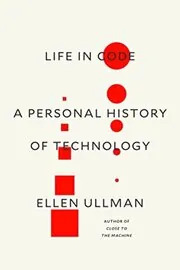
Life in Code
by Ellen Ullman
2017
In essays that stretch from the mid-1990s into the age of AI, Ullman tracks tech culture from the inside. She mixes memoir and criticism to show how computers reshaped work, cities, and ordinary human life.
Where to start with Ellen Ullman
If you want the classic tech memoir first: Close to the Machine → Life in Code
If you want fiction about programmers and work: The Bug
If you want a darker psychological novel: By Blood
If you want the full arc of her writing: Close to the Machine → The Bug → By Blood → Life in Code
Ellen Ullman collections, short stories, and related book types
Non-Fiction
Standalone Ellen Ullman books
Author bio
Ellen Ullman grew up in Flushing, Queens, in an adoptive family, then went to Cornell to study English. At first, writing and computers did not seem like they belonged in the same life.
After college, she got involved in video and early community cable work around Ithaca. She liked the hands-on side of it, cables, machines, and making complicated things behave. When she moved to San Francisco in the early 1970s, she bought a Radio Shack TRS-80, taught herself to program, and wrote her first computer program in 1978.
That detour became her real education.
Ullman spent about twenty years working as a programmer and software engineer. She wrote code during the early personal computer years and the first big wave of networked computing, worked on business software and graphical interfaces, ran her own consulting firm, and saw up close how much ego, idealism, boredom, and anxiety could fit inside a technical workplace. She also spoke about technology on public radio.
Her writing career started almost sideways. An editor asked her to write about what it was actually like to be a programmer, not in theory but in daily life, and that piece led to more work. It eventually became Close to the Machine, her 1997 memoir of programming, workplace culture, and the uneasy fit between clean logic and messy human needs. The book has stayed in print because it still feels startlingly current.
That was the start of her subject, too.
Ullman keeps returning to the border between systems and souls. She writes about the strange pleasure of code, but also about office politics, isolation, ambition, gender, and the way technical people can start believing that every problem ought to have a neat solution. What readers often like most is that she never treats computers as abstract symbols. They are tools, jobs, obsessions, and sometimes excuses.
Her first novel, The Bug, carried those ideas into fiction. Set inside a software company in 1984, it turns a stubborn software flaw into a story about obsession, hierarchy, and the mental pressure of technical work. The book was a finalist for the PEN/Hemingway Award, and it helped show that Ullman was not just writing about tech, she could use it to drive a full-blown human drama.
Then she took a very different road with By Blood. Set in 1970s San Francisco, the novel follows a disgraced professor who becomes obsessed with a young woman searching for her biological family. Adoption, secrecy, history, and self-invention all come into play, and the book became a New York Times Notable Book. It also makes clear how much Ullman cares about identity, not as a slogan, but as a deep and sometimes destabilizing question.
With Life in Code, she returned to essays and memoir. The book looks at the decades after Close to the Machine, when computers moved from a specialist's world into everyday life and began shaping work, culture, politics, and private experience at a much larger scale. Her essays have appeared in places like Harper's and Wired, and across all of this work she keeps asking a stubborn question: what happens to human beings when more and more of life has to pass through code? She has long been based in San Francisco, and that city, along with the tech world around it, remains one of the key landscapes in her work.






Edited by
Software engineer whose passion for tracking book recommendations from podcasts inspired the creation of MRB.
Lead investor at 3one4 Capital whose startup expertise and love for books helped shape MRB and its growth.
Comments
Did we miss something? Have feedback?
Help us improve this page by sharing your thoughts