
Ellen Raskin Books in Order
Browse Ellen Raskin’s books in order, with quick summaries of her mysteries and picture books, plus simple tips on where to start and what to read next.
Last updated:
As an Amazon Associate, we earn from qualifying purchases (at no extra cost to you).
Ellen Raskin books in publication order
15 books
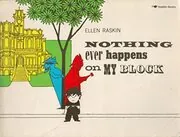
Nothing Ever Happens On My Block
by Ellen Raskin
1966
Chester Filbert sits on the curb complaining that his street is boring while wild, funny drama unfolds all around him. Readers get the full joke because they see every rescue, mishap, and near disaster he misses.
Spectacles
by Ellen Raskin
1968
Without her glasses, Iris Fogel mistakes ordinary people and objects for dragons, elephants, and other impossible sights. Once she gets spectacles, the world makes more sense, but Raskin keeps the joke going to the last page.
And It Rained
by Ellen Raskin
1969
A pig, a parrot, and a potto meet for tea every day, and every day the rain spoils the party. Their increasingly odd fixes lead to a simple solution in this dry, repetitive little comedy.
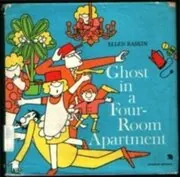
Ghost in a Four-Room Apartment
by Ellen Raskin
1969
An unseen ghost rattles through a crowded apartment, trying to get the family’s attention and have a little fun. The result is a playful, visually clever haunting told through noise, movement, and comic confusion.
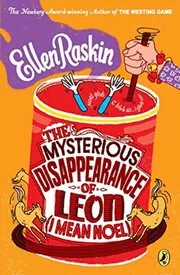
The Mysterious Disappearance of Leon
by Ellen Raskin
1971
After Leon Carillon vanishes, a half-heard message and years of confusion send Mrs. Carillon, her twins, and a friend after the truth. It is a slippery mystery full of puns, odd characters, and clues hidden in plain sound.
The world's Greatest Freak Show
by Ellen Raskin
1971
A smug would-be showman heads off to gather the world’s strangest acts and learns, the hard way, how relative normal can be. Raskin flips the joke on him in a sharp, funny picture book about vanity and spectacle.
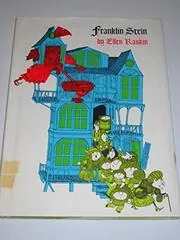
Franklin Stein
by Ellen Raskin
1972
Lonely Franklin Stein builds himself a friend from mops, feathers, wheels, and other odds and ends. Everyone calls the creature awful until a pet show proves that strange and wonderful can be the same thing.
Moe Q. McGlutch, He Smoked Too Much.
by Ellen Raskin
1973
Young Zeke keeps warning his rich cousin Moe Q. McGlutch that constant smoking will bring trouble. It does, in a string of absurd accidents that builds to a big, fiery punch line.
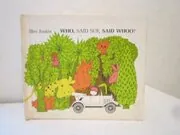
Who, Said Sue, Said Whoo?
by Ellen Raskin
1973
Sue drives along collecting a louder and stranger group of animal passengers, each with a sound of its own. The fun is in the cumulative rhyme, the growing parade, and the final answer to who said what.
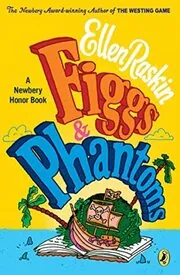
Figgs & Phantoms
by Ellen Raskin
1974
Mona Lisa Figg Newton is stuck with a family of performers, oddballs, and true believers, and only Uncle Florence really gets her. When his search for the family’s version of heaven turns serious, the story becomes funny, strange, and unexpectedly tender.
Moose, Goose and Little Nobody
by Ellen Raskin
1974
When a blown-off red roof lands beside a tiny lost creature, Moose and Goose set out to find his name, home, and mother. Their search becomes a wordplay-heavy identity puzzle with a warm ending.
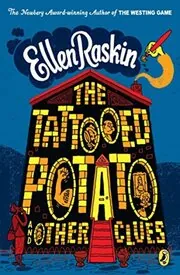
The Tattooed Potato and Other Clues
by Ellen Raskin
1975
Art student Dickory Dock takes a job with a Greenwich Village painter and tumbles into a nest of aliases, neighborhood secrets, and linked cases. It is part mystery, part art-world comedy, with clues tucked into every odd conversation and name.
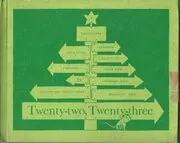
Twenty-two Twenty-three
by Ellen Raskin
1976
A small mouse wants to join a special holiday gathering but cannot decide what to wear. The trip to Twenty-two Twenty-three becomes a rhyming parade of animals, costumes, and a final visual surprise.
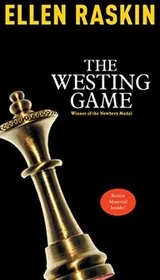
The Westing Game
by Ellen Raskin
1978
Sixteen heirs, one dead millionaire, and a will that reads like a challenge. Turtle Wexler and the other residents of Sunset Towers must solve Samuel W. Westing’s final game before the clues, and the danger, run out.
A Murder for Macaroni and Cheese
by Ellen Raskin
2011
In quiet Grouse Lake, Wisconsin, librarian Madie "Macaroni" Rooney and her shy assistant, Chessa "Cheese" Plotz, start probing a string of crimes. What looks like small-town mischief quickly turns into a knot of clues, secrets, and missing-person trouble.
Where to start with Ellen Raskin
If you want the classic puzzle mystery: The Westing Game
If you want a quirky family novel: Figgs & Phantoms → The Mysterious Disappearance of Leon → The Tattooed Potato and Other Clues
If you want her best picture-book jokes: Nothing Ever Happens On My Block → Spectacles → Ghost in a Four-Room Apartment
If you want playful animal wordplay: Who, Said Sue, Said Whoo? → Moose, Goose and Little Nobody → Twenty-two Twenty-three
Ellen Raskin collections, short stories, and related book types
Picture Books
Standalone Ellen Raskin books
Author bio
Ellen Raskin was born in Milwaukee, Wisconsin, on March 13, 1928, and grew up there during the Depression. That background stayed with her. Her books are full of close observation, neighborhood detail, family clutter, and the sense that something surprising might be hiding inside an ordinary day.
At seventeen she entered the University of Wisconsin-Madison planning to study journalism. Then she visited a major modern art exhibition at the Art Institute of Chicago, was jolted by what she saw, and changed her major to fine art. That turn toward drawing, design, and visual problem-solving shaped everything she made afterward.
She started as an artist, not a novelist.
After college she married, had a daughter, moved to New York City, and learned the practical side of printing and layout in a commercial art studio. Later she freelanced, experimented with typography, illustrated for magazines, and designed more than 1,000 book jackets. One of the best known is the original jacket for A Wrinkle in Time, but jacket work was only part of the education. She was learning how books work as objects, page by page.
After about fifteen years of illustrating other people's ideas, she wanted to build books of her own. Her first solo children's book, Nothing Ever Happens On My Block, appeared in 1966 and already showed her favorite trick: letting the reader see what a character misses. She kept writing and illustrating picture books such as Spectacles, Ghost in a Four-Room Apartment, and And It Rained, books that turn weak eyesight, rainy afternoons, and noisy apartments into carefully staged jokes.
Those early books explain a lot about why readers like her. The pictures do part of the storytelling, the humor often lives in the gap between words and images, and the endings usually come from a shift in perspective instead of a tidy speech about the lesson.
Then the mysteries got bigger.
In her novels, Raskin brought the same visual wit to clues, names, structure, and pacing. The Mysterious Disappearance of Leon (I Mean Noel) spins a missing-person case out of half-heard words and nonsense that slowly makes sense. Figgs & Phantoms, a Newbery Honor Book, follows Mona Lisa Figg Newton through a family of performers and true eccentrics, mixing comedy with grief, books, and the search for belonging. The Tattooed Potato and Other Clues sends art student Dickory Dock into a tangle of aliases, artists, and neighborhood cases.
Her best-known book is The Westing Game. Published in 1978, it gathers sixteen heirs, a dead millionaire, and a very strange will, then turns the whole thing into a puzzle readers can try to solve alongside Turtle Wexler and the other tenants of Sunset Towers. It won the 1979 Newbery Medal, but the reason people keep handing it to new readers is simpler: it is funny, busy, surprising, and packed with memorable people.
Across her work, certain habits keep returning. Things are rarely what they first seem. Names matter. So do apartment buildings, city blocks, odd relatives, performers, artists, and children who notice more than adults expect. Even in her silliest books, she liked hidden patterns, wordplay, disguises, and the feeling that the book itself is part of the joke.
Raskin lived in New York for much of her adult life and kept making books until her death there on August 8, 1984, from a connective-tissue disease. She was fifty-six. The shelf she left behind is not large, but it is easy to spot: brainy, funny, a little strange, and always asking the reader to look again.





Edited by
Software engineer whose passion for tracking book recommendations from podcasts inspired the creation of MRB.
Lead investor at 3one4 Capital whose startup expertise and love for books helped shape MRB and its growth.
Comments
Did we miss something? Have feedback?
Help us improve this page by sharing your thoughts