
Elizabeth Smart Books in Order
Browse Elizabeth Smart books in order, with brief summaries, reading suggestions, and background on her poetry, journals, and prose to help you choose where to start.
Last updated:
As an Amazon Associate, we earn from qualifying purchases (at no extra cost to you).
Elizabeth Smart books in publication order
10 books
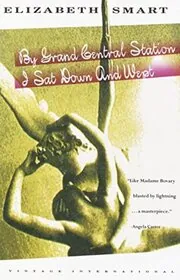
By Grand Central Station I Sat Down and Wept
by Elizabeth Smart
1945
In this lyrical prose novel, a woman is swept into an overwhelming affair with a married poet and undone by desire, guilt, and loss. The plot is slight, but the emotional force and language are huge.

A Bonus
by Elizabeth Smart
1977
This brief collection gathers Smart's late poems, where work, desire, frustration, and sudden joy all flare into language. The pieces are leaner than her famous prose, but they carry the same nervous intensity.
The Assumption of Rogues and Rascals
by Elizabeth Smart
1978
Often read as a companion to By Grand Central Station I Sat Down and Wept, this short novel revisits love, betrayal, and survival from a later, more bruised vantage point. Smart's voice is still intense, but now sharper and more rueful.

In The Meantime
by Elizabeth Smart
1984
A mixed volume of poetry and prose, In The Meantime gathers previously unpublished work alongside autobiographical pieces. It lets readers see Smart moving between memory, family history, and the sharp compressed music of her poems.
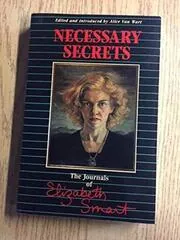
Necessary Secrets
by Elizabeth Smart
1985
Drawn from Smart's journals from 1933 to 1941, this volume catches her ambition, travel, solitude, and growing fixation on George Barker. It offers a raw close-up of the years that led to By Grand Central Station I Sat Down and Wept.
Autobiographies
by Elizabeth Smart
1987
Rather than one straight memoir, this volume gathers autobiographical pieces from different moments in Smart's life. Childhood, family, travel, love, and writing appear in vivid fragments that feel both deeply personal and carefully shaped.

Juvenilia
by Elizabeth Smart
1987
This collection of Smart's adolescent writing shows the young author already drawn to heightened feeling, musical language, and romantic drama. It's most interesting as a first look at the voice that would later become unmistakably her own.

Elizabeth's Garden
by Elizabeth Smart
1989
A slim collection of Smart's garden writing, this book turns weeds, weather, setbacks, and small triumphs into sharp, funny prose. It's a quieter side of her work, full of close observation and the stubborn pleasure of making things grow.

The Collected Poems
by Elizabeth Smart
1992
This volume brings together Smart's poetry across the decades, from familiar pieces to harder-to-find work. Read as a whole, the poems show the same pressure, wit, and emotional voltage that run through her prose.

On the Side of the Angels
by Elizabeth Smart
1994
This second journal volume follows Smart through England, motherhood, and the long shadow of George Barker. Fragmentary but intimate, it catches the strain between daily survival, love, and the need to keep writing.
Where to start with Elizabeth Smart
If you want the essential Elizabeth Smart: By Grand Central Station I Sat Down and Wept → The Assumption of Rogues and Rascals
If you want the life behind the fiction: Necessary Secrets → By Grand Central Station I Sat Down and Wept → On the Side of the Angels
If you want poetry first: A Bonus → In The Meantime → The Collected Poems
If you want a broader self-portrait: Autobiographies → Elizabeth's Garden → Juvenilia
Elizabeth Smart collections, short stories, and related book types
Short Story Collections
Non-Fiction
Standalone Elizabeth Smart books
Author bio
Elizabeth Smart was born in Ottawa on December 27, 1913, into a well-connected family that moved comfortably through the city's legal and political world. She grew up between city life and summers at Kingsmere, went to private schools, and started writing early, publishing a poem when she was still a child.
Music came first, or so it seemed.
At eighteen she went to London to study piano at King's College. The musical training mattered, but words kept tugging harder. Back in Canada she worked briefly at the Ottawa Journal, then traveled as secretary to Margaret Watt of the Associated Country Women of the World, a job that widened her horizons and fed her sense that ordinary life was too small for what she wanted to make.
One small accident changed everything. In a London bookshop she found poems by George Barker, fell hard for the voice on the page, and eventually for the man himself. Their long, difficult relationship produced four children, though they never married, and became the emotional source for By Grand Central Station I Sat Down and Wept, the book that still introduces most readers to her work.
Published in 1945, By Grand Central Station I Sat Down and Wept is less a conventional novel than a rush of poetic prose about desire, guilt, ecstasy, and loss. Readers who love it tend to love the heat of the language and the way Smart turns private feeling into something huge without ever making it neat or polite.
She paid dearly for that intensity.
Much of her adult life was a balancing act between art and survival. She worked for the British government in Washington and London during the war, later spent years earning a living in journalism and advertising, and raised her children largely on her own. For a long time, the public knew her for one astonishing book and not much else. But she kept writing, and when more of her work began to appear, readers could finally see the breadth of it.
A Bonus and The Assumption of Rogues and Rascals marked her return to book publication. In The Meantime showed how freely she moved between prose and poetry, while Necessary Secrets and On the Side of the Angels opened her journals and exposed the daily pressure behind the finished work. Across her writing, love is rarely safe or tidy. Her speakers are often women caught between hunger and duty, between domestic routine and the pull of art.
Elizabeth's Garden reveals another side again, patient, funny, and sharply observant. Smart could write about weeds and weather with the same seriousness she brought to passion. In her later years she lived in Suffolk at a cottage called The Dell, writing steadily and trying to catch up on time lost to work and family demands. She returned briefly to Canada in 1982 and 1983 as writer-in-residence at the University of Alberta, then went back to England. She died in London on March 4, 1986. What lasts is how alive she feels on the page.











Edited by
Software engineer whose passion for tracking book recommendations from podcasts inspired the creation of MRB.
Lead investor at 3one4 Capital whose startup expertise and love for books helped shape MRB and its growth.
Comments
Did we miss something? Have feedback?
Help us improve this page by sharing your thoughts