
Elizabeth Kostova Books in Order
Browse Elizabeth Kostova books in order, with quick summaries, where to start tips, and a clear guide to her gothic, historical, and literary novels.
Last updated:
As an Amazon Associate, we earn from qualifying purchases (at no extra cost to you).
Elizabeth Kostova books in publication order
4 books
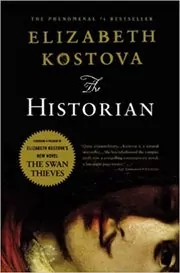
The Historian
by Elizabeth Kostova
2005
A teenager finds an ancient book and a stack of letters in her father's library, opening a hunt across Europe for the truth about Vlad the Impaler, Dracula, and the danger shadowing her own family.
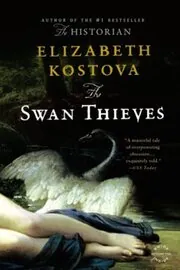
The Swan Thieves
by Elizabeth Kostova
2010
When painter Robert Oliver attacks a canvas in the National Gallery, psychiatrist Andrew Marlow becomes obsessed with the secret behind it, following a trail through damaged love, hidden letters, and the long afterlife of French Impressionism.
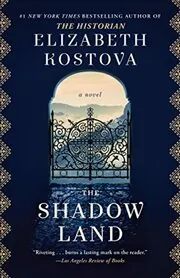
The Shadow Land
by Elizabeth Kostova
2017
In Sofia, Alexandra Boyd accidentally takes a stranger's urn and tries to return it. Her search draws her into Bulgaria's buried history, political violence, and a mystery shaped as much by grief as by danger.
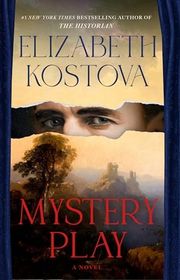
Mystery Play
by Elizabeth Kostova
2026
After his mother's death, Jay Turner finds a scorched clue and a medieval book tied to Dracula. Following a trail into nineteenth-century theater, he uncovers an old threat that may still be hunting his family.
Where to start with Elizabeth Kostova
If you want the book most readers start with: The Historian
If you like art, obsession, and layered secrets: The Swan Thieves
If you want a modern mystery rooted in Bulgaria: The Shadow Land
If you want her Dracula-linked books together: The Historian → Mystery Play
Standalone Elizabeth Kostova books
Author bio
Elizabeth Kostova was born in New London, Connecticut, on December 26, 1964, and grew up in Knoxville, Tennessee. Her novels often move through libraries, archives, trains, monasteries, museums, and old cities, but the pull behind them is simple enough: she loves the way stories travel through time. That mix of curiosity and unease has become a defining part of her work.
She studied British Studies at Yale, then followed another interest, Eastern European music, into postgraduate work and travel. In November 1989 she arrived in Bulgaria, just after the fall of the Berlin Wall, to do fieldwork on village singing. She stayed for six months, met her future husband there, and began a relationship with the country that has shaped much of her writing ever since.
The road to fiction took time.
Kostova has said that some of the deepest roots of The Historian go back to childhood, when her father told her Dracula stories during family trips in Europe. Years later, while thinking seriously about writing a novel, she returned to those memories and found her way in. She worked on The Historian for about ten years, and finished it while earning an MFA in creative writing at the University of Michigan, where she won Hopwood Awards in both fiction and nonfiction.
When The Historian appeared in 2005, it did something few debut novels ever do: it opened at number one on the New York Times Bestseller List. The book sends a young narrator, her father, and generations of scholars across Europe in search of the truth behind Vlad the Impaler and the Dracula legend. Readers who love it often point to the atmosphere first, then the research, then the pleasure of being pulled deeper and deeper into a mystery that keeps widening.
Her next novel, The Swan Thieves, keeps the obsession but swaps medieval horror for painting, psychiatry, and French Impressionist history. It begins when artist Robert Oliver attacks a canvas in the National Gallery, and psychiatrist Andrew Marlow tries to understand why. Then came The Shadow Land, which returns to Bulgaria and follows Alexandra Boyd after an accidental exchange of luggage leaves her carrying an urn. What begins as a mistake turns into a search through personal grief and a painful political past.
She likes big questions, but she gets at them through people.
That is part of what makes her books easy to recommend even when they are large and layered. She writes about letters, diaries, lost art, family secrets, and the way the past keeps reaching into the present. She is drawn to characters who are intelligent but unsettled, people who think they are doing one manageable thing and then find themselves in a much larger story. Her fiction can be gothic, historical, or quietly suspenseful, but it is usually most interested in memory, inheritance, and the cost of looking too closely at what history leaves behind.
Kostova has also taught in university and conference programs in the United States and abroad, and her shorter work, including fiction, essays, and poetry, has appeared in literary magazines and anthologies. In 2007 she co-founded the Elizabeth Kostova Foundation for Creative Writing in Bulgaria with publisher Svetlozar Zhelev. The foundation supports writers and translators and helps build connections between Bulgarian and English-language literary communities.
Her fourth novel, Mystery Play, is scheduled for October 13, 2026. It returns to Dracula territory by following Jay Turner into a trail of family secrets, a medieval book, and nineteenth-century theater history. These days Kostova continues to read and lecture internationally, and Bulgaria remains central to her public work. That feels right. Few writers have made such steady use of archives, folklore, and cross-border history, while keeping the human stakes close and clear.





Edited by
Software engineer whose passion for tracking book recommendations from podcasts inspired the creation of MRB.
Lead investor at 3one4 Capital whose startup expertise and love for books helped shape MRB and its growth.
Comments
Did we miss something? Have feedback?
Help us improve this page by sharing your thoughts