
Elbert Hubbard Books in Order
Elbert Hubbard is a series of 21 books written by Elbert Hubbard.
Here, you can see them all in order! (publication year included)
Last updated: 21 new books added
As an Amazon Associate, we earn from qualifying purchases (at no extra cost to you).
Elbert Hubbard books in publication order
21 books
Forbes of Harvard
by Elbert Hubbard
1894
Harvard student Arthur Ripley Forbes faces an illness that threatens his future. Through letters exchanged with friends and family, his search for recovery in the American West becomes a story of friendship, uncertainty and the hopes of a young man.
No Enemy But Himself
by Elbert Hubbard
1894
Love, Life & Work
by Elbert Hubbard
1906
Hubbard reflects on the pursuit of happiness through essays about everyday conduct, work and relationships. His observations consider how individuals can find personal fulfillment while remaining mindful of the needs and well-being of the people around them.
White Hyacinths
by Elbert Hubbard
1907
Hubbard reflects on friendship, teaching, opportunity and the pursuit of success in a collection of short essays. His observations connect ideals about character and personal growth with the ordinary work and relationships through which people shape their lives.

The Doctors
by Elbert Hubbard
1909
An actress is committed to an asylum by her minister husband, who seeks control of their child. As she challenges the doctors’ authority, Hubbard uses her struggle to satirize medical power and the treatment of vulnerable patients.
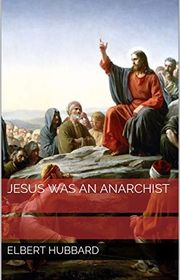
Jesus Was an Anarchist
by Elbert Hubbard
1910
Hubbard argues that kindness and moral responsibility can exist independently of government and institutional religion. Using Jesus and other historical figures as examples, this short essay sets out his individualist understanding of anarchism and voluntary cooperation.

The Mintage
by Elbert Hubbard
1910
Eleven short pieces bring together historical figures, ordinary lives and reflections on human behavior. Hubbard moves between portraits and anecdotes, using stories about ambition, character and experience to consider the values that shape people’s choices.
Elbert Hubbard’s Scrap Book
by Elbert Hubbard
1923
This collection preserves quotations and literary passages that Hubbard gathered for his own reflection and inspiration. Drawn from a lifetime of reading, the selections range across subjects and writers, offering a record of the ideas he valued.
The Silver Arrow
by Elbert Hubbard
1923
At the court of Elizabeth I, Walter Raleigh’s attachment to Eleanor White collides with royal jealousy and plans for American colonization. Forced toward an uncertain life at Roanoke, Eleanor becomes central to a tale of exile, loyalty and resistance.
The Note Book of Elbert Hubbard
by Elbert Hubbard
1927
Mottoes, epigrams and short essays gather Hubbard’s reflections on work, character, religion and everyday conduct. The collection presents his ideas in brief passages, moving between practical observations and arguments about individual freedom, responsibility and the uses of experience.
The Philosophy of Elbert Hubbard
by Elbert Hubbard
1930
Selected by his son, these sayings and short writings bring together Hubbard’s ideas about achievement, work and independent thought. The collection traces the practical ideals through which he addressed personal conduct, ambition and the relationship between daily effort and character.

The Legacy
by Elbert Hubbard
1942
This volume of Hubbard’s selected writings gathers The Legacy alongside shorter pieces, including reflections on respectability. It brings together fiction and commentary from a writer concerned with the tensions between personal conviction, social expectations and everyday conduct.

Andrew Taylor Still
by Elbert Hubbard
2005
Hubbard visits Andrew Taylor Still, the founder of osteopathy, and offers a portrait shaped by their personal acquaintance. The account considers Still’s life and work while describing the man behind a distinctive approach to medical practice.
A Dozen and Two Pastelles in Prose
by Elbert Hubbard
2010
Fourteen prose sketches record Hubbard’s impressions of the Wanamaker stores. His observations turn a commercial setting into a subject for literary reflection, exploring the people, work and ideas associated with the department-store enterprise.
H. H. Rogers
by Elbert Hubbard
2010
Horace Mann
by Elbert Hubbard
2010
Hubbard sketches the life of education reformer Horace Mann, following his work to expand public schooling. The account considers Mann’s campaign for education and teacher preparation as part of a broader effort to improve American society.
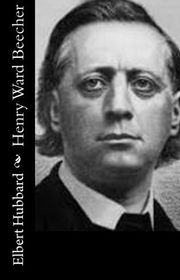
Henry Ward Beecher
by Elbert Hubbard
2015
Hubbard profiles the preacher and reformer Henry Ward Beecher, considering his religious career, public influence and opposition to slavery. The portrait also addresses the controversies surrounding a man whose personal life became inseparable from his public reputation.
The Roycrofters
by Elbert Hubbard
2015
Essays and letters explore the Roycroft craft community and the connections between skilled work, art and industry. Hubbard discusses labor, independence and production while considering the ideals and practical tensions involved in building a community around craftsmanship.

A.T. Stewart
by Elbert Hubbard
2016
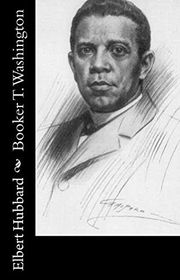
Booker T. Washington
by Elbert Hubbard
2016
Thomas Jefferson
by Elbert Hubbard
2020












Edited by
Software engineer whose passion for tracking book recommendations from podcasts inspired the creation of MRB.
Lead investor at 3one4 Capital whose startup expertise and love for books helped shape MRB and its growth.
Comments
Spotted a missing book, a wrong order or a mistake? Tell us and we'll fix this page.
We're a reading guide, not the author or publisher, so we can't send books or pass on messages.