
Duel of Sorcery Books in Order
Part ofJo Clayton Books in OrderSee the Duel of Sorcery books in order by Jo Clayton, with summaries, series background, reading order, and where to begin the trilogy.
Last updated:
As an Amazon Associate, we earn from qualifying purchases (at no extra cost to you).
Duel of Sorcery books in publication order
3 books
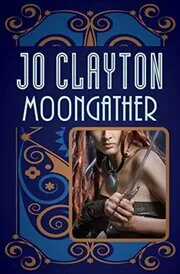
Moongather
by Jo Clayton
1982
Outcast turned warrior Serroi overhears a murder plot aimed at the Domnor during the dangerous season of Moongather. To warn him and face her own broken oath, she has to cross a land that seems bent on stopping her.
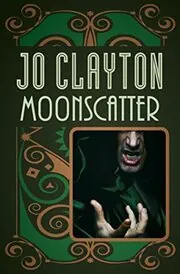
Moonscatter
by Jo Clayton
1983
Serroi stands between Ser Noris, an immortal wizard drunk on power, and the living forces of her world. To stop ruin, she has to face the man who helped shape her into a weapon.
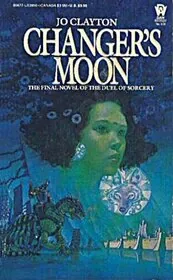
Changer's Moon
by Jo Clayton
1985
Serroi gathers unlikely allies for a final struggle against the forces that have been warping her world for too long. The fate of the land now depends on whether she can meet magical ruin head-on.
Duel of Sorcery books in chronological order
Series background & context
The original Duel of Sorcery trilogy is one of Jo Clayton's strongest secondary-world fantasy series. It follows Serroi, a woman marked from childhood as different and unsettling, who grows into a warrior of the meie and gets pulled into a struggle much larger than one kingdom or one battlefield. From the start, the books mix personal trauma, political danger, and world-shaping magic in a way that feels older and stranger than standard quest fantasy.
Serroi is the center of everything.
In Moongather, she overhears an assassination plot and is forced into motion by duty, fear, and a broken oath that will not leave her alone. That alone would be enough for a trilogy, but Clayton keeps pushing outward. Serroi's past is bound up with Ser Noris, an immensely dangerous wizard whose influence reaches into her mind, body, and memory. By Moonscatter and Changer's Moon, the struggle has widened into a clash involving the land itself, seasonal power, immortal ambition, and the possibility that one man's magical will could unmake the balance of the whole world.
The setting is richly layered without ever feeling like mere backdrop. Clayton builds orders of warriors, old religious structures, moon-linked rhythms, and forms of magic that seem to grow out of the land instead of being dropped on top of it. Nature is not neutral here. The earth has force. So do cycles, old promises, and the spiritual architecture of the world. That gives the trilogy a slightly mythic pressure even when the plot is moving through ambushes, pursuits, and hard practical choices.
Serroi herself is what makes the books stick. She is brave, but not cleanly heroic. She carries damage. She has blind spots. Her strength does not erase what was done to her, and Clayton never asks it to. Instead, the trilogy becomes partly about learning which parts of the self can be reclaimed, and which kinds of power can be used without repeating the logic of the abuser. That is one reason the conflict with Ser Noris feels larger than good versus evil. It is also about domination, violation, and whether the world has room for another way to live.
If you like fantasy with sword work, sorcery, strange landscapes, and a heroine who has to fight on several levels at once, this series delivers. The title is apt, but the duel is never just between two spellcasters. It is between different visions of power, different uses of the body, and different futures for the world Serroi is trying, against long odds, to save.



Edited by
Software engineer whose passion for tracking book recommendations from podcasts inspired the creation of MRB.
Lead investor at 3one4 Capital whose startup expertise and love for books helped shape MRB and its growth.
Comments
Did we miss something? Have feedback?
Help us improve this page by sharing your thoughts