
Dr. Henry Lee's Forensic Books in Order
Part ofJerry Labriola Books in OrderSee the Dr. Henry Lee's Forensic books by Jerry Labriola in order, with quick summaries, series background, and help choosing where to start.
Last updated:
As an Amazon Associate, we earn from qualifying purchases (at no extra cost to you).
Dr. Henry Lee's Forensic books in publication order
2 books
Dr. Henry Lee's Forensic Files
by Jerry Labriola
2006
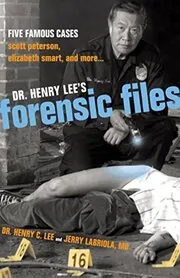
Henry Lee walks readers through five major cases, including Scott Peterson and Elizabeth Smart, from the perspective of the forensic expert on the ground. It is part true crime, part practical guide to how evidence gets read and challenged.
Shocking Cases from Dr. Henry Lee's Forensic Files
by Jerry Labriola
2010
Henry Lee and Jerry Labriola revisit five notorious cases, including the Phil Spector trial and the Brown's Chicken murders. The book mixes gripping case stories with clear explanations of how forensic evidence shapes outcomes.
Dr. Henry Lee's Forensic books in chronological order
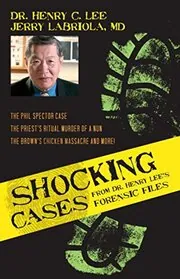
Shocking Cases from Dr. Henry Lee's Forensic Files
by Jerry Labriola
2010Dr. Henry Lee's Forensic, Book 2
Series background & context
This is not a tight, numbered novel series in the usual sense. It is better thought of as a group of Jerry Labriola collaborations with forensic scientist Henry Lee, books that bring readers close to major investigations and the way evidence gets read, argued over, and sometimes mishandled. Most of them are true crime, though one book, The Budapest Connection, shifts the same forensic mindset into fiction.
The nonfiction side begins with Famous Crimes Revisited, which goes back over some of the best-known American cases of the twentieth century. Labriola and Lee revisit names many readers already know, including Sacco and Vanzetti, the Lindbergh kidnapping, Sam Sheppard, John F. Kennedy, Vincent Foster, JonBenet Ramsey, and O.J. Simpson. The point is not just to retell old crimes. It is to ask what the physical evidence really showed, what investigators missed, and how modern forensic thinking changes the conversation.
These are books about method.
Dr. Henry Lee's Forensic Files narrows the focus to five cases and spends more time showing how forensic work actually unfolds. The book covers high-profile matters such as Scott Peterson and Elizabeth Smart, but it also digs into how crime-scene reconstruction, bloodstain interpretation, search warrants, cadaver dogs, and other tools fit into a real investigation. If you like true crime that explains process instead of just piling up shock, this is where the series becomes especially useful.
Shocking Cases from Dr. Henry Lee's Forensic Files keeps that same approach while moving through another set of notorious incidents. Among them are the Phil Spector case, the Brown's Chicken murders, a murder in a sacristy, a police shooting, and the mass atrocities in Bosnia and Croatia. The tone stays grounded. The books are interested in the messiness of evidence, the pressures around public cases, and the fact that justice often depends on small details being read correctly.
Then there is The Budapest Connection, the outlier. Instead of straight nonfiction, it turns forensic expertise into a thriller built around Dr. Henry Liu and the Global Interactive Forensics Team, or GIFT. The story begins with three young women found murdered and arranged in a triangle, then opens into a wider investigation involving organized crime and international trafficking. Even in fiction, the pull is still the same: careful observation, hidden links, and the question of what the evidence is really trying to say.
So what should you expect from this grouping overall? A mix of case narrative, forensic explanation, and a writerly instinct for momentum. Labriola's medical background helps keep the science readable, while Lee brings the perspective of someone who actually worked the scene. If you enjoy books where facts matter, procedures matter, and a single clue can shift the whole story, this is the strongest lane in Labriola's bibliography for that kind of reading experience.



Edited by
Software engineer whose passion for tracking book recommendations from podcasts inspired the creation of MRB.
Lead investor at 3one4 Capital whose startup expertise and love for books helped shape MRB and its growth.
Comments
Did we miss something? Have feedback?
Help us improve this page by sharing your thoughts