
Douglas R Casey Books in Order
Browse Douglas R Casey books in order, with short summaries, High Ground series notes, and simple tips on where to start with his fiction and nonfiction.
Last updated:
As an Amazon Associate, we earn from qualifying purchases (at no extra cost to you).
Douglas R Casey books in publication order
12 books
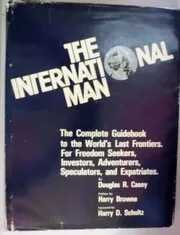
The International Man
by Douglas R Casey
1978
One of Casey's earliest books, this is a guide to living and investing internationally rather than staying tied to one country. It combines travel-minded curiosity with practical advice on opportunity, mobility, and protecting personal freedom.
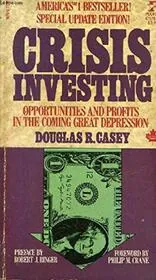
Crisis Investing
by Douglas R Casey
1979
Casey's breakout book argues that market turmoil and political disorder can reward investors who stay clear-eyed and prepared. It blends big-picture economic warnings with very specific ways to think about hard assets, speculation, and timing.
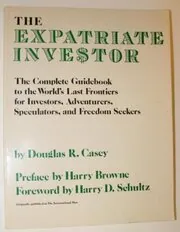
The Expatriate Investor
by Douglas R Casey
1979
This early guide is aimed at readers thinking seriously about moving money, business, or even their lives across borders. Casey combines offshore investing with the broader question of how location can shape freedom, taxes, and personal options.
International Investing
by Douglas R Casey
1981
Casey looks beyond the U.S. and surveys places he saw as promising for overseas investing and international living. The book mixes country-by-country thinking with practical questions about banking, taxes, risk, and opportunity abroad.

Strategic Investing
by Douglas R Casey
1982
Written as a follow-up to Crisis Investing, this book walks small investors through Casey's approach to inflation, liquidity, borrowing, real estate, and speculation. The focus is not caution for its own sake, but positioning early for major economic change.

Strategic Investment Timing
by Douglas R Casey
1983
Casey turns from broad themes to the question of when to move. The book focuses on reading economic shifts, staying flexible, and matching investment decisions to changing conditions instead of treating markets as static.
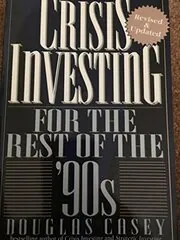
Crisis Investing for the Rest of the '90s
by Douglas R Casey
1993
Casey revisits the crisis-investing theme for the early 1990s, arguing that instability can create unusual openings for prepared investors. He ranges across markets, inflation, government policy, and the habits he thinks matter when conditions turn rough.

Totally Incorrect
by Douglas R Casey
2012
Built around interviews and themed conversations, this book gathers Casey's blunt views on politics, money, war, taxes, and personal freedom. Even when readers disagree, the appeal is the directness and the way each topic is argued from first principles.
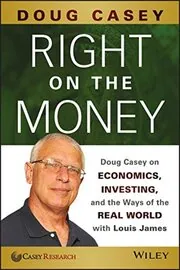
Right on the Money
by Douglas R Casey
2013
This interview-driven book lays out Casey's views on speculation, money, ethics, real estate, and hard assets. It reads like a long conversation, mixing broad economic ideas with practical thinking about how investors can act on them.
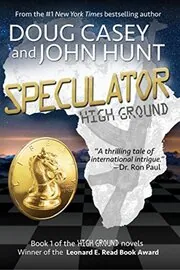
Speculator
by Douglas R Casey
2016
At twenty-three, Charles Knight heads to West Africa after striking it rich on a mining play. What looks like a gold bonanza turns into fraud, violence, and a brutal lesson in politics, money, and survival.

Drug Lord
by Douglas R Casey
2017
After years abroad, Charles Knight comes back to the United States and jumps into both legal pharmaceuticals and black market drugs. As regulators, smugglers, and street operators close in, a new drug called Naked Emperor threatens everyone who lives by deception.
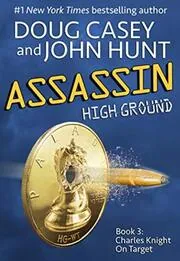
Assassin
by Douglas R Casey
2020
Fresh out of prison, Charles Knight returns to an America shaken by riots, media panic, and political decay. He races to fight the people running the system from behind the curtain, using unorthodox allies and a crypto network that could flip the balance.
Where to start with Douglas R Casey
If you want the book that made him famous: Crisis Investing.
If you want his updated crisis view: Crisis Investing → Crisis Investing for the Rest of the '90s.
If you want the international angle: The International Man → The Expatriate Investor → International Investing.
If you want the ideas in conversation form: Totally Incorrect → Right on the Money.
If you want fiction first: Speculator → Drug Lord → Assassin.
Douglas R Casey sub-series and character series
Douglas R Casey collections, short stories, and related book types
Non-Fiction
Author bio
Douglas R Casey was born in Chicago in 1946 and graduated from Georgetown University in 1968. He has spent decades as a writer, speculator, and publisher, building a career around the idea that chaos and mispricing often travel together.
He did not come to writing through a writing program.
After college, Casey was trying to make enough money to chase what he once called fortune and high adventure in the southern hemisphere. In Washington, he worked as a substitute teacher by day and a bartender by night, then moved into selling group insurance to law firms and later worked as a stockbroker. While trying to explain the world to himself, not just react to it, he started putting his ideas on paper. That effort became Crisis Investing.
The timing was almost perfect. Crisis Investing appeared in 1979, hit a nerve during a period of inflation and anxiety, and went on to sit at the top of the bestseller lists for months. It became the best-selling financial book of 1980. Casey followed it with Strategic Investing and, years later, Crisis Investing for the Rest of the '90s, returning again and again to the same question: where is the opportunity when everyone else is focused on the panic?
He has always liked borders, both geographic and intellectual.
That streak runs through The International Man, The Expatriate Investor, and International Investing. These books treat place as part of the investment thesis. For Casey, where you live, bank, travel, and hold assets matters almost as much as what you buy. Readers who connect with this side of his work usually like the mix of practical offshore thinking and a larger argument about mobility, independence, and not being trapped by one country's rules.
Casey's public voice has long been openly contrarian, skeptical of government power, and drawn to hard assets, commodities, and situations other investors avoid. Later books like Totally Incorrect and Right on the Money present those ideas in interview form. They move between economics, ethics, gold, real estate, speculation, and politics in a way that feels more like a long, opinionated conversation than a textbook. Even people who disagree with him tend to know exactly where he stands.
He also cultivated a life that matched the books. Older profiles describe him traveling widely, researching opportunities on the ground, racing motorcycles, and treating investing as something tied to the real world, not just numbers on a screen. That restless energy helps explain why his work so often returns to mines, currencies, property, borders, and places most readers would never think to look.
In the 2010s, Casey turned to fiction with John Hunt and launched the High Ground novels, beginning with Speculator and continuing with Drug Lord and Assassin. Those books follow Charles Knight through gold speculation, the drug trade, and political violence, using thriller plots to work through many of the same questions that drive Casey's nonfiction. Who really holds power? What counts as justice? How do you stay free when the rules are written by people who benefit from the system?
Travel still seems to be central to his life. Over the years he has lived in multiple countries, and in later interviews and bios he has often described spending much of his time in South America, especially Argentina and Uruguay. That international outlook is not just part of the brand. It is the thread that ties together almost everything he writes.












Edited by
Software engineer whose passion for tracking book recommendations from podcasts inspired the creation of MRB.
Lead investor at 3one4 Capital whose startup expertise and love for books helped shape MRB and its growth.
Comments
Did we miss something? Have feedback?
Help us improve this page by sharing your thoughts