
Dion Fortune Books in Order
See every Dion Fortune book in order, with short summaries, background on her Western Mystery work, and reading order tips to help you choose where to start.
Last updated:
As an Amazon Associate, we earn from qualifying purchases (at no extra cost to you).
Dion Fortune books in publication order
32 books
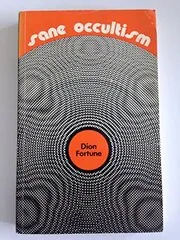
Sane Occultism
by Dion Fortune
1920
Here Fortune argues that real occult study must stay grounded in reason, surveying subjects such as meditation, astrology, numerology, group karma, psychic pathology, and the left-hand path while warning against credulity, moral evasion, and untested claims of power.
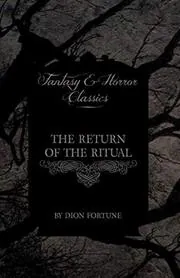
The Return of the Ritual
by Dion Fortune
1922
A Dr Taverner occult detective story in which the doctor and his assistant Rhodes race to recover a stolen ritual manuscript whose misuse could be disastrous, blending psychic investigation with classic mystery plotting.

The Secrets of Dr. Taverner
by Dion Fortune
1926
A collection of linked stories about Dr Taverner and Dr Rhodes, physicians who treat bizarre psychic and magical problems using occult methods, from etheric vampires to hauntings, loosely based on Fortune’s experiences with her own mentor.
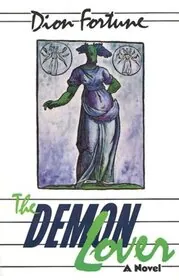
Demon Lover
by Dion Fortune
1927
Veronica Mainwaring becomes secretary to occultist Justin Lucas and finds herself bound as his trance medium, caught between fascination and dread as past lives and psychic vampirism surface, until her own spiritual resources give her a way out.
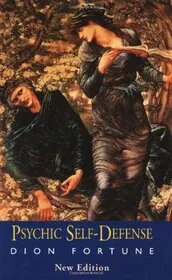
Psychic Self-Defense
by Dion Fortune
1930
A partly autobiographical manual on recognizing and countering psychic attack, covering signs of obsession, vampirism, and hauntings, the psychology behind them, and practical methods of protection that combine sound living, ritual, and clear thinking.
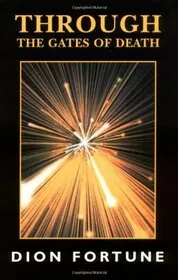
Through the Gates of Death
by Dion Fortune
1930
Fortune describes the soul’s journey before, during, and after physical death, addressing fear of dying, conditions on the inner planes, and how the living can assist the newly dead without clinging or unhealthy mediumistic dependence.

Glastonbury
by Dion Fortune
1934
Glastonbury: Avalon of the Heart is a meditative tour of the town as a mystical landscape, blending history, legend, and visionary experience to show how it has carried Christian, Arthurian, and pagan currents and why it still functions as a living spiritual centre.
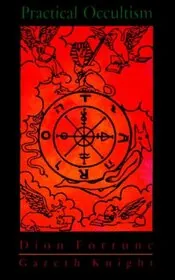
Practical Occultism
by Dion Fortune
1935
Expanding her earlier Practical Occultism in Daily Life with extra material, this book outlines simple occult principles for remembering past lives, working out karma, using mind power wisely, and approaching astral magic and inner contacts without losing common sense.
The Winged Bull
by Dion Fortune
1935
This novel centers on Ursula Brangwyn, harmed by an unscrupulous occult group, and Ted Murchison, the practical man who helps her reclaim magic on healthier terms, contrasting sensational, ego-driven occultism with disciplined work rooted in spiritual responsibility.
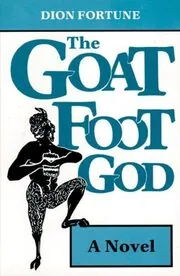
The Goat-Foot God
by Dion Fortune
1936
After his wife’s tragic death, wealthy Hugh Paston turns to occult books and the god Pan, buying a ruined monastery to recreate ancient rites with artist Mona Wilton, and learning through reincarnation and ritual what it means to honour nature’s power.

The Sea Priestess
by Dion Fortune
1938
An occult novel in which frail, unhappy Wilfred Maxwell meets the enigmatic Vivien Le Fay Morgan and helps her restore a sea temple on the coast, discovering through ritual and vision how the tides, Moon, and sea gods can remake a life.

Moon Magic
by Dion Fortune
1956
A sequel to The Sea Priestess that follows Vivien Le Fay Morgan as she builds a lunar temple in the city and trains a new circle of students, weaving romance, reincarnation, and ritual magic into a story about dedication to the Moon goddess.
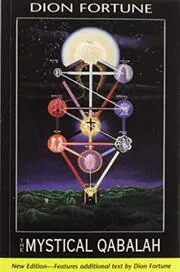
The Mystical Qabalah
by Dion Fortune
1957
Her most influential textbook on the Hermetic Tree of Life, mapping the ten Sephiroth and twenty-two paths in practical language and linking Qabalistic theory to meditation, magic, and psychological growth for students of the Western Mystery Tradition.
Esoteric Orders and Their Work
by Dion Fortune
1961
Fortune’s classic introduction to Western mystery schools explains what esoteric orders are, how they evolved, what their rituals actually do, and how seekers can judge schools, masters, secrecy, and obedience without losing their own judgment.
Applied Magic
by Dion Fortune
1962
A collection of essays on putting magic to work in ordinary life, from protection and meditation to working with inner contacts, aimed at readers who want to translate esoteric theory into practical methods for self-development and quiet, ethical influence.
Aspects of Occultism
by Dion Fortune
1962
Nine essays tackle topics such as evocative magic, sacred centers, the astral plane, auras, spiritual healing, reincarnation, and the Round Table myth, offering clear, down-to-earth reflections on how hidden forces shape religion, magic, and daily experience.
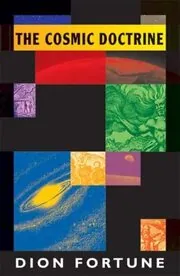
The Cosmic Doctrine
by Dion Fortune
1966
A dense symbolic cosmology that uses images of currents in space and evolving atoms to sketch the creation of the universe, the growth of consciousness, and the laws governing both soul and cosmos, intended as a meditative training text rather than literal physics.
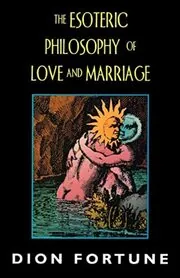
The Esoteric Philosophy of Love and Marriage
by Dion Fortune
1974
Using occult principles of polarity and the seven planes, Fortune explores attraction, sex, and marriage, explaining how masculine and feminine energies interweave in relationships and how spiritual understanding can resolve tension between physical desire and inner ideals.
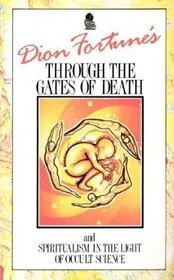
Dion Fortune's Through the Gates of Death and Spiritualism in the Light of Occult Science
by Dion Fortune
1988
This combined edition brings together Fortune’s teaching on death and the afterlife with her critical study of spiritualism, outlining what souls experience beyond the body, how to approach mourning and psychic contact, and where occult science parts company with séance tradition.
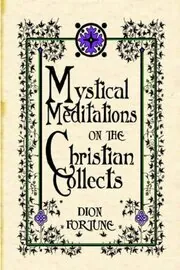
Mystical Meditations on the Christian Collects
by Dion Fortune
1991
A series of esoteric commentaries on the collects from the Anglican Book of Common Prayer, using familiar liturgical prayers as gateways into mystical Christian experience and showing how they can support inner transformation and quiet devotional magic.
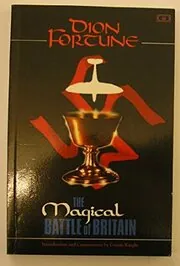
The Magical Battle of Britain
by Dion Fortune
1993
This volume collects Fortune’s wartime letters calling groups to shared meditations and visualizations for Britain’s protection during the Second World War, offering both a vivid record of occult response to crisis and a practical model for group mind-working.
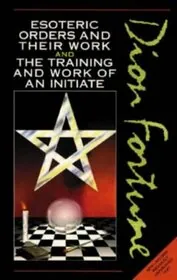
Esoteric Orders and Their Work and The Training and Work of the Initiate
by Dion Fortune
1995
An omnibus edition that first explains why secret schools exist and how their rituals function, then follows with a detailed picture of the training, tests, and responsibilities that shape the life and inner work of a Western initiate.
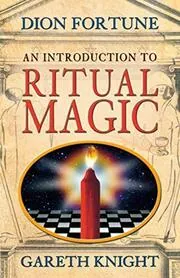
An Introduction to Ritual Magic
by Dion Fortune
1997
Combining Dion Fortune’s original papers with modern commentary, this book gives a step-by-step introduction to ceremonial magic, covering temple layout, symbolism, visualization, and inner contacts so that group or solitary practitioners can approach ritual work in a structured, balanced way.
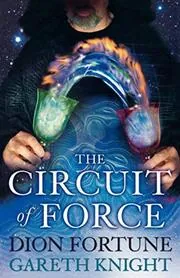
The Circuit of Force
by Dion Fortune
1998
Fortune explores the human aura as a circuit of magnetic force, describing how personal energy can be raised, directed, and balanced for magical work, psychic sensitivity, and everyday effectiveness, with added notes on the etheric vehicle and its practical implications.
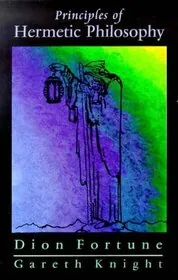
Principles of Hermetic Philosophy
by Dion Fortune
1999
Drawn from her later teaching letters, this volume distills Hermetic principles into practical observations about cosmic law, polarity, and evolution, with commentary and exercises that show how these ideas can reshape personal outlook and modern magical practice.
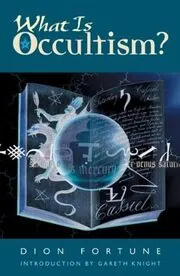
What Is Occultism?
by Dion Fortune
1999
An accessible survey of occult philosophy that strips away superstition to present magic as a rational, disciplined study of consciousness, ethics, and symbolism, aimed at helping thoughtful students use esoteric methods to explore meaning without abandoning critical thinking.
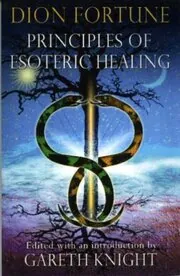
Principles of Esoteric Healing
by Dion Fortune
2000
This book bases healing on Qabalistic and subtle-body anatomy, examining how illness can originate on physical, etheric, astral, mental, or spiritual levels and outlining methods of diagnosis and treatment that work with the aura, psychic centers, and the etheric double.
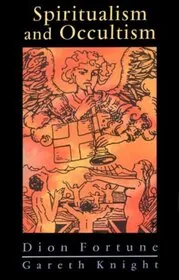
Spiritualism And Occultism
by Dion Fortune
2000
Originally issued as Spiritualism in the Light of Occult Science, this work weighs the strengths and dangers of séance-room spiritualism, distinguishes ordinary mediumship from higher contacts, and explains when communication with the dead is helpful, misleading, or simply unnecessary.
The Training and Work of an Initiate
by Dion Fortune
2000
Fortune lays out the path of Western initiation, from early discipline and meditation through temple work and inner-plane service, showing how an initiate prepares body, mind, and spirit and how magical training becomes a lifelong vocation of responsibility and service.
Dion Fortune's Book of the Dead
by Dion Fortune
2005
Fortune’s guide to the dying process describes the stages the soul passes through after death and shows how candles, flowers, and focused thought can support the etheric body, helping the departed and protecting the living from unintentional depletion.
The Arthurian Formula
by Dion Fortune
2006
A posthumous Inner Light text that reinterprets the Arthurian legends as living occult patterns, exploring Merlin, Arthur, Guinevere, and the Grail as keys to inner-plane training and group ritual work rooted in Atlantean and Glastonbury symbolism.
Machinery of the Mind
by Dion Fortune
2009
Based on a series of popular lectures, this book explains modern psychology in straightforward language, outlining how the nervous system, instincts, complexes, and the subconscious mind work, and how psychotherapy and psychoanalysis can be used to resolve inner conflict.
Where to start with Dion Fortune
If you want her core Western Mystery teachings: The Mystical Qabalah → The Cosmic Doctrine → Applied Magic
If you are focused on psychic protection and the afterlife: Psychic Self-Defense → Dion Fortune's Book of the Dead → Through the Gates of Death
If you prefer occult fiction and priestess magic: The Sea Priestess → Moon Magic → The Goat-Foot God → The Winged Bull
If you are curious about esoteric orders and training: Esoteric Orders and Their Work → The Training and Work of an Initiate → What Is Occultism?
Dion Fortune collections, short stories, and related book types
Collections
Non-Fiction
Standalone Dion Fortune books
Author bio
Dion Fortune was born Violet Mary Firth on 6 December 1890 in the seaside town of Llandudno in North Wales, into a prosperous English family that had made its money in the Sheffield steel industry. Her grandfather coined the family motto “Deo, non fortuna” – by God, not by luck – a phrase she later compressed into the pen name that would appear on all her occult work.
She grew up in a Christian Science household, moved with her parents to England’s West Country, and as a teenager produced two slim volumes of poetry. After a period at Studley Agricultural College, where she later said she suffered a breakdown following “psychic attack,” she turned toward psychology both to make sense of herself and to help others.
At the University of London she studied psychology and psychoanalysis under John Flügel, absorbing the then new ideas of Freud, Adler, and later Jung. She went on to work as a counsellor at a Brunswick Square clinic, where many of her cases revolved around taboos around sex and desire in early twentieth‑century Britain. Lunchtime lectures from the Theosophical Society and her own reading slowly pulled her from purely clinical work toward the borderland where psychology and esotericism meet.
Around the same time she encountered the Irish occultist Theodore Moriarty and, through him, ritual magic. She joined first a small lodge under his influence and then the Alpha et Omega, a successor to the Hermetic Order of the Golden Dawn, where she learned the Hermetic Qabalah and took “Dion Fortune” as her magical motto. Experiments in trance mediumship convinced her that she was in touch with inner‑plane teachers she called the Ascended Masters, and those contacts, real or not, became the backbone of her later teaching.
After a turbulent period inside the occult orders of the day, she broke away to form her own group in the 1920s, the Community of the Inner Light, which evolved into the Fraternity and later the Society of the Inner Light. Based first in London and then also in Glastonbury, this school blended ceremonial magic, Christian mysticism, and Qabalistic symbolism, and used both formal temple ritual and quiet meditation as tools for inner development.
Alongside this organisational work she wrote constantly. Early on she tried to bridge popular psychology and the new psychoanalytic ideas in The Machinery of the Mind, then turned more and more toward explicit occult teaching. The Esoteric Orders and Their Work and The Training and Work of an Initiate mapped out how Western mystery schools function, while The Mystical Qabalah became one of the most widely read introductions to the Tree of Life in English. Psychic Self-Defense mixed case histories and personal experience into a plainspoken guide to recognising and resisting psychic attack.
She also produced a dense symbolic cosmology in The Cosmic Doctrine and a stream of shorter works on topics like love and polarity, Glastonbury as “Avalon of the Heart,” Christian liturgy, and practical occultism in daily life. Taken together, these books show a mind trying to knit psychology, magic, and religion into one working system rather than keep them in separate boxes.
Her fiction carried the same project into story form. In The Secrets of Dr. Taverner she recast Moriarty as an occult physician who treats psychic illnesses. Later novels such as The Demon Lover, The Winged Bull, The Goat-Foot God, The Sea Priestess, and Moon Magic used romance and adventure to smuggle in ideas about initiation, past lives, and the balance of masculine and feminine forces. These tales went on to shape later ceremonial magic and modern Pagan movements, which drew heavily on her images of priestesses, gods, and sacred landscape.
During the Second World War she organised what she called the “magical battle of Britain,” sending weekly letters to scattered students to coordinate meditations and visualisations aimed at strengthening national morale and calling on protective inner forces while the Blitz raged. Those letters, later collected as The Magical Battle of Britain, give a rare inside look at how one occult school responded to real‑world crisis.
In late 1945 Fortune fell ill and died of leukaemia in January 1946 at Middlesex Hospital, aged fifty‑five. She was buried in Glastonbury, the landscape that had come to symbolise her inner work. The Society of the Inner Light continued under her successors, and new editions of her books have kept appearing. For many readers she remains a gateway into the Western Mystery Tradition, offering a blend of psychological insight, Christian mysticism, and practical magic that still feels surprisingly direct and usable today.













Edited by
Software engineer whose passion for tracking book recommendations from podcasts inspired the creation of MRB.
Lead investor at 3one4 Capital whose startup expertise and love for books helped shape MRB and its growth.
Comments
Did we miss something? Have feedback?
Help us improve this page by sharing your thoughts