
Dinaw Mengestu Books in Order
Explore Dinaw Mengestu's books in order, with concise summaries, background on his fiction, and clear suggestions for where to start reading.
Last updated:
As an Amazon Associate, we earn from qualifying purchases (at no extra cost to you).
Dinaw Mengestu books in publication order
4 books
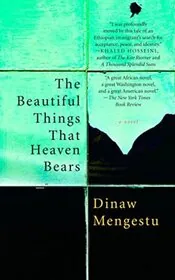
The Beautiful Things That Heaven Bears / Children of the Revolution
by Dinaw Mengestu
2007
Sepha Stephanos, an Ethiopian immigrant in Washington, D.C., runs a failing corner store and drifts through a neighborhood being remade around him. Friendship with a white neighbor and her daughter offers hope, until racial tensions and old grief threaten the fragile life he has built.
How to Read the Air
by Dinaw Mengestu
2010
After his father's death, Jonas Woldemariam leaves New York and retraces his Ethiopian immigrant parents' early life together. As memory and invention blur, he tries to understand a fractured marriage, his own failing one, and what home might mean.
Recommended by
2 people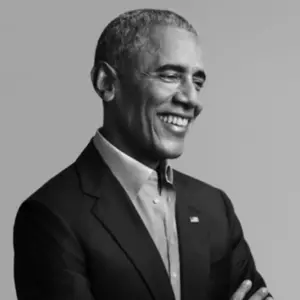 Barack Obama recommended this book
Barack Obama
Barack Obama's favorite books of 2019 list.
Barack Obama's recommendation of this book  Alicia Keys recommended this book
Alicia Keys
Alicia Keys recommended this book on Twitter.
Alicia Keys's recommendation of this book
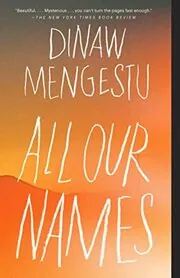
All Our Names
by Dinaw Mengestu
2014
Fleeing political violence in Uganda, a young man calling himself Isaac arrives in a small Midwestern town and falls for the social worker helping him settle in. Their love story is shadowed by buried loyalties, borrowed identities, and a past he can't outrun.
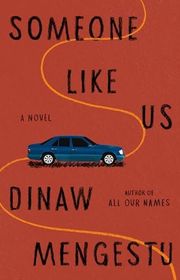
Someone Like Us
by Dinaw Mengestu
2024
When Samuel, the father figure at the center of Mamush's Ethiopian American family, is found dead, Mamush returns to Washington searching for answers. The search pulls him through buried memories, family secrets, and the question of whether he can still make it back to his wife and son.
Where to start with Dinaw Mengestu
If you want the essential starting point: The Beautiful Things That Heaven Bears
If you like family history and memory: How to Read the Air → Someone Like Us
If you want love shaped by politics: All Our Names
If you want the full arc of his fiction: The Beautiful Things That Heaven Bears → How to Read the Air → All Our Names → Someone Like Us
Standalone Dinaw Mengestu books
Author bio
Dinaw Mengestu was born in Addis Ababa, Ethiopia, in 1978. When he was two, his family left amid the political violence that shaped so much of modern Ethiopian history, and he grew up in Peoria, Illinois. That split, between one place remembered through family stories and another learned day by day, sits at the center of much of his fiction.
Peoria mattered.
Mengestu has spoken about growing up in a household that felt Ethiopian inside and American outside. In school and in the wider world, he was often trying to figure out where he fit. Later, he said that writing helped him make peace with that doubleness, not by choosing one identity over the other, but by giving both room on the page.
At Georgetown University, he studied English and spent time in Washington, D.C., a city that would become crucial to his first novel. He later earned an MFA in fiction from Columbia University. Alongside his fiction, he also worked as a journalist, reporting from Darfur, northern Uganda, and eastern Congo. That mix of close observation and moral unease shows up all through his work.
His debut, The Beautiful Things That Heaven Bears, arrived in 2007 and introduced Sepha Stephanos, an Ethiopian immigrant running a struggling store in a changing Washington neighborhood. Readers tend to remember the book for its quiet sadness, its sharp feel for exile, and the way it watches friendship, race, and gentrification press in on everyday life.
Then came How to Read the Air in 2010.
That novel turns inward, following Jonas Woldemariam as he tries to piece together his parents' past and his own damaged marriage. It is a family story, but also a book about storytelling itself, about the lies people tell to survive and the versions of memory they pass on. Around the same time, Mengestu was named to The New Yorker's 20 Under 40 list, and in 2011 the novel won the Ernest J. Gaines Award for Literary Excellence.
In All Our Names, published in 2014, he widened the frame again. The novel moves between political upheaval in Uganda and a small Midwestern town, tracing friendship, reinvention, and a love affair shadowed by secrecy. A decade later he returned with Someone Like Us, a story about a journalist named Mamush trying to understand a father's death, a family history, and the costs of leaving home. Across all four books, Mengestu keeps coming back to migration, family silence, masculinity, grief, and the uneasy hope of starting over.
His novels are serious, but they are not cold. Even when the stories deal with war, loss, or broken families, he pays close attention to ordinary rooms, awkward conversations, jokes between friends, and the small daily rituals that make a life feel real. That may be one reason readers who like character-driven fiction return to him: the books think big, but they stay close to the people inside them.
Mengestu's career has brought a steady stream of recognition, including the National Book Foundation's 5 Under 35 honor and a MacArthur Fellowship in 2012. He now teaches at Bard College, where he directs the Written Arts Program. The classroom and the novels seem to fit together, both built around attention, patience, and the hard work of finding the right words.









Edited by
Software engineer whose passion for tracking book recommendations from podcasts inspired the creation of MRB.
Lead investor at 3one4 Capital whose startup expertise and love for books helped shape MRB and its growth.
Comments
Did we miss something? Have feedback?
Help us improve this page by sharing your thoughts