
Diana Abu-Jaber Books in Order
Find Diana Abu-Jaber books in order, with short summaries and guides to the author's series that help you choose where to start and what to read next.
Last updated:
As an Amazon Associate, we earn from qualifying purchases (at no extra cost to you).
Diana Abu-Jaber books in publication order
8 books
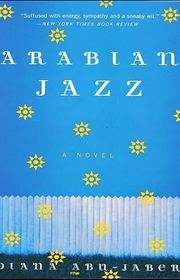
Arabian Jazz
by Diana Abu-Jaber
1993
A Jordanian immigrant family settles in upstate New York, where a widowed father’s enthusiasms coexist with pressure on his daughters to marry. One daughter’s uncertainty about work, love and identity reveals the competing claims of heritage and the surrounding American community.
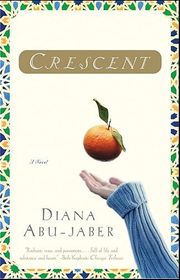
Crescent
by Diana Abu-Jaber
2003
A Los Angeles restaurant cook content with her unmarried life falls for an Iraqi literature professor living in exile. The relationship unsettles her understanding of him and herself, bringing questions of memory, belonging and Arab-American identity into her familiar world of food.
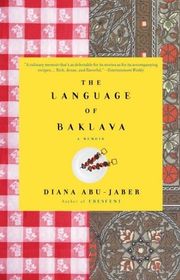
The Language of Baklava
by Diana Abu-Jaber
2005
Food memories connect Diana Abu-Jaber’s American childhood with her father’s Jordanian heritage. Family meals and accompanying recipes reveal his efforts to preserve a lost home, while the memoir explores how cooking carries identity, affection and cultural difference across generations.
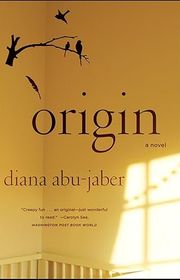
Origin
by Diana Abu-Jaber
2007
A gifted fingerprint analyst investigates a series of unexplained infant deaths while struggling with isolation and an intrusive former husband. Her unusual sensitivity to crime scenes draws her deeper into the case and toward unresolved questions about her own childhood.
Birds of Paradise
by Diana Abu-Jaber
2011
A young runaway approaches adulthood after years on Miami Beach, while the family she left behind continues to live with her absence. The consequences of a hidden act force parents, brother and daughter to reconsider responsibility, reconciliation and their possible futures.
Life Without a Recipe
by Diana Abu-Jaber
2016
Conflicting advice from an independent grandmother and a traditional father leaves Diana Abu-Jaber searching for a life of her own. Marriage, writing and the decision to become a mother shape a memoir about departing from inherited expectations without losing family connection.
Silverworld
by Diana Abu-Jaber
2020
Sami believes her grandmother’s confusion conceals something other than illness. A spell carries her through a mirror into a troubled enchanted city, where disappearances and a rising shadow power may also explain what is happening to the woman she wants to save.
Fencing with the King
by Diana Abu-Jaber
2022
A poet accompanies her father to Jordan for a royal birthday celebration, hoping to understand his past. A discovered poem and an uncle’s concealed motives draw her into family rivalry and buried history, making an apparent homecoming unexpectedly dangerous.
Where to start with Diana Abu-Jaber
For food and family memoir: The Language of Baklava → Life Without a Recipe
For love, food and exile: Crescent
For family intrigue in Jordan: Fencing with the King
For children’s fantasy: Silverworld
Standalone Diana Abu-Jaber books
Author bio
Diana Abu-Jaber writes novels and memoirs in which food, family stories and the meaning of home are closely connected. Her books move between American and Jordanian experience, sometimes approaching family history directly and sometimes giving those concerns an invented form. The list also includes a mystery and a children’s fantasy, so there is more than one kind of story through which to discover her work.
Abu-Jaber was born in Syracuse, New York, to an American mother and a Jordanian father. Her family spent periods of her childhood in Jordan, giving her experience of both countries. She teaches writing and literature at Portland State University and divides her time between South Florida and Portland, Oregon. The movement between places that appears in her biography also supplies a recurring question in the books: how a person belongs to more than one world.
Her first novel was Arabian Jazz.
It won the Oregon Book Award in 1994, establishing an early place for her fiction. Crescent later received the PEN Center USA fiction award in 2004 and an American Book Award. Set around Sirine, a cook in Los Angeles’s Arab American community, it brings love and exile into a world where preparing and sharing food carries emotional meaning. Readers drawn to the meeting of culinary detail, romantic feeling and questions of identity can begin there without reading the earlier novel first.
Food becomes a direct route into memory in The Language of Baklava. The memoir recounts growing up in an Arab American family, letting meals and the people around them help tell the story. It offers a useful introduction for readers who want Abu-Jaber’s own experience rather than a fictional family. Its culinary focus connects with Crescent, while the change in form shifts the relationship between the narrator, the remembered people and the reader.
Life Without a Recipe continues the personal inquiry.
Here the contrasting influence of her father, Bud, and her grandmother, Grace, helps frame choices about work, family and how to live. Their different approaches to food belong to their different ideas about what she should do. Reading this memoir after The Language of Baklava creates a route through the autobiographical writing, although either can be a first encounter. The interest lies as much in negotiating inherited expectations as in preserving recipes or remembering meals.
Fencing with the King returns to fiction and Jordan, following a poet who accompanies her father to a royal birthday celebration. Abu-Jaber has connected its inspiration to her own father’s experience fencing with King Hussein and to her family’s history of displacement. In the novel, a search for understanding becomes entangled with rivalry and concealed motives, giving the family questions the momentum of an investigation.
For a younger readership, Silverworld follows Sami through a mirror into an enchanted city as she seeks to help her grandmother. It gives the wish to understand and protect an older relative a fantasy form. Readers choosing among Abu-Jaber’s books can begin with the food-centered memoirs, the adult fiction of Crescent or Fencing with the King, or Sami’s magical journey, depending on the kind of family story they want to follow.










Edited by
Software engineer whose passion for tracking book recommendations from podcasts inspired the creation of MRB.
Lead investor at 3one4 Capital whose startup expertise and love for books helped shape MRB and its growth.
Comments
Spotted a missing book, a wrong order or a mistake? Tell us and we'll fix this page.
We're a reading guide, not the author or publisher, so we can't send books or pass on messages.