
Denis Johnson Books in Order
This page lists Denis Johnson’s books in order, with short summaries, publication notes, reading paths, and practical guidance on where to start.
Last updated:
As an Amazon Associate, we earn from qualifying purchases (at no extra cost to you).
Denis Johnson books in publication order
20 books

Angels
by Denis Johnson
1983
Jamie, a young mother fleeing her husband, meets restless ex-con Bill Houston on a bus. Their trip through bars, hospitals, prisons, and bad choices becomes a bleak, compassionate portrait of people running out of chances.

Fiskadoro
by Denis Johnson
1985
Decades after nuclear disaster, a small Florida Keys community pieces together culture, memory, and belief from broken scraps. Young Fiskadoro comes of age in a strange world that barely remembers what was lost.

The Stars at Noon
by Denis Johnson
1986
In 1984 Nicaragua, an unnamed American woman drifts through danger, sex, and politics while trying to leave the country. Her attachment to a mysterious English businessman turns escape into a risky test of trust.

The Veil
by Denis Johnson
1987
Johnson’s 1987 poetry collection continues his spare, restless work with desire, faith, loneliness, drink, and sudden moments of clarity. The poems feel close to his fiction, but cut even nearer to the nerve.

Resuscitation of a Hanged Man
by Denis Johnson
1990
Leonard English arrives in Provincetown after a suicide attempt and takes work as a private detective and radio DJ. A missing-person case pulls him into a search that is also spiritual, paranoid, and deeply unstable.
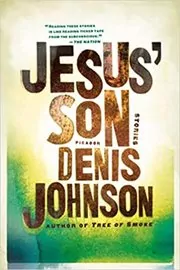
Jesus' Son
by Denis Johnson
1992
A linked cycle of stories follows an unnamed, drug-addicted narrator through crashes, hospital shifts, bad love, and flashes of grace. It is raw, funny, and strangely tender without sanding off the damage.
Recommended by
1 person James Altucher recommended this book
James Altucher
"There was a movie about it and it's a beautiful collection of short stories about this total drug addict." - James Altucher
James Altucher's recommendation of this book

The Incognito Lounge
by Denis Johnson
1994
Selected for the National Poetry Series, this collection shows Johnson at work in poems about damaged lives, night streets, longing, and fear. Its sharp images and plain speech make the darkness feel immediate.

The Throne of the Third Heaven of the Nations Millennium General Assembly
by Denis Johnson
1995
This collected-and-new volume gathers Johnson’s poetry from The Man Among the Seals, Inner Weather, The Incognito Lounge, The Veil, and later work. It is the best single doorway into his poems.

Already Dead
by Denis Johnson
1997
On the Mendocino coast, marijuana grower Nelson Fairchild plots to kill his wife and secure a threatened inheritance. Debt, paranoia, lovers, and a suicidal stranger turn the scheme into a jagged California noir.
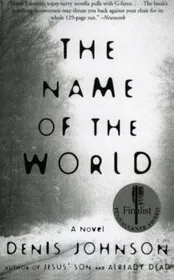
The Name of the World
by Denis Johnson
2000
Michael Reed, a widowed professor at a Midwestern university, is stuck inside grief years after losing his wife and daughter in a crash. A chance encounter with a young performance artist unsettles his careful numbness.

Seek
by Denis Johnson
2001
This nonfiction collection follows Johnson through war zones, religious fringes, deserts, biker gatherings, and American back roads. The pieces mix reporting and self-scrutiny as he looks for meaning among people living far from the center.

Shoppers
by Denis Johnson
2002
This volume collects two plays, Hellhound on My Trail and Shoppers Carried by Escalators Into the Flames. Johnson sends damaged families, investigators, believers, and hustlers across a darkly funny version of the American West.

Train Dreams
by Denis Johnson
2002
Robert Grainier, a railroad laborer in the Idaho Panhandle, lives through love, wildfire, solitude, and the rush of the twentieth century. The novella turns one ordinary life into a compact story of loss and endurance.
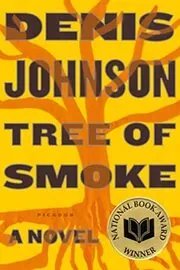
Tree of Smoke
by Denis Johnson
2004
During the Vietnam War, CIA recruit Skip Sands follows his mythic uncle, Colonel Sands, into a maze of intelligence schemes, soldiers, missionaries, and moral fog. The novel tracks how war warps faith, loyalty, and purpose.

Nobody Move
by Denis Johnson
2009
Gambler and barbershop singer Jimmy Luntz owes money to the wrong people when he crosses paths with Anita Desilvera, who has troubles of her own. Their chase through California plays noir for speed, menace, and crooked laughs.

Soul of a Whore and Purvis
by Denis Johnson
2012
Two verse plays push American myth into strange theater. Soul of a Whore follows a fraudulent faith healer, while Purvis loops around FBI agent Melvin Purvis, J. Edgar Hoover, and the legends they make.
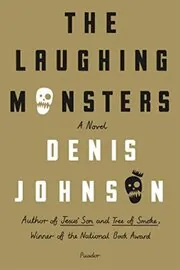
The Laughing Monsters
by Denis Johnson
2014
Roland Nair returns to Freetown to meet old comrade Michael Adriko and his American fiancée, Davidia. Their reunion turns into a shifty, post-9/11 spy journey through money, loyalty, and danger in West and Central Africa.

The Man Among the Seals / Inner Weather
by Denis Johnson
2017
This volume brings together Johnson’s first two poetry collections, written before his fiction made him widely known. The poems show a young writer testing faith, dream logic, loneliness, and hard-edged American scenes.

The Largesse of the Sea Maiden
by Denis Johnson
2018
Johnson’s final story collection gathers five late pieces about memory, art, addiction, old age, and the nearness of death. The narrators look back on lucky escapes and moral wreckage with rueful humor.
Recommended by
1 person Barack Obama recommended this book
Barack Obama
Barack Obama's favorite books of 2018 list.
Barack Obama's recommendation of this book

Car Crash While Hitchhiking and Emergency
by Denis Johnson
2020
Two essential stories from Jesus’ Son appear here in compact form. One follows a drugged hitchhiker into a fatal wreck, while the other tracks a chaotic hospital shift and a surreal drive into the snow.
Where to start with Denis Johnson
If you want the best-known stories first: Jesus' Son → The Largesse of the Sea Maiden.
If you prefer shorter novels: Train Dreams → The Name of the World → Nobody Move.
If you want the big Vietnam-era novel: Tree of Smoke.
If you like Johnson’s darker early fiction: Angels → Fiskadoro → The Stars at Noon.
If you want poetry and nonfiction: The Incognito Lounge → The Throne of the Third Heaven of the Nations Millennium General Assembly → Seek.
Denis Johnson collections, short stories, and related book types
Plays
Short Stories/Novellas
Collections
Non-Fiction
Standalone Denis Johnson books
Author bio
Denis Johnson was born in Munich, Germany, on July 1, 1949. His father worked for the State Department, so home moved around: Japan, the Philippines, and then the suburbs of Washington, D.C. That early zigzag shows up later in books that rarely feel settled. His characters are often in transit, in borrowed rooms, on buses, at borders, or just a little outside normal life.
He found writing early. At nineteen, he published his first poetry collection, The Man Among the Seals. He earned a B.A. in English at the University of Iowa in 1971 and an M.F.A. from the Iowa Writers’ Workshop in 1974, where Raymond Carver was one of the teachers who mattered to him.
The poetry came first.
Collections like The Incognito Lounge and The Veil are spare and jumpy, full of drink, night, weather, fear, and odd moments of grace. You can feel that training in the fiction. Even when Johnson is telling a crime story or a war story, the sentences often move like lines of verse.
A key turn came after he taught creative writing at the Arizona state prison in Florence from 1979 to 1981. That work, including contact with men on death row, helped him return to a novel he had been carrying for years. The result was Angels, his first novel, about Jamie Mays and Bill Houston, two damaged people who meet on a bus and keep slipping toward trouble.
Then Jesus' Son changed how many readers found him. The linked stories follow an addict through hospitals, highways, bars, emergency rooms, and a recovery house, but the book is not just about wreckage. People like it because the narrator can be selfish, lost, funny, cruel, frightened, and open to wonder, sometimes on the same page.
Johnson kept switching forms. Fiskadoro imagines a post-nuclear Florida Keys; The Stars at Noon puts a stranded American woman in revolutionary Nicaragua; Already Dead turns Northern California into a crooked, druggy gothic; and Seek gathers reporting from war zones, religious edges, and American back roads. He was not a writer who stayed in one lane.
The big public prize came with Tree of Smoke. Published in 2007, it follows CIA men, soldiers, missionaries, and civilians through the Vietnam era, and it won the National Book Award for Fiction. A few years later, Train Dreams, a short novella about railroad worker Robert Grainier, became another favorite starting point because it gives you Johnson’s range in a small space.
He could be very funny, too.
That humor is easy to miss if you only hear that his books are about addiction, war, death, faith, and people doing terrible things. In Nobody Move and The Laughing Monsters, he plays with noir and spy-fiction machinery, but the real pull is the same as in the earlier work: people bluffing, praying, lying, drinking, loving badly, and still hoping the next turn might save them.
Johnson died of liver cancer on May 24, 2017, at The Sea Ranch in Northern California. His last story collection, The Largesse of the Sea Maiden, came out after his death and reads like a late conversation with memory, art, aging, and luck. It is a good reminder that his work can be dark without being closed off. There is usually some light getting in, even when nobody quite deserves it.















Edited by
Software engineer whose passion for tracking book recommendations from podcasts inspired the creation of MRB.
Lead investor at 3one4 Capital whose startup expertise and love for books helped shape MRB and its growth.
Comments
Did we miss something? Have feedback?
Help us improve this page by sharing your thoughts