
Deepa Anappara Books in Order
Browse Deepa Anappara's books in order, with quick summaries, a short author overview, and a simple guide to where to start with her fiction.
Last updated:
As an Amazon Associate, we earn from qualifying purchases (at no extra cost to you).
Deepa Anappara books in publication order
2 books
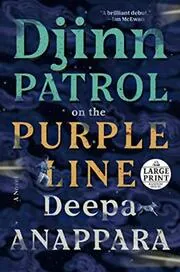
Djinn Patrol on the Purple Line
by Deepa Anappara
2020
Nine-year-old Jai joins Pari and Faiz to investigate the disappearance of children from their crowded settlement at the end of the Purple Line. What begins as play detective work turns urgent as fear spreads and the losses move closer to home.
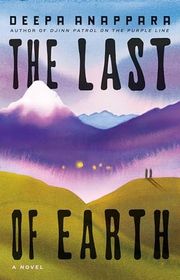
The Last of Earth
by Deepa Anappara
2026
In 1869, Balram, an Indian schoolteacher turned surveyor-spy for the British, enters Tibet to find his missing friend and guide a reckless officer in disguise. When he crosses paths with Katherine, an English explorer, ambition and survival collide in the high mountains.
Where to start with Deepa Anappara
If you want a contemporary mystery told through a child's eyes: Djinn Patrol on the Purple Line
If you prefer historical adventure and big questions about empire: The Last of Earth
If you'd like to read her novels in order: Djinn Patrol on the Purple Line → The Last of Earth
Standalone Deepa Anappara books
Author bio
Deepa Anappara was born in Kerala, in southern India, and grew up in Palakkad. She read widely as a child, in Malayalam, Hindi, and English, and that mix still shows in the texture of her work. Her fiction is full of local speech, rumor, folklore, and the small observations people make when they are trying to understand a difficult world.
Before she published novels, she spent about eleven years as a journalist in India. After studying journalism in Bengaluru, she reported from cities including Mumbai and Delhi, often writing about education, child rights, poverty, and the effects of religious violence. Her reporting on how poverty and violence shaped children's education won journalism awards, and those years put her in close contact with families whose stories were often treated as background noise by the news cycle.
That stayed with her.
Anappara has said she always wanted to write fiction, but journalism felt like the practical path. The real shift came after she moved to the UK in 2008. Away from the daily demands of reporting, she found herself returning to scenes and voices she had carried for years. She took evening writing classes, completed a master's degree, wrote short fiction, and worked through two abandoned novels before she found the form that fit.
That long apprenticeship led to Djinn Patrol on the Purple Line, her debut novel. The book follows Jai, a nine-year-old boy who teams up with his friends Pari and Faiz to investigate why children are disappearing from their settlement at the end of a metro line in a sprawling Indian city. Readers tend to remember Jai's funny, cocky voice, the bond between the three children, and the way the novel balances suspense with anger, tenderness, and real social weight.
It's a hard story, but never a cold one.
The book's reach was wide. Djinn Patrol on the Purple Line landed on major best-of-the-year lists, was translated into more than twenty languages, and won the Edgar Award for Best Novel. What matters just as much is how clearly it carries over the concerns of her reporting: missing children, unequal cities, religious tension, official indifference, and the stubborn energy of communities trying to survive.
Her second novel, The Last of Earth, moves to nineteenth-century Tibet and a very different scale. It follows Balram, an Indian schoolteacher turned surveyor-spy for the British Empire, and Katherine, an English explorer traveling in disguise. The landscape is larger, the history older, but the questions are familiar. Who gets to map the world? Who is asked to risk everything for someone else's ambition? What does loyalty cost when power is uneven from the start?
Across her books, Anappara returns to outsiders, children, workers, and travelers caught inside systems bigger than themselves. She is also the co-editor of Letters to a Writer of Colour, a collection of essays on fiction, race, and culture, which fits neatly with her long interest in who gets heard and who gets edited out. She has been based in the UK since leaving India, and her path to fiction looks less like an overnight leap than years of patient work. That slow build is part of why her novels feel so lived in.








Edited by
Software engineer whose passion for tracking book recommendations from podcasts inspired the creation of MRB.
Lead investor at 3one4 Capital whose startup expertise and love for books helped shape MRB and its growth.
Comments
Did we miss something? Have feedback?
Help us improve this page by sharing your thoughts