
Deborah Levy Books in Order
Explore Deborah Levy books in order, with short summaries, where-to-start guidance, and background on her fiction and Living Autobiography books.
Last updated:
As an Amazon Associate, we earn from qualifying purchases (at no extra cost to you).
Deborah Levy books in publication order
20 books

Heresies & Eva and Moses
by Deborah Levy
1988
Two early plays that pit female desire and dissent against male authority. Levy uses sharp, stylized scenes rather than realism, asking who gets to speak, who gets watched, and who gets pushed aside.

Beautiful Mutants
by Deborah Levy
1989
Russian exile Lapinski moves through a surreal late-Thatcher London, gathering stories from damaged dreamers and grotesques. Slim and strange, the novel turns satire, migration, and broken desire into a jagged modern fable.

Ophelia and the Great Idea
by Deborah Levy
1989
Levy's first collection gathers dreamlike, satirical stories where art, science, love, and power keep colliding. Strange and sharp even in miniature, the pieces test how modern life can distort feeling and language.

An Amorous Discourse in the Suburbs of Hell
by Deborah Levy
1990
This long poem stages a flirtation and argument between a restless angel and an accountant who wants ordinary comforts. Funny and philosophical, it weighs security against freedom, desire, and the shape of a good life.

Swallowing Geography
by Deborah Levy
1993
Narrated by the drifting J.K., this short novel follows a young woman moving across borders in search of home, love, and a self that will hold. Levy mixes road story, fairy tale, and bite-sized social satire.
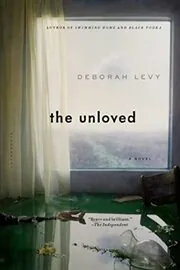
The Unloved
by Deborah Levy
1994
During a holiday gathering at a remote French chateau, an Englishwoman is murdered and a child named Tatiana says she knows who did it. The mystery opens into a colder story about love, cruelty, and buried history.

Billy and Girl
by Deborah Levy
1996
Damaged siblings Billy and Girl live alone in England, searching for the mother who abandoned them. Their odd quests and fantasies become a dark, funny portrait of childhood hurt, reinvention, and survival.
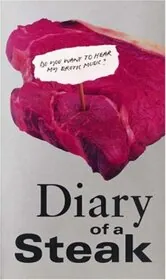
Diary of a Steak
by Deborah Levy
1997
An experimental novella told from the point of view of a steak in a butcher's shop during the mad cow panic. Funny, grotesque, and unsettling, it turns consumer fear and herd thinking into a voice on the edge of breakdown.

Pillow Talk in Europe and Other Places
by Deborah Levy
2003
This story collection follows men and women circling friendship, desire, motherhood, and loneliness. Levy keeps the settings shifting and the emotions off balance, finding tenderness and damage in the same scenes.
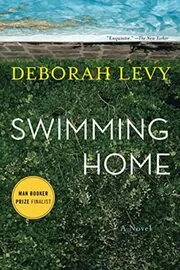
Swimming Home
by Deborah Levy
2011
On holiday above Nice, poet Joe Jacobs and his family find a young woman named Kitty Finch floating in their pool. Her arrival turns a tense summer into a dangerous study of secrets, desire, and grief.

Black Vodka
by Deborah Levy
2013
Ten stories about people who slip out of place, from uneasy lovers to strangers carrying other people's memories. Levy's short fiction is cool, strange, and precise, with ordinary encounters tipping toward the uncanny.
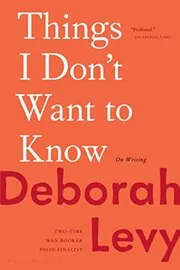
Things I Don't Want to Know
by Deborah Levy
2013
Levy answers Orwell's essay on writing with a memoir about childhood in apartheid South Africa, exile in England, and learning to claim a writer's voice. It is brief, sharp, and personal without losing sight of politics.
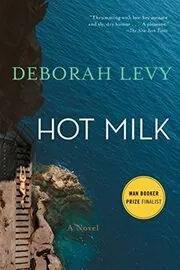
Hot Milk
by Deborah Levy
2016
Sofia takes her mother Rose to a clinic on the Spanish coast to treat a baffling paralysis. In the heat and uncertainty, Sofia begins to question the illness, their bond, and the life she has put on hold.

Stardust Nation
by Deborah Levy
2016
In this graphic novel, advertising executive Tom Banbury finds his damaged past bleeding into the mind of his colleague Nikos Gazidis. Deborah Levy and Andrzej Klimowski turn memory, trauma, and empathy into something eerie and visual.
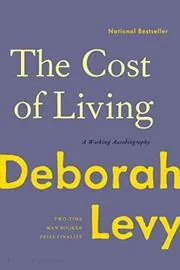
The Cost of Living
by Deborah Levy
2018
Levy writes through divorce, motherhood, work, and the search for a new way to live in middle age. Sharp, fragmentary, and quietly funny, this memoir asks what freedom costs and what it means to become the main character in your own life.
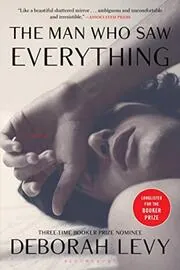
The Man Who Saw Everything
by Deborah Levy
2019
In 1988, young historian Saul Adler is hit by a car on Abbey Road before heading to East Berlin to write a favorable essay on the GDR. As past and present fold into each other, history, desire, and self-image grow unstable.

Real Estate
by Deborah Levy
2021
In the final book of her Living Autobiography, Levy thinks about home, ownership, and belonging as she moves through London, Paris, and other borrowed spaces. It is a memoir about possessions, freedom, and the life a woman can claim for herself.

August Blue
by Deborah Levy
2023
After walking offstage during a concert in Vienna, pianist Elsa M. Anderson drifts through Athens and across Europe. When she sees a woman who seems to be her double, the novel becomes a haunting search for freedom and selfhood.

The Position of Spoons
by Deborah Levy
2023
A collage of short essays and vignettes on books, cities, objects, artists, and private memory. Read together, they form a loose self-portrait of Levy's writing life and the things that keep pulling her attention.

My Year in Paris with Gertrude Stein
by Deborah Levy
2026
A writer in Paris tries to understand Gertrude Stein while spending time with two new friends, Eva and Fanny. Fiction, biography, and essay fold together into a witty book about friendship, art, and how we make a life.
Where to start with Deborah Levy
If you want the best entry to her fiction: Swimming Home → Hot Milk → The Man Who Saw Everything
If you want memoir first: Things I Don't Want to Know → The Cost of Living → Real Estate
If you like art, doubles, and a drifting mood: August Blue → The Man Who Saw Everything
If you want her earlier, sharper experiments: Beautiful Mutants → Swallowing Geography → Billy and Girl
Deborah Levy sub-series and character series
Living Autobiography books in order
Explore this seriesLiving Autobiography books in chronological order
Deborah Levy collections, short stories, and related book types
Short Story Collections
Plays
Graphic Novels
Short Stories/Novellas
Non-Fiction
Standalone Deborah Levy books
Author bio
Deborah Levy was born in Johannesburg in 1959. Her father was involved in the African National Congress, and after his imprisonment under apartheid the family moved to England when Levy was nine. She grew up in London, carrying with her a strong sense of exile and dislocation that would later run through much of her fiction and memoir.
Writing began as a way to get her voice back.
As a child, she became very quiet, and a teacher encouraged her to write down her thoughts. That private act of putting words on paper became a lasting habit. Levy has said that the early break from South Africa, and the feeling of being between places, shaped the way she thinks about identity, home, and who gets to belong.
Before she was known mainly as a novelist, she trained in theatre at Dartington College of Arts. She has spoken about meeting Derek Jarman while working as an usher at the Gate Cinema, and that encounter helped point her toward Dartington. After leaving college in 1981, she wrote plays, directed theatre, and had work staged by the Royal Shakespeare Company. You can still feel the playwright in her prose, in the pauses, the sharp turns, and the way a room can suddenly feel charged.
Her early books were restless and experimental. First came the story collection Ophelia and the Great Idea, then the novel Beautiful Mutants, followed by books such as Swallowing Geography, The Unloved, and Billy and Girl. These are short, strange, often funny works full of drifters, damaged families, uneasy desire, and people trying to invent themselves while the world keeps pushing back.
Then Swimming Home brought her to a much wider readership.
That novel, set around a summer holiday in the south of France, was shortlisted for the Booker Prize, and Hot Milk followed with another Booker shortlist a few years later. Readers often come to Levy for the precision of her sentences, but they stay for the feeling underneath them: the unsettled mothers and daughters, the awkward lovers, the sudden comedy, the sense that ordinary life can turn dreamlike without warning. The Man Who Saw Everything and August Blue keep pushing those interests further, into questions of history, doubling, memory, art, and the stories we tell about ourselves.
Her nonfiction opened another side of her work without really leaving those questions behind. In Things I Don't Want to Know, The Cost of Living, and Real Estate, the three books she called her Living Autobiography, Levy writes about childhood, motherhood, divorce, work, money, freedom, and the problem of finding a home that is truly one's own. Later, The Position of Spoons gathered essays and short pieces that show how closely her life as a reader, thinker, and writer all fit together.
Across all these books, certain themes keep returning. Exile matters. So do women trying to step out of prescribed roles, children who notice more than adults think, and characters who feel half inside and half outside the lives they are living. Water, travel, illness, houses, artists, and cities appear again and again, not as decoration but as ways of thinking.
Levy lives in London and continues to move between fiction, essays, plays, and other forms. What makes her bibliography so rewarding is not that every book sounds the same, because they do not, but that you can feel the same searching mind at work in all of them, curious, wary, funny, and always looking for a truer arrangement of freedom, love, and language.








Edited by
Software engineer whose passion for tracking book recommendations from podcasts inspired the creation of MRB.
Lead investor at 3one4 Capital whose startup expertise and love for books helped shape MRB and its growth.
Comments
Did we miss something? Have feedback?
Help us improve this page by sharing your thoughts