
Dear Mr. President Books in Order
Part ofKathleen Karr Books in OrderThis page covers Dear Mr. President by Kathleen Karr, with the book in order, a brief summary, background, and an easy place to begin.
Last updated:
As an Amazon Associate, we earn from qualifying purchases (at no extra cost to you).
Dear Mr. President books in publication order
1 book
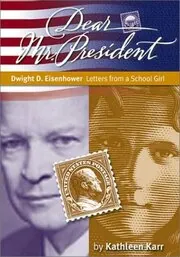
Dwight D. Eisenhower
by Kathleen Karr
2002
Through letters from a New Jersey schoolgirl, this historical story offers a young person's view of Dwight D. Eisenhower's America. Everyday concerns and presidential politics meet in an accessible portrait of the 1950s.
Dear Mr. President books in chronological order
Series background & context
Dear Mr. President is a historical fiction entry built around Dwight D. Eisenhower: Letters from a New Jersey Schoolgirl. Rather than following a large cast across several adventures, it uses a personal form, letters, to bring a period in American life closer to young readers.
The book is set during Eisenhower's presidency in the 1950s. Its young narrator writes from New Jersey, giving readers a child's view of the world beyond her own home and school. The president is a distant public figure, but the letter format makes the connection feel direct. A question, worry, or everyday observation can become the start of a conversation with history.
That small point of view matters.
Karr's historical fiction often works best when big events are filtered through a young person trying to understand them. Here, the emphasis is not on a single high-stakes adventure. It is on the act of paying attention. The letters let readers see how a schoolgirl might make sense of politics, public life, family expectations, and the ordinary routines of the decade.
The setting also gives the story a useful balance. The 1950s can look simple from far away, especially in books that focus on familiar images of postwar America. A child's letters can show a more lived-in version of the time, full of school concerns, local details, questions about adults, and curiosity about the nation she belongs to.
This is a good pick for readers who enjoy diary-style or letter-based historical stories. The format keeps the chapters approachable, while the presidential connection offers an opening into American history without making the book feel like a textbook.
It is a compact, personal story.
Readers should begin with Dwight D. Eisenhower: Letters from a New Jersey Schoolgirl. It stands on its own, so there is no earlier installment required. The appeal is in watching history become something a young person can write about, question, and claim as part of her own world.






Edited by
Software engineer whose passion for tracking book recommendations from podcasts inspired the creation of MRB.
Lead investor at 3one4 Capital whose startup expertise and love for books helped shape MRB and its growth.
Comments
Did we miss something? Have feedback?
Help us improve this page by sharing your thoughts