
David R Dow Books in Order
Find all David R Dow books in order, with short summaries, reading order tips, and a simple guide to where to start with his legal nonfiction and fiction.
Last updated:
As an Amazon Associate, we earn from qualifying purchases (at no extra cost to you).
David R Dow books in publication order
8 books

Cameras in the Courtroom
by David R Dow
1998
This legal study digs into the long argument over televised trials, asking whether cameras improve public access or distort justice. Using major cases and competing viewpoints, it looks at what cameras change for judges, lawyers, jurors, and defendants.
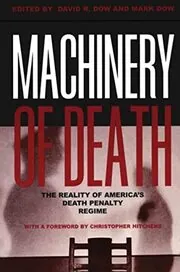
Machinery of Death
by David R Dow
2002
This collection brings together voices from across the death-penalty system, including lawyers, prison officials, victims' families, journalists, and others who have seen it up close. The result is a broad, unsettling picture of how capital punishment works and what it does to people.
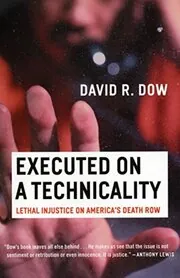
Executed on a Technicality
by David R Dow
2005
Starting from real cases, Dow argues that the death penalty is shaped less by the worst crimes than by race, poverty, bad lawyering, and luck. It is a direct, case-driven critique of how capital punishment actually gets imposed.
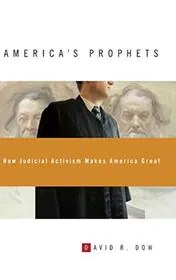
America's Prophets
by David R Dow
2009
Dow argues that so-called judicial activism has deep roots in American legal culture and can protect liberty and equality when majorities fail. He links modern court battles over race, religion, privacy, and marriage to a longer moral tradition.
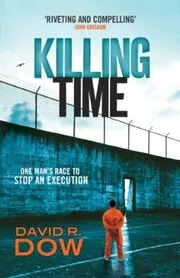
Killing Time
by David R Dow
2010
The UK edition of Dow's memoir The Autobiography of an Execution, this book follows his race to save Henry Quaker, a client he comes to believe may be innocent. It also shows the grind, doubt, and moral strain of death-penalty work.
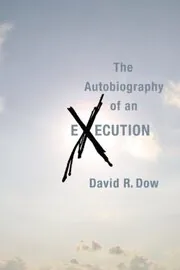
The Autobiography of an Execution
by David R Dow
2010
Dow takes readers inside prison visits, last-minute appeals, and the exhausting intimacy of defending people on death row. Centered partly on a client he believes may be innocent, it is a blunt, human look at how capital punishment works in practice.
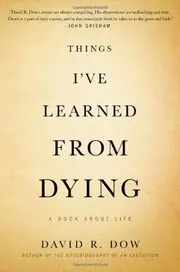
Things I've Learned from Dying
by David R Dow
2013
Dow moves from death-row cases to losses at home, writing about his father-in-law's cancer, his family's dog, and the quiet ways grief changes a household. It is a personal memoir about love, fear, and what people owe one another near the end.
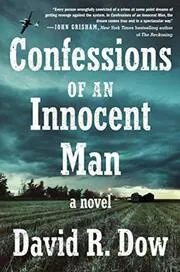
Confessions of an Innocent Man
by David R Dow
2019
Houston chef and pilot Rafael Zhettah thinks he has found love, then his girlfriend is murdered and he is sent to death row for a crime he did not commit. After his release, he turns his anger toward the system that broke him.
Where to start with David R Dow
If you want his fiction first: Confessions of an Innocent Man
If you want the key death-row memoir: The Autobiography of an Execution → Things I've Learned from Dying
If you prefer argument-driven nonfiction: Executed on a Technicality → Machinery of Death
If you want his constitutional-law side: America's Prophets → Cameras in the Courtroom
David R Dow collections, short stories, and related book types
Non-Fiction
Standalone David R Dow books
Author bio
David R. Dow has spent much of his working life in places where time is short and the stakes are final. He joined the University of Houston Law Center faculty in 1988, later became Cullen Professor of Law, and built a career teaching constitutional law, contracts, and death penalty law. With students in his death penalty clinic, he has represented more than one hundred people on death row and founded the Texas Innocence Network.
Before all that, he studied history. Dow earned his B.A. at Rice University, then went to Yale for both an M.A. in history and a law degree, and after graduation he clerked for Judge Carolyn Dineen King on the Fifth Circuit. Even then, writing was part of the mix. As a student at Rice, he was a weekly columnist for The Rice Thresher.
He did not begin as an opponent of the death penalty. When he first took a capital case, he supported it in the abstract. Working on actual cases changed his mind. The farther he got from theory and the closer he got to clients, trial records, and the quality of lawyering, the harder it became to believe the system was fair.
That change shaped the books.
In Executed on a Technicality and the edited volume Machinery of Death, Dow writes about capital punishment as something messy, uneven, and very human. He is interested in doctrine, but he keeps circling back to the same concrete facts: bad lawyers, rushed courts, race, poverty, luck, and the damage done to everyone caught inside the system. That mix gives the work a particular charge. It is legal argument, but it is also case history and witness.
The Autobiography of an Execution, later published in the UK as Killing Time, widened his audience. The book takes readers into prison visits, last-minute filings, and the odd intimacy that can grow between lawyer and client when the clock is running down. It was a National Book Critics Circle Award finalist, and it remains the clearest entry point into his work for many readers.
Then he turned the lens closer to home. In Things I've Learned from Dying, Dow writes not just about executions and law, but about his father-in-law's terminal cancer, the illness of the family's dog Winona, and the way grief moves through a house. It is still a book about death, but it is also about marriage, parenthood, patience, and how ordinary family life looks when loss is near.
Fiction came later.
His first novel, Confessions of an Innocent Man, uses the tools he knows best. A Houston chef and pilot is wrongly convicted and sent to death row, and the novel asks what justice looks like after the system has already failed. Dow has said that his memoirs taught him about voice, and that helps explain why the book feels so lived in. Even when he writes suspense, he keeps pulling at the same questions about punishment, responsibility, and who gets believed.
What makes Dow interesting as a writer is that he never stays only in one lane. Across the books, Houston, courtrooms, prisons, and family rooms keep returning as connected spaces. He can move from constitutional theory to a prison cell, from an appellate brief to a family kitchen, without sounding like he has changed subjects. For years, Houston has been the center of his professional life, and later author biographies place him in Houston and Park City, Utah, with his wife Katya, their son Lincoln, and their dogs. That mix of professor, lawyer, husband, father, and writer explains a lot about his books. They are serious without being stiff, and personal without losing sight of the larger system around them.








Edited by
Software engineer whose passion for tracking book recommendations from podcasts inspired the creation of MRB.
Lead investor at 3one4 Capital whose startup expertise and love for books helped shape MRB and its growth.
Comments
Did we miss something? Have feedback?
Help us improve this page by sharing your thoughts