
David Halberstam Books in Order
Explore David Halberstam books in order, with short summaries, key nonfiction themes, sports writing highlights, and tips on where to start.
Last updated:
As an Amazon Associate, we earn from qualifying purchases (at no extra cost to you).
David Halberstam books in publication order
22 books

The Making Of A Quagmire
by David Halberstam
1965
Written from Halberstam’s reporting in South Vietnam, this early account shows how the Kennedy administration misread the war, the Diem regime, and its own optimistic briefings. It is eyewitness journalism with a warning.
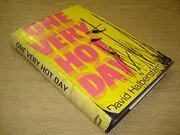
One Very Hot Day
by David Halberstam
1967
Halberstam’s Vietnam novel follows American advisers and South Vietnamese soldiers through a tense, punishing day as they wait for an enemy attack. The heat, fear, and confusion feel as dangerous as the ambush.
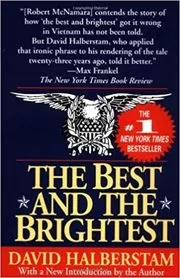
The Best and the Brightest
by David Halberstam
1969
A deep account of how the Kennedy and Johnson administrations led the United States into Vietnam. Halberstam follows the gifted officials, bad assumptions, and political pressures that turned confidence into disaster.
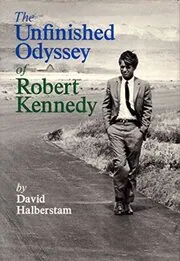
The Unfinished Odyssey of Robert Kennedy
by David Halberstam
1969
Centered on Robert Kennedy’s 1968 presidential run, this portrait traces his shift from hard-edged campaign operator to antiwar candidate with strong support among minorities, Catholics, and younger voters. It catches a career cut short in motion.

Ho
by David Halberstam
1971
This compact biography looks at Ho Chi Minh’s public life and the nationalism behind Vietnam’s resistance to France and the United States. Halberstam treats Ho as a political figure shaped by history, not myth.
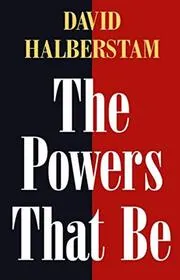
The Powers That Be
by David Halberstam
1979
Halberstam follows CBS, Time, The Washington Post, and the Los Angeles Times to show how modern media became a force in politics. The book is about owners, reporters, ambition, and the fight over truth.

The Breaks of the Game
by David Halberstam
1981
Embedded with the Portland Trail Blazers during the 1979-80 season, Halberstam uses one NBA team to explore injuries, race, labor, money, and the uneasy shift from sport to business.
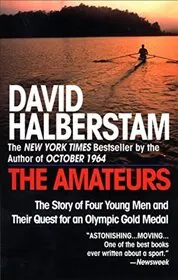
The Amateurs
by David Halberstam
1985
Four American single scullers chase one Olympic spot in 1984, training through pain for a sport with little money or fame. Halberstam turns rowing into a study of obsession and sacrifice.
The Reckoning
by David Halberstam
1986
Halberstam compares Ford’s troubles with the rise of Nissan and the Japanese auto industry. Through executives, factories, and cultural habits, he asks why American manufacturing lost ground and what it might take to recover.
Recommended by
1 person Trung Phan recommended this book
Trung Phan
"About the Auto industry." - Trung Phan
Trung Phan's recommendation of this book
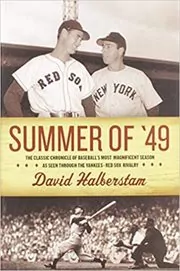
Summer of '49
by David Halberstam
1989
Halberstam revisits the 1949 American League pennant race, when Ted Williams’s Red Sox and Joe DiMaggio’s Yankees battled to the final day. It’s baseball as rivalry, memory, and postwar America in motion.

The Next Century
by David Halberstam
1991
A brief, reflective essay on America after the Cold War, with Halberstam weighing economic competition, education, media, and national purpose. It captures the early 1990s worry that the American century was ending.

The Fifties
by David Halberstam
1993
Halberstam surveys the 1950s through politics, business, television, civil rights, cars, fast food, and Cold War anxiety. The result is a wide-angle portrait of the decade that set up modern America.
Recommended by
1 person Ben Carlson recommended this book
Ben Carlson
Ben Carlson recommended this book on Twitter.
Ben Carlson's recommendation of this book
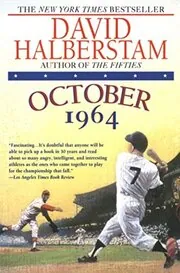
October 1964
by David Halberstam
1994
The 1964 World Series becomes a story of change as the aging Yankees meet the faster, more integrated St. Louis Cardinals. Halberstam captures baseball at the edge of a new era.
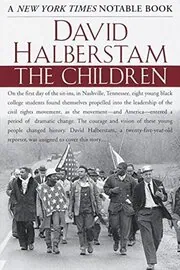
The Children
by David Halberstam
1998
This civil rights history follows the young activists of the Nashville movement, including Diane Nash and John Lewis. Halberstam shows how nonviolent training, sit-ins, and Freedom Rides shaped lives and changed the country.
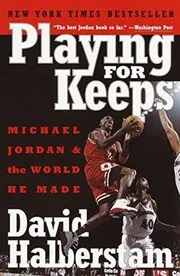
Playing for Keeps
by David Halberstam
1999
Halberstam examines Michael Jordan’s rise with the Chicago Bulls and the NBA’s explosion into a global business. The book is as much about media, money, and competition as it is about Jordan’s game.

War in a Time of Peace
by David Halberstam
2001
A look at American foreign policy after the Cold War, from George H. W. Bush to Bill Clinton. Halberstam follows generals, diplomats, and politicians struggling to define power without a clear enemy.
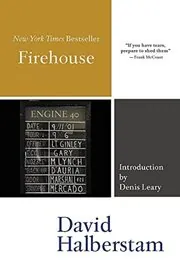
Firehouse
by David Halberstam
2002
Halberstam focuses on Engine 40, Ladder 35, a Manhattan firehouse devastated on September 11. Through the lives of its firefighters and families, he shows the daily bonds behind an unimaginable public loss.

The Teammates
by David Halberstam
2003
Four old Red Sox friends, Ted Williams, Bobby Doerr, Dom DiMaggio, and Johnny Pesky, anchor this warm baseball story. A final trip to visit Williams opens a portrait of loyalty that lasted long after the games.
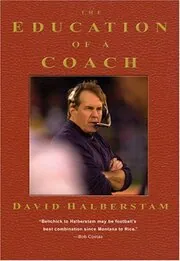
The Education of a Coach
by David Halberstam
2005
Halberstam traces Bill Belichick’s path from a coach’s son studying film to the architect of the New England Patriots dynasty, showing how discipline, scouting, and stubborn preparation built his football mind.
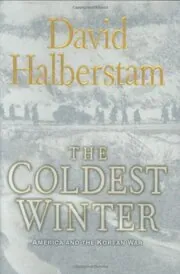
The Coldest Winter
by David Halberstam
2007
Halberstam’s final book takes on the Korean War, from Washington misjudgments to soldiers trapped in brutal cold near the Yalu River. It connects battlefield courage with the politics that shaped a costly conflict.
Recommended by
1 person Bill Rasmussen recommended this book
Bill Rasmussen
"One that I would recommend." - Bill Rasmussen
Bill Rasmussen's recommendation of this book

Everything They Had
by David Halberstam
2008
Edited after Halberstam’s death, this collection gathers his sports writing across baseball, basketball, football, and more. The pieces show why games mattered to him: character, loyalty, pressure, and the culture around them.
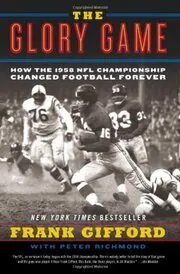
The Glory Game
by David Halberstam
2009
This book returns to the 1958 NFL Championship between the Baltimore Colts and New York Giants, the sudden-death game that helped make pro football a national television spectacle.
Where to start with David Halberstam
For Vietnam and power in Washington: The Making Of A Quagmire → The Best and the Brightest → War in a Time of Peace
For big American history and institutions: The Fifties → The Powers That Be → The Reckoning
For baseball first: Summer of '49 → October 1964 → The Teammates
For sports beyond baseball: The Breaks of the Game → The Amateurs → Playing for Keeps → The Education of a Coach
For later war history: The Coldest Winter
David Halberstam collections, short stories, and related book types
Non-Fiction
Collections
Standalone David Halberstam books
Author bio
David Halberstam was born on April 10, 1934, in New York City, to Blanche, a teacher, and Charles, an Army surgeon. His childhood moved around with his father’s service, including time in Winsted, Connecticut, El Paso, Texas, and Rochester, Minnesota, before the family settled back in Westchester County, New York. He graduated from Roosevelt High School in Yonkers in 1951.
At Harvard, he found the place where his restlessness made sense: the student paper. He earned his degree in 1955 and served as managing editor of the Harvard Crimson, where he learned to chase facts, ask harder questions, and not worry too much about being convenient.
After college, he made a choice that said a lot about him. Instead of taking the comfortable route, he went to Mississippi to work for the Daily Times Leader in West Point, then moved to The Tennessean in Nashville, where he covered the early civil rights movement and the Nashville sit-ins.
He kept moving toward the harder story.
The path led through the Congo and then, in 1962, to Saigon for The New York Times. In Vietnam, Halberstam became part of a small group of reporters who challenged the upbeat official version of the war. His dispatches angered people in Washington, but they also helped him win the 1964 Pulitzer Prize for international reporting.
That experience shaped The Making Of A Quagmire and, later, The Best and the Brightest. Both books ask how smart, confident institutions can talk themselves into failure, especially when pride, politics, and career pressure get mixed with war.
He liked big systems, but he got there through people.
That habit carried into The Powers That Be, about the rise of modern media power; The Reckoning, about Ford, Nissan, and the auto industry; and The Fifties, his broad look at the decade that made much of modern American life. He wrote about presidents, publishers, executives, soldiers, activists, coaches, and players with the same basic question: who has power, and what do they do with it?
Sports gave him another way to ask that question. Summer of '49 and October 1964 use baseball to show a changing country. The Breaks of the Game follows the Portland Trail Blazers and the business of basketball. Playing for Keeps looks at Michael Jordan, the Bulls, and the NBA as a media force, while The Teammates and The Education of a Coach stay closer to friendship, work, and memory.
Halberstam died on April 23, 2007, in a car crash in Menlo Park, California, while traveling to interview former quarterback Y. A. Tittle for a football book. His final completed book, The Coldest Winter, was published after his death. The shelf he left behind is wide, but it keeps returning to one thing: how America explains itself, especially when the explanation is too easy.

















Edited by
Software engineer whose passion for tracking book recommendations from podcasts inspired the creation of MRB.
Lead investor at 3one4 Capital whose startup expertise and love for books helped shape MRB and its growth.
Comments
Did we miss something? Have feedback?
Help us improve this page by sharing your thoughts