
David Grossman Books in Order
Explore David Grossman’s books and series in order, with short summaries and reading lists to help you find your next book and decide where to begin reading.
Last updated:
As an Amazon Associate, we earn from qualifying purchases (at no extra cost to you).
David Grossman books in publication order
15 books
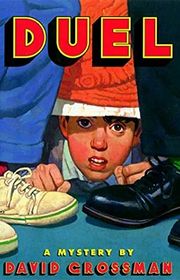
Duel
by David Grossman
1982
Twelve-year-old David befriends an elderly man whose past draws them into an unexpected adventure. Across their difference in age, their courage and stubbornness shape a story of friendship, secrets and a confrontation reaching back many years.
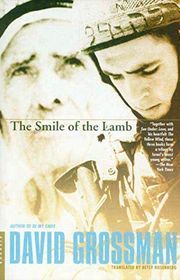
The Smile of the Lamb
by David Grossman
1983
An idealistic Israeli soldier stationed in an occupied Palestinian village forms a relationship with an elderly storyteller. As stories intersect with the violence around them, he confronts deception, disillusionment and the injustices shaping both their lives.
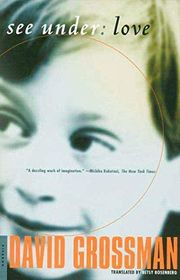
See Under: Love
by David Grossman
1986
The child of Holocaust survivors, Momik grows up trying to understand the terror that shadows his parents' lives. His attempts to confront that inherited past unfold through an imaginative exploration of storytelling, memory and human connection.
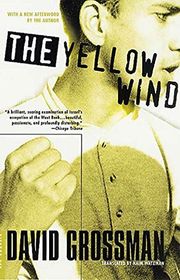
The Yellow Wind
by David Grossman
1987
Grossman recounts visits and conversations in the occupied West Bank in early 1987. His report examines Palestinian life under occupation and considers the political and moral costs borne by both the occupied population and Israeli society.
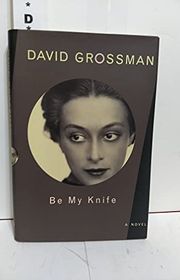
Be My Knife
by David Grossman
1988
A rare-book dealer writes to a woman he glimpses at a reunion, beginning an intimate correspondence between two married strangers. Their letters expose desires and painful memories while testing how much truth a relationship can bear.
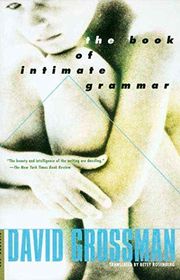
The Book of Intimate Grammar
by David Grossman
1991
As his friends grow toward adulthood, twelve-year-old Aron remains physically unchanged for years. In Jerusalem before the Six-Day War, his imagination becomes both refuge and battleground as he struggles with family, desire and the loss of childhood.
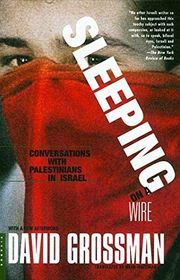
Sleeping on a Wire
by David Grossman
1992
Through conversations with Palestinian citizens of Israel, Grossman explores belonging, identity and the meaning of citizenship in a Jewish state. His reporting examines the tensions between national labels, everyday lives and competing hopes for the future.
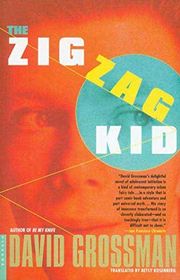
The Zig Zag Kid
by David Grossman
1994
A journey during Nonny Feuerberg's thirteenth year becomes an adventure involving a notorious criminal and a celebrated actress. As unexpected encounters overturn his plans, he must confront questions about his family, his identity and right and wrong.
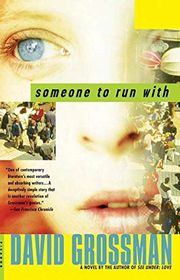
Someone to Run With
by David Grossman
2000
Assigned to find the owner of a stray dog, shy teenager Assaf follows its path through Jerusalem. His search intersects with Tamar, a young singer pursuing a dangerous mission to rescue a teenage drug addict.

Death as a Way of Life
by David Grossman
2003
These dispatches follow the decade after the Oslo agreements, tracing the movement from hopes for peace toward renewed violence. Grossman writes as a novelist, parent and peace activist, urging Israelis and Palestinians to return to negotiation.
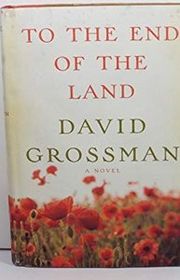
To the End of the Land
by David Grossman
2008
When her son returns to active military service, Ora sets out walking in the Galilee, hoping to evade any news of his death. With an estranged former lover beside her, she recounts the life she fears losing.
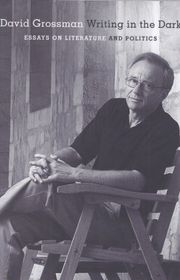
Writing in the Dark
by David Grossman
2008
In six essays, Grossman considers literature, language and political conscience amid conflict in Israel. Reflections on artistic creation sit alongside arguments for peace, including a response to the 2006 war in which his son died.
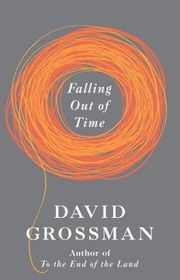
Falling Out of Time
by David Grossman
2014
A bereaved father begins walking in search of his dead son, and other grieving townspeople gradually join him. Blending poetry, prose and drama, their shared journey explores memory, loss and the longing to reach those who are gone.

A Horse Walks into a Bar
by David Grossman
2016
During a single evening's performance, an aging stand-up comedian turns his routine into an unsettling account of childhood. Among the audience, an old acquaintance must confront his own place in the painful story emerging between the jokes.

More Than I Love My Life
by David Grossman
2021
Three generations of women travel to a Croatian island where the grandmother was once imprisoned. Filming their journey, her granddaughter tries to understand a family divided by abandonment, political violence and a secret that still shapes their relationships.
Where to start with David Grossman
For an intense novel in one evening: A Horse Walks into a Bar
For a mother’s story amid war: To the End of the Land
For three generations confronting the past: More Than I Love My Life
For his nonfiction reporting: The Yellow Wind → Sleeping on a Wire
For his reflections on writing: Writing in the Dark
Standalone David Grossman books
Author bio
David Grossman is an Israeli novelist and nonfiction writer born in Jerusalem in 1954. He studied philosophy and drama at the Hebrew University of Jerusalem and worked as an editor and broadcaster at Israel Radio. His books move between the private life of a family and the public pressures of history, war and political conflict.
The range matters. The Yellow Wind grew out of reporting in the West Bank, while Sleeping on a Wire examines the lives of Palestinian citizens of Israel. These are nonfiction works, distinct from the invented characters through whom his novels explore fear, imagination and the difficulty of understanding another person.
In Grossman’s fiction, telling a story can itself become a way of resisting fear.
To the End of the Land follows Ora, a mother whose son returns to military service. She leaves home with an old friend, Avram, hoping to evade the news she dreads. As they walk, her account of her son’s life becomes the heart of the novel. The book makes a family’s accumulated details feel inseparable from the larger conflict threatening to interrupt them.
Grossman was working on that novel when his son Uri was killed in the 2006 Lebanon war. The fact gives the book a painful personal context, but Ora’s journey remains a fictional story with its own characters and relationships. It is an extended, emotionally demanding starting point for readers interested in the meeting of intimate experience and national life.
A Horse Walks into a Bar uses a much narrower frame: a stand-up comedian performing during a single evening. The routine becomes an unsettling account of childhood, with an old acquaintance in the audience forced to reconsider his part in what happened. Rather than relying on the distance between a stage and its spectators, the novel steadily makes that distance uncomfortable.
It won the 2017 International Booker Prize, shared with translator Jessica Cohen.
Other books offer different forms and points of entry. See Under: Love approaches the legacy of the Holocaust through a child’s attempt to understand it, while More Than I Love My Life follows three generations of women confronting a history of imprisonment and abandonment. Memory is active in these stories: what one generation cannot explain can shape the choices available to the next.
Grossman’s list also includes younger protagonists in The Zig Zag Kid and Someone to Run With, as well as the essays collected in Writing in the Dark. A reader can begin with a compressed performance, a long family journey or his nonfiction, depending on the kind of encounter they want. Across those forms, his attention stays close to the language people use to preserve a sense of themselves when the world around them threatens to take it away.




Edited by
Software engineer whose passion for tracking book recommendations from podcasts inspired the creation of MRB.
Lead investor at 3one4 Capital whose startup expertise and love for books helped shape MRB and its growth.
Comments
Spotted a missing book, a wrong order or a mistake? Tell us and we'll fix this page.
We're a reading guide, not the author or publisher, so we can't send books or pass on messages.