
David Downing Books in Order
Explore David Downing's books in order, from Berlin spy fiction to historical nonfiction, with quick summaries, series guides, and help on where to start.
Last updated:
As an Amazon Associate, we earn from qualifying purchases (at no extra cost to you).
David Downing books in publication order
37 books

Future Rock
by David Downing
1976
A wide-ranging study of how rock musicians imagined tomorrow, from utopian dreams to science-fiction dread. Downing reads artists like Dylan, Bowie, and Pink Floyd as storytellers of the future.
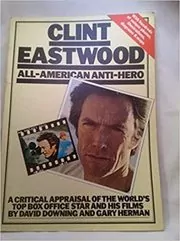
Clint Eastwood
by David Downing
1977
Written with Gary Herman, this early critical biography follows Clint Eastwood's rise from television to international stardom. It looks at the hard-edged screen image that made him one of the era's defining film stars.

The Devil's Virtuosos
by David Downing
1977
A military history of Germany's top field commanders in World War II. Downing examines major campaigns through generals like Guderian, Manstein, and Rommel, and how their strengths helped shape defeat.

War Without End, Peace Without Hope
by David Downing
1978
Written with Gary Herman, this book surveys three decades of Arab-Israeli conflict. It traces the wars, diplomacy, and recurring stalemate that left both violence and peace efforts unresolved.
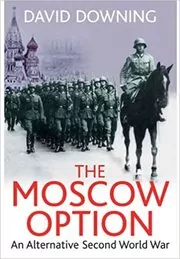
The Moscow Option
by David Downing
1980
An alternative history of World War II built around a different outcome on the Eastern Front. Downing imagines German success at Moscow and follows the military and political consequences from there.
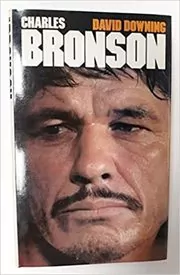
Charles Bronson
by David Downing
1982
A brisk look at Charles Bronson's long climb from tough supporting roles to international stardom. Downing focuses on the hard, stripped-down screen presence that made Bronson a fixture of action cinema.
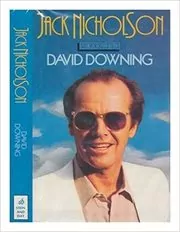
Jack Nicholson
by David Downing
1983
An early biography of Jack Nicholson that tracks his path from counterculture roles to major Hollywood stardom. It follows the restless, unpredictable screen persona that ran through his best-known films.
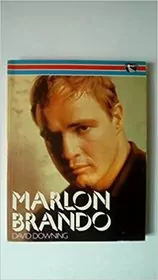
Marlon Brando
by David Downing
1984
This biography follows Marlon Brando from Method acting sensation to one of Hollywood's most influential and difficult stars. It traces the performances, rebellion, and legend that reshaped screen acting.
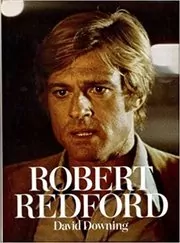
Robert Redford
by David Downing
1985
A compact biography of Robert Redford's move from actor to major Hollywood power. Downing looks at the clean-cut star image, the career choices behind it, and Redford's growing influence behind the camera.
Robert Mitchum
by David Downing
1986
A short biography of Robert Mitchum, whose sleepy drawl and dangerous ease made him a singular film star. Downing traces the outlaw image that carried him from noir to westerns and beyond.
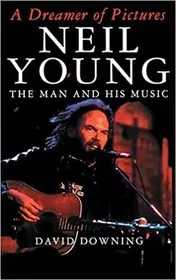
A Dreamer Of Pictures
by David Downing
1995
A full-length portrait of Neil Young that follows his childhood in Canada, his bands, solo work, and constant stylistic reinvention. It is as much about the music as the restless life behind it.
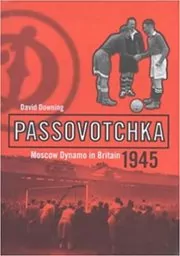
Passovotchka
by David Downing
1999
A lively account of Dynamo Moscow's 1945 tour of Britain, when football, politics, and postwar curiosity collided. Downing uses the matches to show two very different cultures sizing each other up.
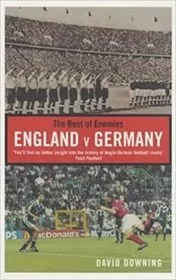
The Best of Enemies
by David Downing
2000
A history of the England-Germany football rivalry across a century of matches, myths, and nerves. Downing mixes sport and politics to show why this fixture has carried so much extra weight.
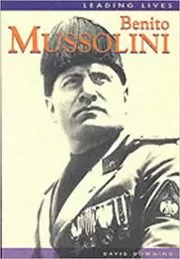
Benito Mussolini
by David Downing
2001
This concise biography follows Mussolini's rise from socialist firebrand to fascist ruler of Italy. It explains how he built power, sold the myth of strong leadership, and led his country toward disaster.
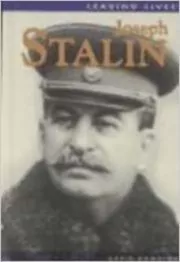
Joseph Stalin
by David Downing
2001
A short illustrated biography of Stalin, from revolutionary organizer to Soviet dictator. It sketches his rise to power, the system he built, and the legacy of fear and control he left behind.
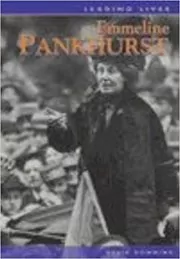
Emmeline Pankhurst
by David Downing
2002
This short biography traces Pankhurst's fight for women's suffrage in Britain. It follows the growth of the suffragette movement, its clashes with the authorities, and her lasting political impact.

Mohandas Gandhi
by David Downing
2002
A clear introduction to Gandhi's life, beliefs, and leadership of India's independence movement. Downing shows how nonviolent resistance became both a moral stance and a political strategy.
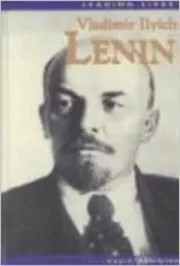
Vladimir Ilyich Lenin
by David Downing
2002
A brief biography of Lenin that follows his years in exile, leadership of the Bolsheviks, and role in the Russian Revolution. It also looks at the new Soviet state he helped create.

Yasser Arafat
by David Downing
2002
A concise life of Yasser Arafat and his role in the Palestinian national movement. The book follows his rise inside the PLO and the hard balance between armed struggle, diplomacy, and leadership.
Che Guevara
by David Downing
2003
This illustrated introduction follows Che Guevara from medical student and traveler to guerrilla fighter and revolutionary icon. It covers Cuba, his later campaigns, and the myth that outlived him.
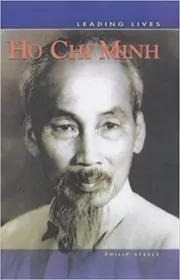
Ho Chi Minh
by David Downing
2003
A short biography of Ho Chi Minh that traces his travels, revolutionary politics, and leadership of Vietnam's independence struggle. It shows how one life intersected with colonialism, war, and nation-building.
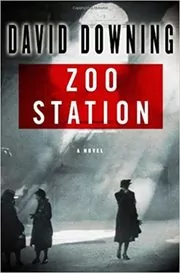
Zoo Station
by David Downing
2007
Berlin, 1939. Journalist John Russell tries to protect his son and keep his footing as Soviet, British, and Nazi intelligence all tug him into the same dangerous web.
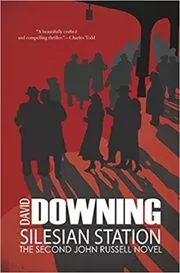
Silesian Station
by David Downing
2008
As Europe edges toward war in 1939, John Russell is blackmailed into intelligence work on multiple fronts. A missing Jewish girl pulls him into a personal search that is every bit as dangerous as the spy game.
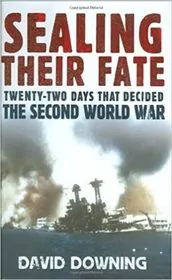
Sealing Their Fate
by David Downing
2009
A focused World War II history of the three weeks from November 17 to December 8, 1941. Downing interweaves the drive on Moscow, the desert war, and the road to Pearl Harbor.
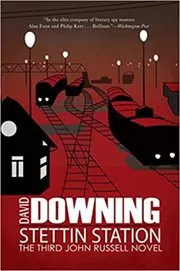
Stettin Station
by David Downing
2009
In autumn 1941, Berlin feels more hostile by the day, and John Russell is trapped between German and American intelligence. He wants a way out, but escape could cost him Effi, Paul, or both.
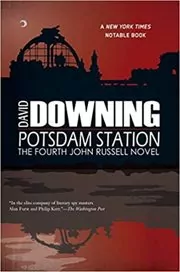
Potsdam Station
by David Downing
2010
In April 1945, Berlin is collapsing and Russell is desperate to find Effi and his son before the city is destroyed. His search sends him through Moscow and back into the heart of the last battle.
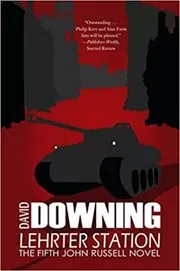
Lehrter Station
by David Downing
2012
After the war, Russell and Effi hope for a quieter life, but divided Berlin quickly proves otherwise. Soviet demands, American intelligence, and unfinished Nazi business drag them into a new spy world.
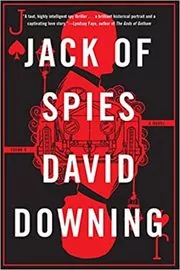
Jack of Spies
by David Downing
2013
In 1913, Scottish car salesman Jack McColl moonlights for British intelligence while traveling the world on business. Then politics, danger, and an Irish-American journalist turn a fantasy of spy work into something much more costly.
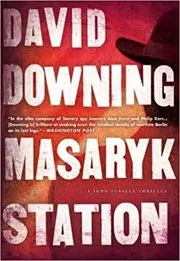
Masaryk Station
by David Downing
2013
Berlin in 1948 is ruined, occupied, and sliding into the Cold War. Working both sides, Russell tries to find one final piece of leverage that might let him and Effi survive and walk away.
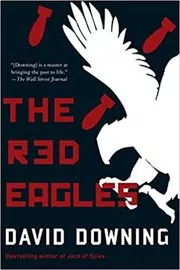
The Red Eagles
by David Downing
2014
In the last months of World War II, Stalin and Hitler both chase miracles as the race for the atom bomb reshapes the endgame. Spies, deception, and collapsing regimes drive this high-stakes historical thriller.
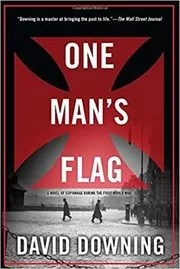
One Man's Flag
by David Downing
2015
Spring 1915 finds Jack McColl in India, hunting German plots and anti-colonial unrest for the British Empire. At the same time, Caitlin Hanley is drawn deeper into Irish politics, and the two may meet again as lovers or enemies.
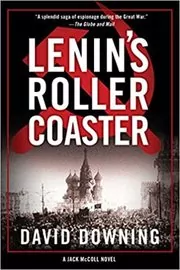
Lenin's Roller Coaster
by David Downing
2017
In winter 1917, Jack McColl is sent on a sabotage mission in Central Asia while Caitlin Hanley races to cover the Russian Revolution. War, ideology, and divided loyalties put their relationship under real strain.
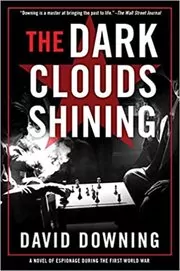
The Dark Clouds Shining
by David Downing
2018
In 1921, former spy Jack McColl is offered freedom from prison if he takes one last mission in Soviet Russia. The job puts him back in Caitlin's orbit and into a maze of plots, betrayals, and revolutionary aftermath.
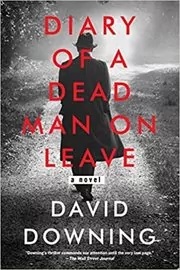
Diary of a Dead Man on Leave
by David Downing
2019
In 1938, a supposed returning emigrant rents a room in Hamm, but his hidden diary reveals he is a communist agent sent to rebuild shattered resistance inside Nazi Germany. The mission is deadly, and his growing bond with a local family makes it even harder to stay cold.
Lenin
by David Downing
2020
A short, accessible biography of Lenin for younger readers. It covers the revolutionary leader's early years, the 1917 upheaval, and the state that emerged from Bolshevik victory.
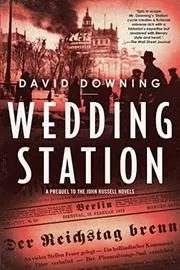
Wedding Station
by David Downing
2021
In 1933, just after the Reichstag fire, John Russell is newly separated and trying to hold on to Berlin, his job, and his young son. A string of investigations shows how quickly the city is sliding into terror.

Union Station
by David Downing
2024
Now in 1953 Los Angeles, John Russell is researching American ties to Nazi Germany when someone starts following him. The trail leads back to Berlin, where old bargains and new Cold War dangers collide.
Where to start with David Downing
If you want WWII Berlin espionage: Wedding Station → Zoo Station → Silesian Station
If you want the core John Russell arc: Zoo Station → Silesian Station → Stettin Station → Potsdam Station
If you prefer globe-trotting WWI spy fiction: Jack of Spies → One Man's Flag → Lenin's Roller Coaster
If you want a strong standalone first: Diary of a Dead Man on Leave or The Red Eagles
David Downing sub-series and character series
John Russell & Effi Koenen books in order
Explore this seriesJohn Russell & Effi Koenen books in chronological order
David Downing collections, short stories, and related book types
Non-Fiction
Standalone David Downing books
Author bio
David Downing grew up in north-west London, in Harrow, in a home that left him plenty of room to make his own interests. Football, railways, rock music, politics, history, they all got their hooks in early, and most of them stayed. At school he was drawn to geography and history more than anything else, especially once a teacher showed him that the past was something to argue about, not just memorize.
That lesson stuck.
He went on to study at Sussex and stayed for postgraduate work, but academic life did not quite keep him. He later recalled failing to finish a PhD on Che Guevara's economic ideas because he was far more interested in novels, music, and writing his own work. In the early 1970s he found his first real lane as a rock critic, writing for Let It Rock and other magazines, and his first book, Future Rock, grew directly out of that world.
Travel mattered too.
In 1974 he went overland to India through Iran and Afghanistan, a trip that gave him a lasting taste for long journeys, cheap hotels, and the way politics looks from the ground. He later traveled through South and Central America, Mexico, and the Soviet Union. That mix of movement, curiosity, and political interest runs straight through his books, whether he is writing about football, war, or spies trying to keep their balance in bad times.
Downing's career has never moved in a neat line. He wrote military history, alternate history, show business biographies, football books, and more than forty history books for younger readers. He also wrote thrillers under the name David Monnery. A biography of Neil Young, A Dreamer Of Pictures, sits in the same body of work as Sealing Their Fate, his study of the crucial weeks in late 1941 that helped decide World War II.
Fiction came more slowly. His first major novel, The Red Eagles, appeared in the late 1980s, but his real breakthrough came years later with Zoo Station, the opening John Russell novel. Set in Berlin as Nazi power hardens into war, that series follows a journalist and reluctant spy through moral traps, family loyalties, and the everyday pressure of living inside a police state. Readers tend to remember the atmosphere first, but the pull is also in the choices. Nobody gets to stay clean for long.
He carried that historical reach into the Jack McColl books, beginning with Jack of Spies. These novels move back to the years around World War I and widen the map to China, India, Ireland, the United States, and revolutionary Russia. They are spy stories, yes, but also books about empire, class, nationalism, and the private cost of serving causes that look shakier up close than they do from a flagpole.
What makes Downing interesting is the range.
His nonfiction and fiction keep circling a few big subjects: power, ideology, borders, war, and the ordinary people caught in the machinery. Even when he writes about famous figures or decisive campaigns, he tends to look for the human pressure points, the compromise, the accident, the bit of fear or stubbornness that changes a life. He does not write history from very far above street level.
These days he lives with his wife Nancy, an American acupuncturist, and has long made his home outside London. The two have also spent years restoring a cottage in France, where he has pictured a good life of vegetables, wine, films, and unread books finally getting their turn. It sounds like the kind of ending one of his tired, thoughtful spies might actually trust.


Edited by
Software engineer whose passion for tracking book recommendations from podcasts inspired the creation of MRB.
Lead investor at 3one4 Capital whose startup expertise and love for books helped shape MRB and its growth.
Comments
Did we miss something? Have feedback?
Help us improve this page by sharing your thoughts