
David Diop Books in Order
This page shows David Diop’s books in order, with quick summaries, background on his historical novels, and simple advice on where to start reading.
Last updated:
As an Amazon Associate, we earn from qualifying purchases (at no extra cost to you).
David Diop books in publication order
2 books
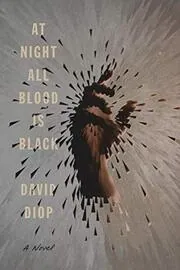
At Night All Blood Is Black
by David Diop
2018
On the Western Front, Senegalese soldier Alfa Ndiaye is shattered by his closest friend's death and begins a night ritual of revenge that unnerves his own comrades. It's a fierce, unsettling novel about war, grief, and colonial violence.
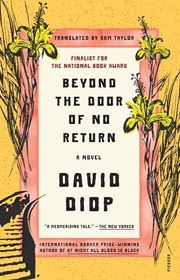
Beyond the Door of No Return
by David Diop
2023
As he lies dying in Paris, botanist Michel Adanson looks back on his years in eighteenth-century Senegal and his obsession with a vanished woman named Maram. The novel blends memory, love, and colonial history in a layered story about loss and betrayal.
Where to start with David Diop
If you want the book that made his name internationally: At Night All Blood Is Black
If you want the clearest reading path in English: At Night All Blood Is Black → Beyond the Door of No Return
If you prefer a wider, more layered historical novel: Beyond the Door of No Return
Standalone David Diop books
Author bio
David Diop was born in Paris in 1966 to a French mother and a Senegalese father, and he spent most of his childhood in Senegal. That split background matters to his work. His novels often move between France and West Africa, and between official history and the lives that history tends to leave out.
History came first.
After returning to France for university, Diop earned a doctorate at the Sorbonne in eighteenth-century French literature. In 1998 he joined the University of Pau, where he has taught literature and researched the ways Europeans wrote about Africa in the seventeenth and eighteenth centuries. That long academic life gave him a deep feel for archives, but it also made him alert to the blind spots and stereotypes hiding inside them.
He came to fiction after years in academia, and that late start seems to have sharpened his sense of purpose. His first novel, 1889, l'Attraction universelle, imagines a Senegalese delegation traveling to the 1889 World's Fair in Paris. Even there, he was already focused on buried histories and unequal encounters between Europe and Africa.
While researching the Senegalese tirailleurs of the First World War, Diop saw how old European fantasies about Africa had been reused in wartime propaganda. That insight helped shape At Night All Blood Is Black, the novel that brought him to many readers outside France. It follows Alfa Ndiaye, a Senegalese soldier unraveling after the death of his closest friend, and readers often remember its intense voice, its ritual repetitions, and the way it binds personal grief to colonial violence.
The book changed his public life. In Anna Moschovakis's English translation, At Night All Blood Is Black won the 2021 International Booker Prize, and it also received the Los Angeles Times Book Prize for fiction. Success did not arrive with a giant shelf of sprawling novels. It arrived with a short, fierce book that refuses to let war sound noble or clean.
Then came Beyond the Door of No Return, a broader and more layered novel set partly in eighteenth-century Senegal and partly in Paris. Through the dying botanist Michel Adanson and the memory of a woman named Maram, Diop explores love, slavery, betrayal, and the human cost of curiosity tied to empire. Readers who admire this book often like its nested stories and the way memory keeps changing the meaning of the past.
His books are usually compact, but they don't feel small. Again and again, he returns to soldiers, travelers, scholars, and displaced people, characters caught between languages, loyalties, and versions of history. You can also feel his interest in oral storytelling in the repetitions, the circling sentences, and the sense that a voice is carrying the story forward.
He still teaches in Pau, in southwestern France.
That double life, professor and novelist, helps explain why his work feels both precise and alive. He knows the documents, but he also knows their limits. The real spark in a David Diop novel comes when history stops sounding official and starts sounding human again.






Edited by
Software engineer whose passion for tracking book recommendations from podcasts inspired the creation of MRB.
Lead investor at 3one4 Capital whose startup expertise and love for books helped shape MRB and its growth.
Comments
Did we miss something? Have feedback?
Help us improve this page by sharing your thoughts