
Dava Sobel Books in Order
Explore Dava Sobel’s books and series in order, with short summaries and reading lists to help you find your next book and decide where to begin reading.
Last updated:
As an Amazon Associate, we earn from qualifying purchases (at no extra cost to you).
Dava Sobel books in publication order
10 books
Backache Relief
by Dava Sobel
1985
Drawing on reported experiences with back pain, this guide surveys approaches to relief across several conditions. Its coverage includes lower-back and neck pain, damaged discs, sciatica, arthritis, and spinal disorders, organizing recommendations around the problems sufferers describe.
Arthritis: What Exercises Work
by Dava Sobel
1989
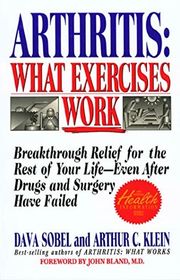
Dava Sobel and Arthur Klein examine exercise programs for people living with arthritis, drawing on a national survey of sufferers' experiences. The guide discusses adapting movement to different conditions, pain levels, ages, and daily activities through illustrated routines.
Is Anyone Out There?
by Dava Sobel
1992
Astronomer Frank Drake recounts three decades spent searching for evidence of intelligent life beyond Earth. Written with Dava Sobel, the account follows the questions, observing methods, and scientific ambitions behind the effort that developed into NASA's microwave search program.
The Incredible Planets
by Dava Sobel
1993
Spacecraft photographs and computer-enhanced images guide a tour of the solar system's planets and moons. Drawing on American and Soviet missions, the book presents the discoveries and unfamiliar landscapes revealed as probes carried scientific observation beyond Earth.
Backache: What Exercises Work
by Dava Sobel
1994
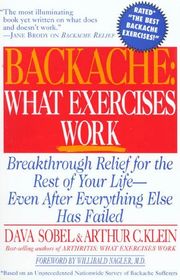
This illustrated guide examines exercise as an approach to recurring back pain, combining routines with self-assessment checklists. It discusses adjusting activity, addressing acute and chronic discomfort, and reconsidering everyday movements, drawing on surveys of sufferers' experiences.
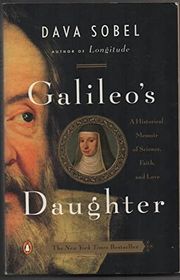
Galileo's Daughter
by Dava Sobel
1999
The surviving letters of Galileo's daughter Maria Celeste frame a portrait of the scientist and their enduring relationship. Her life inside a Florentine convent offers a personal view of the religious pressures, scientific controversies, and family obligations surrounding his work.
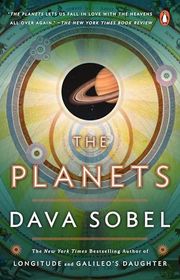
The Planets
by Dava Sobel
2005
Dava Sobel explores the solar system by connecting planetary science with mythology, art, music, literature, and history. Each world's physical characteristics become a starting point for examining the many ways people have imagined the heavens and their place within them.
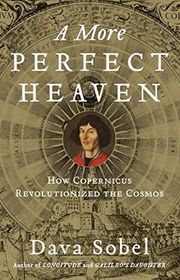
A More Perfect Heaven
by Dava Sobel
2011
Dava Sobel traces Copernicus's development of a sun-centered universe and his hesitation to publish it. Historical narrative and an imagined dramatic encounter with mathematician Rheticus explore the personal convictions and religious tensions behind a transformation in humanity's understanding of the cosmos.
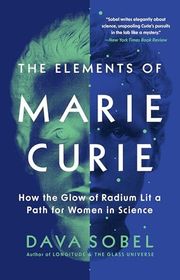
The Elements of Marie Curie
by Dava Sobel
2024
Dava Sobel follows Marie Curie's scientific work alongside the careers of women trained in her laboratory. The account connects discoveries about radioactivity with family life, wartime service, and the opportunities Curie helped create for a new generation of researchers.
The Glass Universe
by Dava Sobel
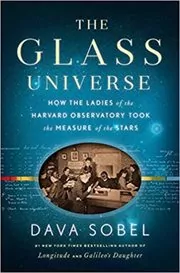
Dava Sobel tells the history of women who studied photographic glass plates at Harvard College Observatory. Their work on stellar classification, composition, and distance transformed astronomy, while their personal stories reveal the obstacles surrounding women's participation in science.
Where to start with Dava Sobel
For science through a family relationship: Galileo's Daughter
For a cultural tour of the solar system: The Planets
For the women behind astronomical discoveries: The Glass Universe
For Curie and the researchers around her: The Elements of Marie Curie
For Copernicus and a changing cosmos: A More Perfect Heaven
Standalone Dava Sobel books
Arthritis: What Exercises Work
by Dava Sobel
1989Breakthrough Relief for the Rest of Your Life, Even After Drugs and Surgery Have Failed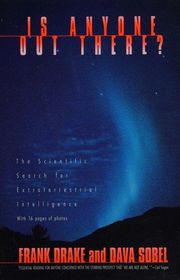

by Dava Sobel
Publication date unknownHow the Ladies of the Harvard Observatory Took the Measure of the Stars
Author bio
Dava Sobel writes about science through the people who do it: their work, beliefs, family relationships and struggles to have their discoveries understood. Astronomy runs through much of her writing, but her books also examine scientific collaboration and the opportunities available to women. A laboratory, an observatory or a collection of letters can become a way into a much larger change in human knowledge.
Sobel was born and raised in New York City and attended the Bronx High School of Science. She worked as a science reporter for the New York Times and contributed to magazines as a freelancer. The success of Longitude, published in 1995, allowed her to spend years researching the books that followed.
Galileo's Daughter was a finalist for the Pulitzer Prize in Biography in 2000.
That book examines Galileo through his relationship with his daughter, the nun Suor Maria Celeste, and her surviving letters. The family connection opens questions about religious belief and scientific inquiry, rather than treating Galileo's discoveries as a story detached from his private world. It is a good beginning for readers who enjoy biography as much as the history of ideas.
The Planets offers a broader tour, linking the solar system with mythology, astrology, music, poetry and other parts of culture. The subject is both the worlds being explored and the meanings people have attached to them. Readers who want to move among several topics rather than follow one scientist can start there.
Women doing scientific work take the foreground in The Glass Universe.
It follows the women who analysed photographic plates at Harvard College Observatory. Their patient examination of stars contributed to discoveries about classification, composition and distance, while their careers reveal the constraints surrounding women's work in science. The observatory setting makes this a history of a working group as well as a series of individual lives.
The Elements of Marie Curie also reaches beyond a single famous name. Curie's discoveries are part of the account, alongside the women who trained in her laboratory and the connections between scientific work, family and wartime service. For readers interested in the people whom a prominent scientist helped make room for, it offers a companion to the Harvard history.
Sobel lives on Long Island and edits the Meter poetry column in Scientific American. That combination of science and literary form has a counterpart in her books, which make room for the language, beliefs and relationships surrounding a discovery as well as the discovery itself.












Edited by
Software engineer whose passion for tracking book recommendations from podcasts inspired the creation of MRB.
Lead investor at 3one4 Capital whose startup expertise and love for books helped shape MRB and its growth.
Comments
Spotted a missing book, a wrong order or a mistake? Tell us and we'll fix this page.
We're a reading guide, not the author or publisher, so we can't send books or pass on messages.