
Danielle Evans Books in Order
This page lists Danielle Evans books in order, with short summaries, publication details, and simple advice on where to start with her story collections.
Last updated:
As an Amazon Associate, we earn from qualifying purchases (at no extra cost to you).
Danielle Evans books in publication order
2 books
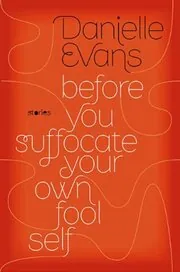
Before You Suffocate Your Own Fool Self
by Danielle Evans
2010
Evans's debut gathers eight stories about Black and mixed-race teenagers and young adults trying to make sense of family, class, sex, and belonging. The voices are sharp, funny, and painfully alert to how quickly one choice can change a life.
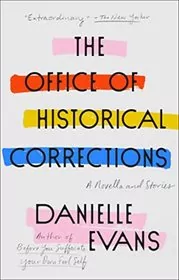
The Office of Historical Corrections
by Danielle Evans
2020
This collection pairs six stories and a novella about race, grief, desire, and the way history keeps pressing into the present. The title piece follows a D.C. historian pulled into a knotty mystery about memory, records, and power.
Where to start with Danielle Evans
If you want to read in publication order: Before You Suffocate Your Own Fool Self → The Office of Historical Corrections
If you want her coming-of-age stories first: Before You Suffocate Your Own Fool Self
If you want the broader, later collection: The Office of Historical Corrections
Danielle Evans collections, short stories, and related book types
Collections
Standalone Danielle Evans books
Author bio
Danielle Evans was born in Alexandria, Virginia, in 1983, and grew up mostly in Northern Virginia. She was an only child, and after her parents separated she moved often with her mother, a civil rights lawyer, from one school district to another. That early feeling of being both inside and outside a place never really left her. It became one of the deep currents in her fiction.
She started writing early. By the time she was five, she was already making stories.
At Columbia University, Evans studied anthropology and African American studies while also taking creative writing classes. That mix makes a lot of sense once you read her work. She pays close attention to how people behave in public, how families explain themselves, and how history settles into everyday life. Anthropology trained her to observe. Fiction gave her room to ask harder questions.
Then came the Iowa Writers' Workshop, where she earned an MFA in fiction. While there, she wrote "Virgins," a story about two teenage girls stepping toward adulthood for one charged night. It was published when she was still in her twenties and quickly brought her a wider audience. The story showed what she could do from the start: write with humor, precision, and a sharp eye for the social rules people pretend not to notice.
She has stayed loyal to the short story.
Her debut collection, Before You Suffocate Your Own Fool Self, arrived in 2010. It introduced readers to Black and mixed-race teenagers and young adults trying to figure out school, sex, class, money, family, and belonging. Stories like "Virgins" and "Robert E. Lee Is Dead" are frank about bad decisions and social pressure, but never mean about them. Readers tend to like the wit, the emotional honesty, and the way her characters can be self-aware without being fully in control of their own lives.
A decade later, The Office of Historical Corrections showed a wider range of scale and setting. The collection moves through grief, apology, lust, friendship, and public memory, and its title novella follows a Washington, D.C., historian pulled into a tangled mystery about race, archives, and the stories a country tells about itself. Another much-read story, "Boys Go to Jupiter," follows a white college student after a Confederate flag bikini photo goes viral. Even when Evans builds a high-concept premise, she keeps her attention on ordinary panic, private embarrassment, and the small choices that turn into large consequences.
Place matters a lot in her work. Northern Virginia and Washington, D.C., recur not as glossy political backdrops, but as lived-in places full of schools, buses, office buildings, and long arguments about who belongs. Again and again, she writes about daughters, students, strivers, and people who know the official version of events is not the whole story. Her fiction is interested in race and power, yes, but also in friendship, desire, class friction, grief, and the weird comedy of being a person in public.
Her mother, Dawn Valore Martin, died in 2017, and that loss sits close to the surface in some of the later work.
Along the way, Evans has received the PEN America Robert W. Bingham Prize, the Hurston-Wright Legacy Award, the Paterson Prize, a National Book Foundation 5 Under 35 honor, a National Endowment for the Arts fellowship, the Joyce Carol Oates Prize, and a USA Artists Fellowship. She has taught at American University and the University of Wisconsin-Madison, and now teaches in The Writing Seminars at Johns Hopkins University, where she is also affiliated with the Center for Africana Studies. Her bibliography is still compact, just two story collections so far, but both books reward close reading and rereading.



Edited by
Software engineer whose passion for tracking book recommendations from podcasts inspired the creation of MRB.
Lead investor at 3one4 Capital whose startup expertise and love for books helped shape MRB and its growth.
Comments
Did we miss something? Have feedback?
Help us improve this page by sharing your thoughts