
Craig Thomas Books in Order
Explore Craig Thomas books in order, from Firefox to Aubrey and Hyde, with short summaries, series guides, and help choosing the best place to start.
Last updated:
As an Amazon Associate, we earn from qualifying purchases (at no extra cost to you).
Craig Thomas books in publication order
19 books
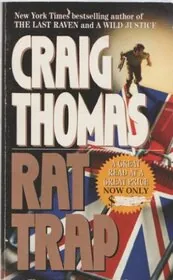
Rat Trap
by Craig Thomas
1976
A battered British Airways jet lands safely at Heathrow, only to be seized by armed hijackers. As officials scramble to negotiate and contain the crisis, one escape turns a tense airport standoff into a wider manhunt.
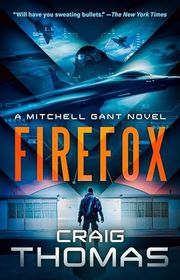
Firefox
by Craig Thomas
1977
Mitchell Gant, a damaged American pilot with the skills the CIA needs, is sent deep into the Soviet Union to steal the experimental Firefox. The mission depends on nerve, deception, and surviving long enough to fly the impossible aircraft home.
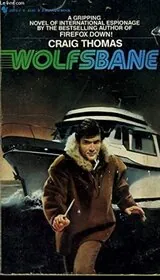
Wolfsbane
by Craig Thomas
1978
Haunted by a wartime betrayal, former agent Richard Gardiner is drawn back into a hunt for the elusive Soviet operative known as Wolf. His private vendetta opens onto a larger game of double-crosses, buried loyalties, and old wounds that never healed.
Snow Falcon
by Craig Thomas
1979
Strange clues on the Finnish border point Kenneth Aubrey toward a conspiracy inside the Soviet system. As British, American, and even Soviet agents scramble for answers, a plot with the power to trigger a wider war starts to surface.
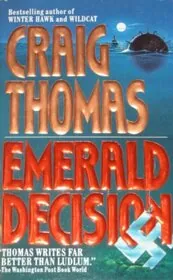
Emerald Decision
by Craig Thomas
1980
In 1940, an Anglo-Irish spy uncovers signs of a secret German operation linked to Ireland. Decades later, his son reopens the mystery and finds that old wartime secrets still have powerful defenders.

Moscow Five Thousand
by Craig Thomas
1980
Set against the 1980 Moscow Olympics, this thriller follows several converging plots of pressure, sabotage, and terror. Everything narrows toward the men's 5,000 metres final, where sport and Cold War politics meet at full speed.
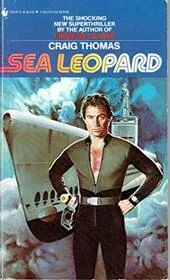
Sea Leopard
by Craig Thomas
1981
Britain's newest nuclear submarine carries Leopard, an advanced anti-sonar system that could shift the balance at sea. When a distress signal draws the crew off course, Patrick Hyde and Kenneth Aubrey uncover a trap waiting under Arctic waters.
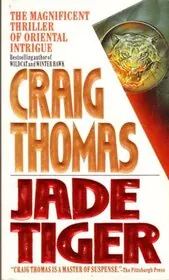
Jade Tiger
by Craig Thomas
1982
A Chinese officer defects in Hong Kong with claims that a key German statesman is working for Moscow. Kenneth Aubrey and Patrick Hyde chase the truth across several countries, never sure which side is feeding them the story they want to hear.
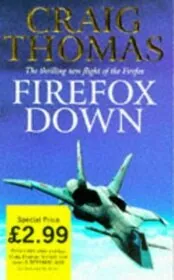
Firefox Down!
by Craig Thomas
1983
Moments after stealing the Firefox, Mitchell Gant is forced down on a frozen lake near the Finnish border. With the aircraft lost under the ice, he must stay alive while Soviet forces close in from every direction.
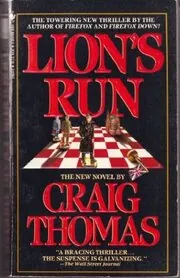
Lion's Run / The Bear's Tears
by Craig Thomas
1985
A Russian defector surfaces with a file that brands Kenneth Aubrey a Soviet mole, and British intelligence turns on its own master spy. Patrick Hyde goes off the books to clear Aubrey's name before the trap closes.
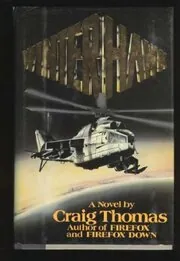
Winter Hawk
by Craig Thomas
1987
Mitchell Gant heads into Baikonur on a mission that becomes far bigger than one extraction. Hidden weapons, Soviet infighting, and the threat to an American space shuttle turn this into a high-stakes Cold War sprint.
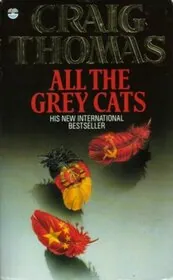
All The Grey Cats / Wildcat
by Craig Thomas
1988
When an East German defector dies in a disastrous operation, Kenneth Aubrey becomes the target of a ruthless Stasi power broker with a personal score to settle. The fallout spreads from London and East Berlin to a tense, violent plot in Nepal.
The Last Raven
by Craig Thomas
1990
At the end of a mission in Afghanistan, Patrick Hyde witnesses a Soviet aircraft brought down by a terrifying new weapon. The crash leads Aubrey and Hyde into a struggle over reform, hardliners, and the future direction of Moscow.
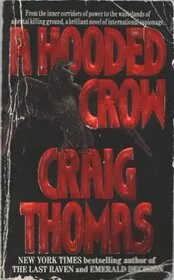
A Hooded Crow
by Craig Thomas
1991
Patrick Hyde starts tracing illegal shipments of British technology and runs into a larger network of KGB links, corporate greed, and South African extremists. As the trail widens from London to Namibia, even Aubrey is pulled back into the fight.
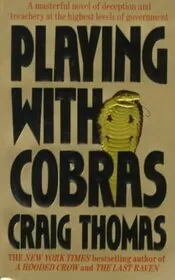
Playing with Cobras
by Craig Thomas
1993
In India, British agent Philip Cass is accused of murdering the actress he loved. Patrick Hyde digs into the case and finds drugs, political ambition, and powerful men who would rather bury the truth than risk a scandal.
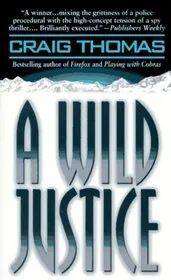
A Wild Justice
by Craig Thomas
1995
After linked murders in Washington and Siberia, former CIA man John Lock and Russian investigator Alexei Vorontsyev uncover a conspiracy tied to an American gas company, heroin trafficking, and dangerous secrets that reach far beyond one case.
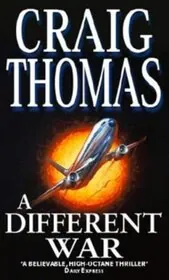
A Different War
by Craig Thomas
1997
A brand-new American airliner crashes in the Arizona desert, and Mitchell Gant is called in to reconstruct the fatal flight. What looks like an accident soon opens into sabotage, rival aerospace interests, and a second crash overseas.
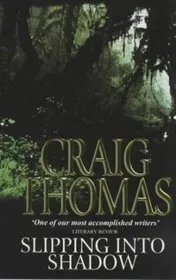
Slipping into Shadow
by Craig Thomas
1998
When a luxury resort rises in northern Burma just as heroin starts flooding the West, Patrick Hyde follows the money and the rumor trail into a deadly web of drugs, business, and intelligence work.

That's Not How It Happened
by Craig Thomas
2025
After Paige writes a memoir about raising her son with Down syndrome, Hollywood comes calling. The film opportunity excites and unsettles her whole family, forcing each of them to reckon with whose version of their story will be told.
Where to start with Craig Thomas
If you want the classic Cold War jet thriller: Firefox → Firefox Down! → Winter Hawk
If you want his long-running MI6 saga: Wolfsbane → Snow Falcon → Sea Leopard → Jade Tiger
If you want Aubrey and Hyde at their sharpest: The Bear's Tears → The Last Raven → A Hooded Crow
If you want the standalones and one-offs: Rat Trap → Moscow Five Thousand → Emerald Decision
Craig Thomas sub-series and character series
Kenneth Aubrey and Patrick Hyde books in order
Explore this seriesKenneth Aubrey and Patrick Hyde books in chronological order
Standalone Craig Thomas books
Author bio
Craig Thomas was born David Craig Owen Thomas in Cardiff, Wales, in 1942, and he grew up in a world where words already mattered. His father, J.B.G. Thomas, wrote about rugby for the Western Mail, so sharp observation and strong opinions were part of the air early on. Thomas went to Cardiff High School and later studied at University College, Cardiff, where he completed an MA with a thesis on Thomas Hardy.
After university he became an English teacher, and for years that was his working life. He taught in grammar schools across the West Midlands, including King Edward VI Grammar School in Lichfield and Shire Oak Grammar School in Walsall Wood, where he became head of English. That job gave him structure, and it also meant he was writing around the edges of ordinary working days rather than waiting for perfect conditions.
Writing did not begin with a clean breakthrough. He first tried radio scripts and got nowhere. One editor told him, in effect, that he could write, just not for radio, so Thomas took one of those ideas and reshaped it as a novel. That became Rat Trap, a hijacking thriller and his first published book.
Then came Firefox.
Published in 1977, it followed Mitchell Gant, a damaged American pilot sent into the Soviet Union to steal a revolutionary fighter aircraft. The mix of espionage, aviation detail, and hard technical tension made the book stand out, and the later Clint Eastwood film brought Thomas to a much bigger audience. Many readers now place him among the early writers who helped shape what later got called the techno-thriller, not because he chased jargon, but because he cared about how systems really worked.
He never wrote small.
Thomas built a much wider fictional world around intelligence chief Kenneth Aubrey, field operative Patrick Hyde, Mitchell Gant, and a recurring cast of spies, soldiers, defectors, detectives, and officials. In books like Snow Falcon, Sea Leopard, The Bear's Tears, and The Last Raven, readers get long, tightly wound operations that move through frozen borders, submarines, embassies, airfields, and war zones. Later novels such as Playing with Cobras, A Wild Justice, A Different War, and Slipping into Shadow show him adapting to a changed world after the Cold War, while keeping the same interest in pressure, risk, and divided loyalties.
Even when the hardware is memorable, the books are not really about machines alone. Thomas kept returning to betrayal, institutional secrecy, political nerves, and the cost of asking flawed people to carry impossible missions. Mitchell Gant's trauma, Aubrey's patience, Hyde's stubbornness, and the weary moral pressure running through his later work all come from that same concern with what conflict does to the people inside it.
For a long time he balanced teaching and fiction, with his wife Jill acting as a close editor, and he only left teaching after his third novel, Wolfsbane, in 1977. He also wrote beyond thrillers, publishing work on political thought, and shortly before his death he completed a two-volume commentary on Friedrich Nietzsche. That side of him helps explain why his novels can feel both mechanical and reflective at once.
Thomas and Jill lived for more than 25 years in Whittington, near Lichfield, before moving to Somerset in 2010. He died there on 4 April 2011, aged 68, after a short illness. What he left behind is a body of thrillers that feels deeply rooted in the anxieties of its time, but still easy to pick up now because the stakes are clear, the settings are vivid, and the people inside the machinery never stop feeling human.




Edited by
Software engineer whose passion for tracking book recommendations from podcasts inspired the creation of MRB.
Lead investor at 3one4 Capital whose startup expertise and love for books helped shape MRB and its growth.
Comments
Did we miss something? Have feedback?
Help us improve this page by sharing your thoughts