
Covert-One (Philip Shelby) Books in Order
Part ofPhilip Shelby Books in OrderThis page covers the Covert-One books by Philip Shelby, with reading order, a quick summary of The Cassandra Compact, and notes on where it fits.
Last updated:
As an Amazon Associate, we earn from qualifying purchases (at no extra cost to you).
Covert-One (Philip Shelby) books in publication order
1 book
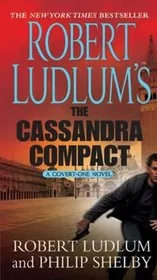
The Cassandra Compact
by Robert Ludlum & Philip Shelby
2001
When a Russian scientist is gunned down after warning Jon Smith that smallpox stocks are about to be stolen, the Covert-One operative is thrown into a race against time. A shadowy cabal plans to weaponize the virus and trigger global catastrophe.
Covert-One (Philip Shelby) books in chronological order
Series background & context
Philip Shelby's Covert-One work is concentrated in a single novel, The Cassandra Compact, but it plugs neatly into the larger series. You do not need a mountain of backstory to follow it. The key idea is simple: Covert-One is a deniable American group used when a problem is too dangerous, too political, or too embarrassing for normal agencies to handle in daylight. That premise gives Shelby room to write both a spy thriller and a disaster countdown at the same time.
At the center of this corner of the series is Jon Smith, an Army doctor and infectious-disease expert who can move between labs, briefings, and firefights without ever feeling like a standard action hero. That mix matters. In Covert-One, the threat is often scientific before it becomes military, and the people trying to stop it need to understand both the biology and the body count. Smith is useful because he can read a lab problem as quickly as he can sense a political trap.
In The Cassandra Compact, the danger begins with a warning that arrives too late. A Russian asset tries to tell Smith that smallpox stocks are at risk, and the message dies with him in a burst of violence. From there the novel becomes a chase through intelligence channels, diplomatic barriers, and half-trusted allies as Smith and his team try to work out who wants the virus, how far the theft has already gone, and what kind of catastrophe could follow. The stakes are global, but the pace stays tight and immediate.
Science is not background noise here.
That is what makes Shelby's contribution feel different from a more ordinary spy caper. The suspense comes not only from assassins and betrayals, but from the awful practical question of what happens if a disease that should be history becomes a weapon again. Labs, transport routes, government cover stories, and emergency response all matter. The book keeps one foot in thriller mechanics and the other in public-health dread, which gives the action a colder edge.
Even so, the story stays human-sized. Jon Smith is capable, but he is not immune to bad information, shock, or loss, and the people around him matter because they bring different skills rather than because they are superhuman. If you are coming to this page through Philip Shelby rather than Robert Ludlum, this is a good way to see how his interest in political danger, institutional secrecy, and fast-moving plots fits inside a shared franchise. If you plan to read more Covert-One, starting with The Hades Factor and then moving to The Cassandra Compact gives the fullest setup, but Shelby's novel still works on its own as a tight bio-thriller with worldwide stakes.















Edited by
Software engineer whose passion for tracking book recommendations from podcasts inspired the creation of MRB.
Lead investor at 3one4 Capital whose startup expertise and love for books helped shape MRB and its growth.
Comments
Did we miss something? Have feedback?
Help us improve this page by sharing your thoughts