
Clocktaur War Books in Order
Part ofT Kingfisher Books in OrderFollow the Clocktaur War duology by T. Kingfisher in order, with summaries, series background, and guidance on how it links to Swordheart and the Saint of Steel books.
Last updated:
As an Amazon Associate, we earn from qualifying purchases (at no extra cost to you).
Clocktaur War books in publication order
2 books
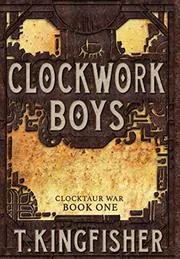
Clockwork Boys
by T Kingfisher
2017
Convicted forger Slate is offered a last chance at life if she joins a mismatched team sent to uncover the secret of the unstoppable Clockwork Boys. Their "suicide mission" through enemy lands mixes dark magic, espionage, and sharp, weary humor.

The Wonder Engine
by T Kingfisher
2018
The second half of the Clocktaur War duology finds Slate, Caliban, and their dubious allies finally inside Anuket City, hunting the source of the clockwork siege engines. Their espionage turns into a desperate race through guild halls and catacombs to avert disaster.
Clocktaur War books in chronological order
Series background & context
The Clocktaur War books drop you into the early days of the “World of the White Rat,” a shared setting that also includes Swordheart and the Saint of Steel series. Here, the stakes are grimly practical: a neighboring kingdom has unleashed unstoppable mechanical soldiers—leather‑faced, gear‑driven horrors known as the Clockwork Boys—and someone has to figure out how to stop them before they flatten what’s left of the Dowager’s city.
Instead of shining heroes, the Dowager sends out a handful of expendables. Slate is a convicted forger who can literally smell magic and would very much like not to die. Caliban is a disgraced paladin still haunted by a demon that once rode him like a puppet. They’re joined by Brenner, an assassin with an inconvenient conscience, and Learned Edmund, a fussy young scholar who is in way over his head. Their reward for success is a pardon; their odds of coming back are not great.
The first book, Clockwork Boys, reads like a doomed road trip. The group travels through contested countryside, avoiding armies and cultists while trying not to kill each other. Kingfisher spends as much time on small, human details—bad boots, decent beer, the question of what you do after surviving a demon—as she does on the looming menace of the constructs. Along the way you get a feel for the gods, saints, and minor monsters that populate this world, as well as the down‑to‑earth practicality of the Temple of the White Rat.
The second half of the story, The Wonder Engine, moves into enemy territory. Anuket City turns out to be a place of guilds, scholars, and ordinary people trying to live next to a moral catastrophe. The mission shifts from simple sabotage to understanding what, exactly, the Clockwork Boys are and how they were made. The tone balances espionage, heists, and creeping dread with the developing relationships inside the team, including the slow, awkward romance between Slate and Caliban.
Across both volumes, the Clocktaur War is less about a grand chosen‑one narrative and more about tired adults deciding to do one decent, terrifying thing because no one else is in a position to try. The duology stands alone, but it also lays down a lot of the emotional and theological groundwork for later White Rat stories. If you enjoy paladins with frayed nerves, pragmatic magic, and banter in the face of certain doom, this series gives you a concentrated dose of all three.









Edited by
Software engineer whose passion for tracking book recommendations from podcasts inspired the creation of MRB.
Lead investor at 3one4 Capital whose startup expertise and love for books helped shape MRB and its growth.
Comments
Did we miss something? Have feedback?
Help us improve this page by sharing your thoughts