
Clay Edison (Jesse Kellerman) Books in Order
Part ofJesse Kellerman Books in OrderSee the Clay Edison books by Jesse Kellerman and Jonathan Kellerman in order, with summaries, series background, and a clear place to start.
Last updated:
As an Amazon Associate, we earn from qualifying purchases (at no extra cost to you).
Clay Edison (Jesse Kellerman) books in publication order
6 books
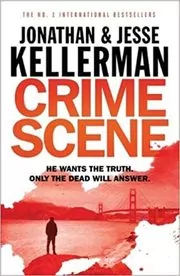
Crime Scene
by Jesse Kellerman
2017
Deputy coroner Clay Edison is asked to look again at the death of a disgraced psychology professor. What seems like a simple accident opens into an old scandal, a buried murder, and a case Clay cannot leave alone.
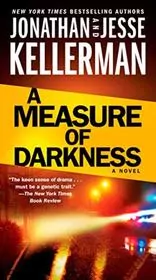
A Measure of Darkness
by Jesse Kellerman
2018
Deputy coroner Clay Edison is called to a chaotic East Bay shooting, but one victim does not fit the rest. His search to identify a forgotten Jane Doe leads him into a hidden world of cruelty, secrecy, and real danger.
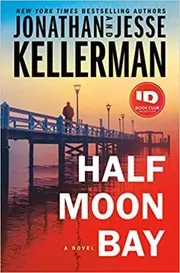
Half Moon Bay
by Jesse Kellerman
2020
When workers uncover a child's skeleton in a Bay Area park, Clay Edison starts asking questions that reach back decades. A possible link to an old disappearance turns the case into a tense search through secrets and betrayal.
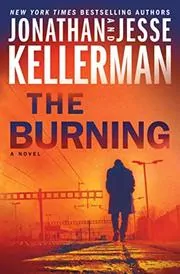
The Burning
by Jesse Kellerman
2021
During a wildfire blackout, Clay Edison investigates the shooting of a wealthy man and finds evidence pointing toward his troubled brother, Luke. The case forces him to choose between family loyalty and the truth.

The Lost Coast
by Jesse Kellerman
2024
Now working as a private investigator, Clay Edison takes what looks like a small estate-fraud case. It leads him to California's remote Lost Coast, where a long con and a violent local welcome make every answer harder to reach.

Coyote Hills
by Jesse Kellerman
2025
Private investigator Clay Edison is asked to revisit the supposed accidental death of a wealthy couple's son, found in San Francisco Bay with drugs in his system and a head injury. The deeper he digs, the uglier the lies get.
Clay Edison (Jesse Kellerman) books in chronological order
Series background & context
The Clay Edison books, co-written by Jesse Kellerman and Jonathan Kellerman, are crime novels built around a man who spends his working life close to the dead. Clay is an Alameda County deputy coroner when the series begins, not a cop, which gives the books a slightly different angle from a standard police procedural. He arrives after the violence, studies what is left behind, and keeps asking whether the official story actually makes sense.
That matters a lot.
In Crime Scene, A Measure of Darkness, Half Moon Bay, and The Burning, Clay keeps getting pulled beyond the limits of his job. A suspicious death, an unnamed victim, old bones turned up by chance, a murder that touches his own family, each case starts with a body but opens into something wider. The books care about evidence and procedure, but they also care about the people left standing around the edges: relatives, witnesses, the newly bereaved, and the people who have been carrying secrets for years.
The Bay Area setting does real work here. These novels move through Oakland, Berkeley, and nearby California towns, and they make the region feel lived in rather than postcard pretty. Gentrifying neighborhoods, hillside homes, parks, fire zones, and coastal backroads all shape the mood of the cases. The place changes from book to book, but there is a steady sense that the past never stays buried for long.
Clay himself is a grounded lead. He used to be a promising basketball player before an injury changed his path, and he brings that same mix of discipline and frustration to his cases. He is thoughtful, stubborn, and usually more compassionate than the people around him expect. He also has a messy personal life, especially where his brother Luke is concerned, and the series gets a lot of mileage out of the tension between family loyalty and plain facts. Clay wants the truth, but the truth is not always kind.
That tension gives the books their pulse.
As the series goes on, Clay's role shifts. Later books move him out of the coroner's office and into private investigation, starting with The Lost Coast and continuing in Coyote Hills. The job changes, but the appeal stays the same. He is still a careful, skeptical investigator who notices when a neat explanation feels wrong, and he is still surrounded by people whose motives are more tangled than they first appear.
If you like procedural crime novels but want a lead who is quieter and more reflective than the usual hard-charging detective, this series is a good fit. The cases are tense, but the books make room for family strain, moral ambiguity, and the small human details that keep the danger from feeling abstract. They read like mysteries with a conscience.

Edited by
Software engineer whose passion for tracking book recommendations from podcasts inspired the creation of MRB.
Lead investor at 3one4 Capital whose startup expertise and love for books helped shape MRB and its growth.
Comments
Did we miss something? Have feedback?
Help us improve this page by sharing your thoughts