
City Blues Books in Order
Part ofJeff Edwards Books in OrderSee the City Blues books in order by Jeff Edwards, with quick summaries, reading order, series background, and tips on where to start in this future noir world.
Last updated:
As an Amazon Associate, we earn from qualifying purchases (at no extra cost to you).
City Blues books in publication order
2 books
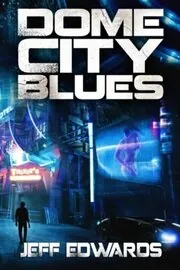
Dome City Blues
by Jeff Edwards
2011
In Los Angeles, 2063, retired detective David Stalin is pulled back into work by a case that looks simple and turns deeply personal. Edwards mixes noir atmosphere, cyberpunk tech, and a mystery that keeps shifting under Stalin's feet.
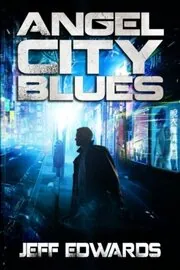
Angel City Blues
by Jeff Edwards
2014
In Los Angeles, 2065, a wealthy woman vanishes from a locked-down apartment without leaving DNA, camera footage, or a clear motive. Private detective David Stalin takes the case and finds himself chasing a mystery where technology keeps bending reality.
City Blues books in chronological order
Series background & context
City Blues is Jeff Edwards taking detective noir into a future Los Angeles that looks flashy from a distance and battered up close. The series follows private detective David Stalin, a former top investigator whose life has been knocked badly off course. Instead of battle groups and missile ranges, these books deal in missing people, bad memories, and crimes that grow stranger the deeper he digs.
This is noir with better hardware and worse air.
The first book, Dome City Blues, brings David out of retirement after a case and a personal loss shattered his old life. He is asked to look into a death that seems settled, then finds himself pulled into something darker and much bigger. In Angel City Blues, he faces an impossible disappearance, a wealthy young woman gone from a high-security apartment without DNA, camera footage, or an obvious way out. Each novel has its own mystery, but together they build a picture of a man who keeps trying to step away from trouble and keeps getting dragged back by conscience, curiosity, or grief.
The setting does a lot of the heavy lifting. Edwards imagines Los Angeles in the 2060s as a place of tech-enhanced gangs, data-jackers, organ thieves, tight surveillance, and neighborhoods shaped by environmental damage and social decay. Old LA still hangs over the series like a ghost. So do the domes that protect parts of the city. The result is a world that feels part hard-boiled detective story, part cyberpunk cautionary tale.
David Stalin is the reason the books hold together. He is not slick or untouchable. He is bruised, stubborn, and often running on memory as much as momentum. That makes him a good guide through a city where appearances are cheap and truth is always expensive. The cases give him room to do classic detective work, asking questions, reading people, and following bad leads into worse neighborhoods, while the futuristic setting keeps changing the rules around him.
The future here is shiny in spots, but never comfortable.
If you want a series that mixes mystery, science fiction, and a strong noir pulse, City Blues is the one to pick up. Reading Dome City Blues before Angel City Blues is the best way to get the full arc of David's world, but both books work because the central appeal stays the same, a weary detective, a damaged city, and a case that refuses to stay simple.










Edited by
Software engineer whose passion for tracking book recommendations from podcasts inspired the creation of MRB.
Lead investor at 3one4 Capital whose startup expertise and love for books helped shape MRB and its growth.
Comments
Did we miss something? Have feedback?
Help us improve this page by sharing your thoughts